To provide room for long-term expansion, companies like Google, Facebook, and LinkedIn are buying up even more Bay Area real estate. Their flush cash reserves have them nudging out the traditional development and investment crowd.


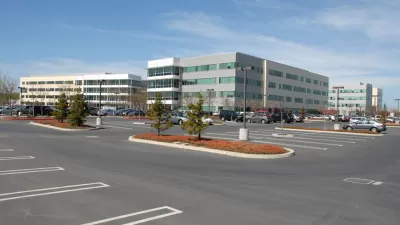
Tech giants including Google and Facebook are engaged in a Silicon Valley land grab. From the article: "The companies' newfound hunger for real estate offers a glimpse into their remarkable ambitions for expansion. Google reported it grew by about 5,800 employees world-wide in 2014, bringing the total to 53,600. Facebook boosted its head count by 45% last year to 9,199, growth it expects to continue."
Concentrated mainly in the Bay Area, new commercial and industrial spaces will give the companies ample room for future expansion. Their land banking has introduced a new dynamic into the local market. "The flurry of acquisitions is reshaping the landscape of the competitive world of Silicon Valley property, with tech companies often out-competing the developers and investment firms that traditionally dominate the sector."
With the exception of Apple, currently building a new headquarters in Cupertino, CA, most of the major tech firms actively acquired real estate in 2014. They expect long-term growth: "The tech giants have a leg up on developers and investors because they can tap their enormous piles of cash. They are happy to buy property now and then collect rent, perhaps for years, while they plot their expansions."
Read the full story: Google, Facebook, LinkedIn Want to Make Sure They Have Space to Grow

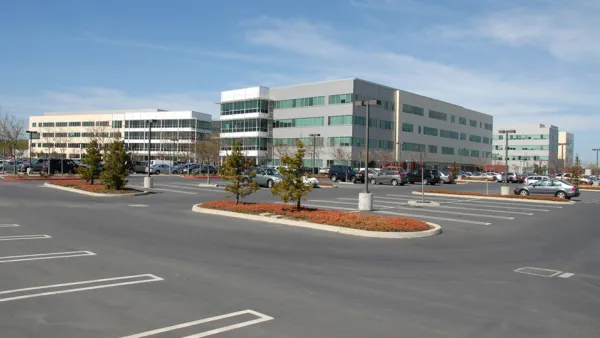
How Office Parks and Corporate Campuses Evolved
The office park has become a suburban given, disliked by some, but once it represented a utopian vision of work away from the city. Here's a look at how the Silicon Valley model developed, and where it might be going.
Google's Loss is LinkedIn's Gain in Silicon Valley
The city of Mountain View chose to allot most of the redevelopment rights in its much sought-after North Bayshore area not to the city's largest employer and taxpayer but to LinkedIn's more conventional proposal.
Silicon Valley Cities' Complex Relationship with Silicon Valley
Silicon Valley isn't just an industry. It's also a place. Actually, a series of places. The dozen or so cities that make up the valley are increasingly wary of the corporate behemoths that are constantly expanding within their city limits.

Planetizen Federal Action Tracker
A weekly monitor of how Trump’s orders and actions are impacting planners and planning in America.

Amtrak, CN end decades-long dispute with eight-year agreement
The new operating agreement establishes an updated framework for the companies to work together, including processes to resolve disputes.

Judges permit Denver to divert 77,000 acre feet from the Colorado River for reservoir expansion
Overuse and climate change have caused the Colorado River’s water levels to plummet.

NYC DOT wants faster, more permanent street upgrades
The city is examining ways to build more concrete infrastructure without getting entangled in 'decades-long' projects.

'Something we’ve never seen before:' rising utility rates could strain city finances nationwide
Data centers, climate change and other factors have caused utility rates in the United States to increase by 38% since 2020.

Trump to overrule local leaders, lease millions of acres of America’s Pacific Island territories’ seafloors to mining companies
International law says that the Indigenous people of America’s territories have a right to prior and informed consent regarding projects that impact their countries.

FREE Course: Walkable City 1: Why Walkability?
After describing his path towards focusing on walkability as the essence of good planning, Jeff Speck marches through his five principal reasons for making more walkable places.
Reinventing Malls: Planning Alchemy—Turning Gray Fields Into Gold
The course focuses on the opportunities and imperatives that shape reinvention of mall sites.

Harvard University Graduate School of Design
KFH Group Inc.
Greater Baltimore Committee
The Architects Foundation
University of Cincinnati Online
The Pocatello Development Authority
The Urban Renewal Agency of the City of Pocatello