Trulia has created a "Neighborhood Pride Score" to determine the communities with the largest gay populations. Access to those neighborhoods comes at a high price.


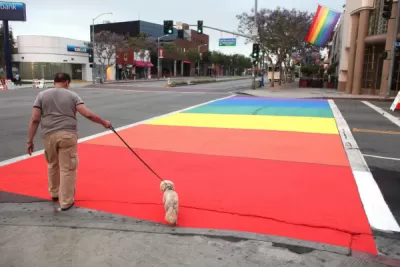
"During the last five years, the premium to live in neighborhoods with the largest gay populations has grown substantially," according to an article by Ralph McLaughlin. Specifically:
At the housing market bottom in 2012, homebuyers would have needed to pay, on average, a 28.9% premium to live in communities populated with a higher share of gay, lesbian and bisexual residents. This home-buying season, homebuyers will need to pay 36.8% premium to live in these same neighborhoods.
The post drills down on the local data, after explaining a methodology that relies on data from both OkCupid data and the U.S. Census to generate what McLaughlin has dubbed the "Neighborhood Pride Score." The demand to live in communities with higher Neighborhood Pride scores "has increased most in New York, New Orleans, and Boston, where the premium to live in gay neighborhoods has increased by 56 percentage points, 52 percentage points, and 26 percentage points respectively."
FULL STORY: Pride of the Neighborhood

To upzone or not to upzone? Two views on the housing crisis
Allowing more density can increase the housing supply, but does the attendant rise in land prices cancel out the benefits?
Alexandria eviction diversion program will let tenants pay back rent in installments
Eligible tenants will be allowed to make a 10% down payment on the back rent they owe and pay off the rest in installments while remaining in their home.
Indianapolis rents grew by 30% since 2020
The metro area has a shortage of roughly 137,000 affordable homes for the lowest-income households.

Planetizen Federal Action Tracker
A weekly monitor of how Trump’s orders and actions are impacting planners and planning in America.

The state-sanctioned urbicide of Austin
People don’t kill cities. Freeways do.

US to reduce Colorado River water deliveries to Mexico
A new Colorado Treaty amendment reduces Mexico’s Colorado River water allocation by 250,000 acre feet.

Mamdani overhauls NYC's Vision Zero plan with 100 new policy goals
The overhaul aims to reduce traffic deaths and make streets safer for pedestrians, cyclists and drivers through lower speed limits, new safety infrastructure and more.

Amtrak not solely to blame for New Jersey commuter rail's unreliability, report finds
A new study from the Garden State Initiative found that NJ Transit’s budget grew 20% across a 4 year period, but reliability declined significantly over the same period.

EPA erases limits on planet-warming pollution from power plants
Under Monday’s plan, power plants would still have some limits on how much mercury, arsenic and other contaminants they can emit.

FREE Course: Walkable City 1: Why Walkability?
After describing his path towards focusing on walkability as the essence of good planning, Jeff Speck marches through his five principal reasons for making more walkable places.
Reinventing Malls: Planning Alchemy—Turning Gray Fields Into Gold
The course focuses on the opportunities and imperatives that shape reinvention of mall sites.

Eagle County Government
Harvard University Graduate School of Design
Nashville Planning Department
The Architects Foundation
University of Cincinnati Online
The Pocatello Development Authority
The Urban Renewal Agency of the City of Pocatello
Journal of the American Planning Association