The power and process of boards that take control of a city or territory's finances is becoming more generalized, although they affect local democracy, impose austerity measures without controls, and lack mechanisms to evaluate their efficiency.


Regardless of their size or financial problems, U.S. cities under the command of fiscal control boards have faced the firing of public employees, the implementation of pension cuts, increases to the cost of public college education, and a reduction in essential services, such as health. The structures, the laws that create them, and the names of the boards vary; the public policies they impose, not so much.
Despite the normalization of the boards and their commonly broad powers, the federal government and Congress lack control mechanisms, studies, databases, or an entity that actively monitors a fiscal control board's impact or efficiency, the Center for Investigative Journalism (CIJ) in Puerto Rico has found.
“In the United States, there is no centralized information across states [about fiscal control boards],” says Deborah Kobes, author of the thesis Out of Control? Local Democracy Failure and Fiscal Control Boards, published in 2009. “There also isn’t a real definition about what a board is.”
FULL STORY: The Silent Expansion of Fiscal Control Boards in the U.S.

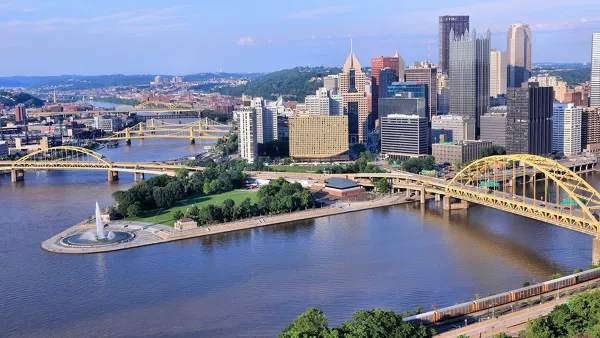
'Pittsburgh Is Back'
The state of Pennsylvania has released Pittsburgh from the terms of Act 47, signaling a new era of fiscal security for the city, and a sign of home for the "Rust Belt."
Shedding Light on the $3.7 Trillion Municipal Bond Market
The Municipal Securities Rulemaking Board is working toward new levels of transparency in the municipal bond market.
Federal Fiscal Reform's Impact at Lower Levels of Government
The Obama Administration is hoping to address the nation's huge deficits. Neal Peirce looks at how proposed solutions might trickle down to states and municipalities.

Planetizen Federal Action Tracker
A weekly monitor of how Trump’s orders and actions are impacting planners and planning in America.

The state-sanctioned urbicide of Austin
People don’t kill cities. Freeways do.

US to reduce Colorado River water deliveries to Mexico
A new Colorado Treaty amendment reduces Mexico’s Colorado River water allocation by 250,000 acre feet.

Mamdani overhauls NYC's Vision Zero plan with 100 new policy goals
The overhaul aims to reduce traffic deaths and make streets safer for pedestrians, cyclists and drivers through lower speed limits, new safety infrastructure and more.

Amtrak not solely to blame for New Jersey commuter rail's unreliability, report finds
A new study from the Garden State Initiative found that NJ Transit’s budget grew 20% across a 4 year period, but reliability declined significantly over the same period.

EPA erases limits on planet-warming pollution from power plants
Under Monday’s plan, power plants would still have some limits on how much mercury, arsenic and other contaminants they can emit.

FREE Course: Walkable City 1: Why Walkability?
After describing his path towards focusing on walkability as the essence of good planning, Jeff Speck marches through his five principal reasons for making more walkable places.
Reinventing Malls: Planning Alchemy—Turning Gray Fields Into Gold
The course focuses on the opportunities and imperatives that shape reinvention of mall sites.

Eagle County Government
Harvard University Graduate School of Design
Nashville Planning Department
The Architects Foundation
University of Cincinnati Online
The Pocatello Development Authority
The Urban Renewal Agency of the City of Pocatello
Journal of the American Planning Association