Fans of transit maps will have to watch out for the new map of BaltimoreLink.


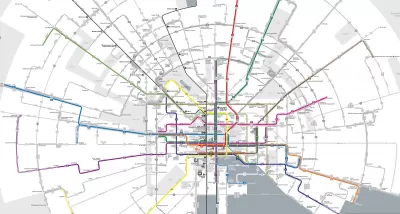
"Baltimore will soon be the latest American city to overhaul its bus network in an attempt to jumpstart ridership," reports Peter Dovak. "The plan, known as 'BaltimoreLink'," will go into effect on June 18. So far the best part is a really, really cool new map."
The Baltimore bus system reorganization follows the famous example of Houston, which reorganized its bus syetm in 2015 and is now one of the few systems in the country attracting on increased numbers of riders in recent years.
"The core of the BaltimoreLink plan is a dozen color-coded, high-frequency routes known as CityLink lines," explains Dovak. "They'll run 24 hours a day along Baltimore's downtown grid and then radiate out of the city in every direction, complimented by less frequent local and express lines."
A good portion of the article is devoted to the design of the Baltimore Link map, which a radial structure that allows for both a striking appearance and legible detail. A quick mention of the system re-structure's political origins—as a replacement for the aborted Red Line Subway project—is also included in the article.

Read the full story: The map for Baltimore’s new bus system is positively radiant

One-Year Later: Evaluating Baltimore's Overhauled Bus System
The $135 million BaltimoreLink bus system redesign launched in June 2017.
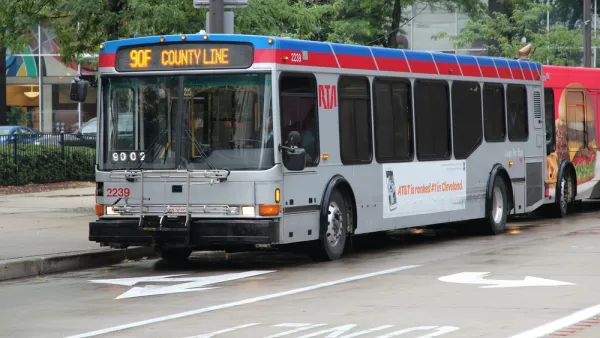
Bus System Redesign Coming to the Cleveland Region
The Greater Cleveland Regional Transit Authority (RTA) revealed a draft system redesign this week.
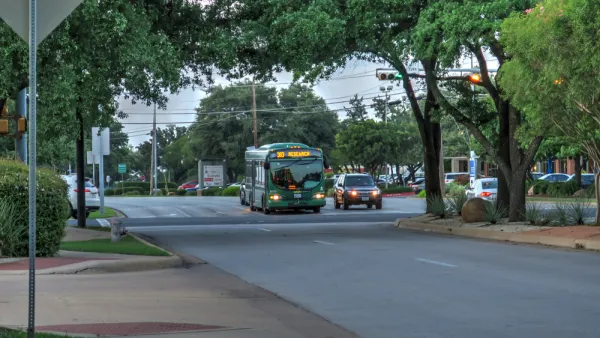
Bus System Redesign Boosts Ridership in Austin
Over a year after Capital Metro in Austin overhauled its bus system design, the system is bucking national trends and achieving growth in its ridership numbers.

Planetizen Federal Action Tracker
A weekly monitor of how Trump’s orders and actions are impacting planners and planning in America.

California plans to bury El Niño’s downpour
If the state plays its cards right, it may be able to store a billion acre-feet of El Niño’s water in aquifers.

Desperate measures: Advocates weigh draining Lake Powell to fill Colorado River
Draining the reservoir could reduce evaporation losses by a couple hundred thousand acre-feet.

Chicago voters approve permanent festival grounds, penalty for vacant property owners
Currently, major summer and fall festivals take over public parks for weeks at a time, drawing criticism from nearby residents

NYC votes to cut outdoor dining red tape, speed up permitting
New York City also voted to allow the Department of Transportation to begin work on urgent projects before notifying elected officials.

California appears to reject Prop. 45
The proposition would have expanded the projects that qualify for a streamlined environmental review, effectively paring down the California Environmental Quality Act.

FREE Course: Walkable City 1: Why Walkability?
After describing his path towards focusing on walkability as the essence of good planning, Jeff Speck marches through his five principal reasons for making more walkable places.
Reinventing Malls: Planning Alchemy—Turning Gray Fields Into Gold
The course focuses on the opportunities and imperatives that shape reinvention of mall sites.

City of Rosemead
Rutgers University, Edward J. Bloustein School of Planning and Public Policy
One Hundred Miles
Hunter College, City University of New York (CUNY)
The Architects Foundation
University of Cincinnati Online
City of Cambridge
Montrose County
The Pocatello Development Authority