St. Louis provides the backdrop for a discussion about "middle neighborhoods"—the subject of a 2016 book by Paul C. Brophy.


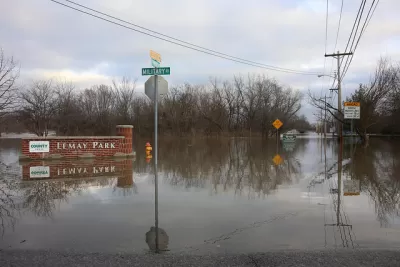
"There are neighborhoods in St. Louis that are thriving and those that are very much struggling, but what about neighborhoods that fall somewhere in the middle?"
That's the question posed by an article by Kelly Moffitt to summarize a recent episode of St. Louis on the Air. The episode featured Alan Mallach, Henry Webber, and Reginald Scott, who discussed the idea of "middle neighborhoods, as examined in a recent research study titled "One the Edge: America's Middle Neighborhoods." The study was edited by Paul C. Brophy, and originally published by the Federal Reserve Bank of San Francisco. Now, however, the study is available in book form.
According to Moffitt's coverage of the study and its examples from the city of St. Louis, middle neighborhoods are threatened by a shrinking middle class. "Middle neighborhoods could fall into distress (areas with high poverty and declining real estate values) or they could turn into thriving neighborhoods … but that takes policy heft," writes Moffitt.
Such policy strategies include locating jobs nearby the neighborhood and identifying amenities in the neighborhood that can attract new residents.
FULL STORY: What are St. Louis’ ‘middle neighborhoods’ and how can they be stopped from falling into distress?

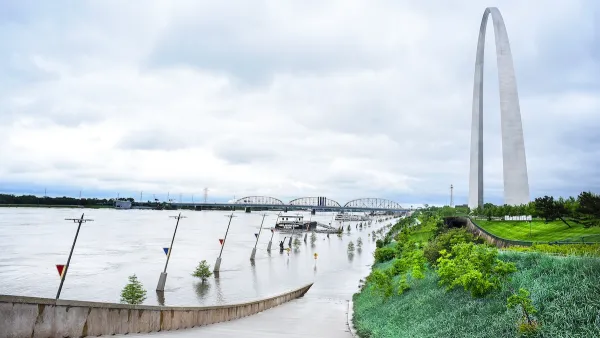
St. Louis has a Secret Stormwater Weapon Saving 100 Million Gallons from the Mississippi
The city reimburses residents who install gardens, rain barrels, and other methods that retain stormwater and decrease the risk of flooding.
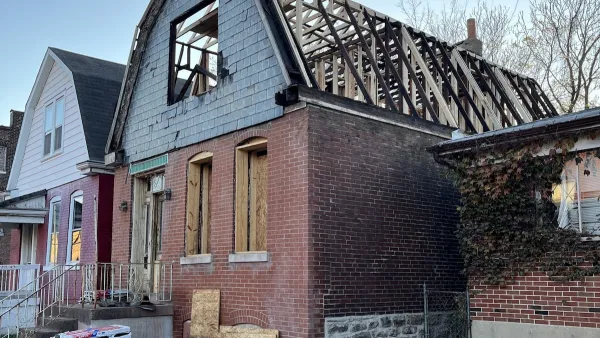
St. Louis Nonprofit Builds Housing for Struggling Artists
The St. Louis Art Place Initiative purchases city-owned vacant properties and rehabilitates them, offering homeownership opportunities to local artists.
St. Louis Zeroing in on Safe Streets
The city is creating its first Department of Transportation and using hundreds of millions in federal funding to launch road safety projects.

The state-sanctioned urbicide of Austin
People don’t kill cities. Freeways do.

US to reduce Colorado River water deliveries to Mexico
A new Colorado Treaty amendment reduces Mexico’s Colorado River water allocation by 250,000 acre feet.

New Jersey’s second-largest city bans standalone data centers
Jersey City will continue to allow co-location facilities, such as those meant for research institutions that store their own data.

Amtrak not solely to blame for New Jersey commuter rail's unreliability, report finds
A new study from the Garden State Initiative found that NJ Transit’s budget grew 20% across a 4 year period, but reliability declined significantly over the same period.

EPA erases limits on planet-warming pollution from power plants
Under Monday’s plan, power plants would still have some limits on how much mercury, arsenic and other contaminants they can emit.

Phoenix announces new on-demand transit service, more frequent RAPID buses
Both new services will launch in October, and are part of Phoenix's Project Effective Access Solutions for Easing Congestion.

FREE Course: Walkable City 1: Why Walkability?
After describing his path towards focusing on walkability as the essence of good planning, Jeff Speck marches through his five principal reasons for making more walkable places.
Reinventing Malls: Planning Alchemy—Turning Gray Fields Into Gold
The course focuses on the opportunities and imperatives that shape reinvention of mall sites.

Eagle County Government
Harvard University Graduate School of Design
Nashville Planning Department
The Architects Foundation
University of Cincinnati Online
The Pocatello Development Authority
The Urban Renewal Agency of the City of Pocatello
Journal of the American Planning Association