Los Angeles' proposed transit neighborhood plan for the Expo Line corridor includes minor changes, but nothing earth-shattering. Many of the line's stations remain underutilized.


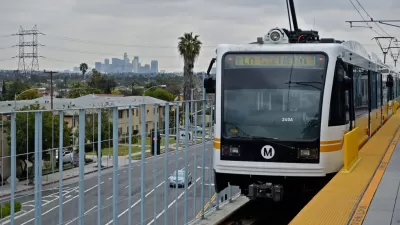
It's been nearly a year since L.A.'s Expo Line extension to Santa Monica opened. Here, Steven Sharp goes through a newly-proposed set of zoning and development rules [pdf] for the area surrounding the line, specifically its newest portion.
Overall, the plan allows for intensified land use in certain places, but does relatively little to impact the low-rise neighborhoods surrounding much of the corridor. However, Sharp writes, "the proposed urban design standards call for street-facing entrances, limited use of fencing and uniform building setbacks, among other items. In short, the regulations would mandate pedestrian-oriented buildings along commercial boulevards."
In short, density fans will have some things to like in the plan, but many will feel it doesn't go far enough. "The proposed Expo TNP walks a fine line between maintaining the status quo and creating the transit-oriented communities implied by the project's name [...] The question remains how to build around transit in a region that still considers its single family neighborhoods to be sacrosanct."
FULL STORY: Breaking Down the Draft Expo Corridor Transit Neighborhood Plan

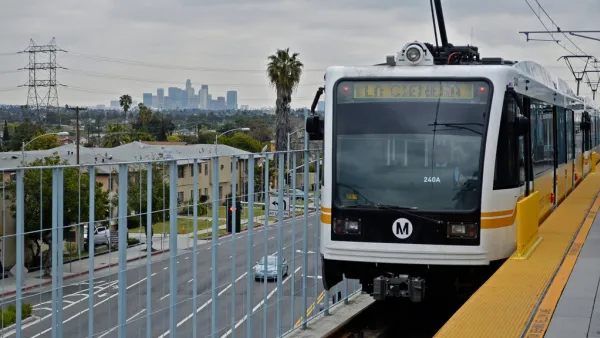
LA Times: City Council Should Take Responsibility for Lack of Transit Oriented Development
The Los Angeles Times editorial board has strong words for the Los Angeles City Council about planning for transit oriented development.
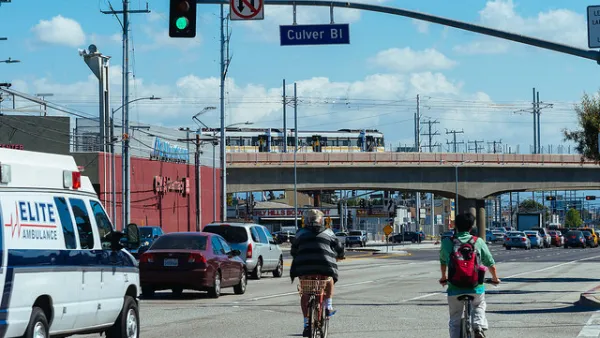
Designing a Multi-Modal, User-Focused TOD Vision for Los Angeles' Expo Line
Facing explosive development interest around its Metro station, the small city of Culver on L.A.’s Westside is taking steps to shape its mobility future.
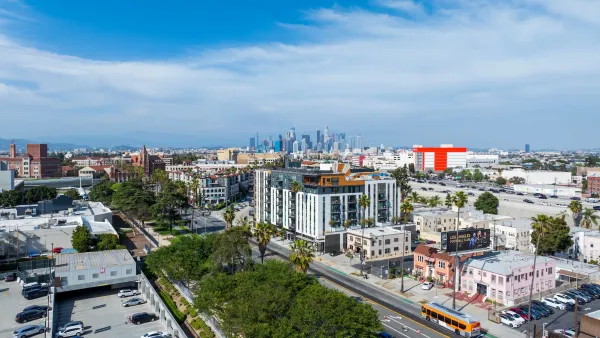
LA delays state housing mandate with 'low-rise ordinance'
The new ordinance allows the city to delay implementing SB 79, a state law requiring more density near transit.

The state-sanctioned urbicide of Austin
People don’t kill cities. Freeways do.

US to reduce Colorado River water deliveries to Mexico
A new Colorado Treaty amendment reduces Mexico’s Colorado River water allocation by 250,000 acre feet.

New Jersey’s second-largest city bans standalone data centers
Jersey City will continue to allow co-location facilities, such as those meant for research institutions that store their own data.

Amtrak not solely to blame for New Jersey commuter rail's unreliability, report finds
A new study from the Garden State Initiative found that NJ Transit’s budget grew 20% across a 4 year period, but reliability declined significantly over the same period.

EPA erases limits on planet-warming pollution from power plants
Under Monday’s plan, power plants would still have some limits on how much mercury, arsenic and other contaminants they can emit.

Phoenix announces new on-demand transit service, more frequent RAPID buses
Both new services will launch in October, and are part of Phoenix's Project Effective Access Solutions for Easing Congestion.

FREE Course: Walkable City 1: Why Walkability?
After describing his path towards focusing on walkability as the essence of good planning, Jeff Speck marches through his five principal reasons for making more walkable places.
Reinventing Malls: Planning Alchemy—Turning Gray Fields Into Gold
The course focuses on the opportunities and imperatives that shape reinvention of mall sites.

Eagle County Government
Harvard University Graduate School of Design
Nashville Planning Department
The Architects Foundation
University of Cincinnati Online
The Pocatello Development Authority
The Urban Renewal Agency of the City of Pocatello
Journal of the American Planning Association