Partisan politics killed what was labeled as a bipartisan effort to increase funding for Colorado's roads by allowing voters in November to determine whether to raise the state sales tax to fund a bond measure.


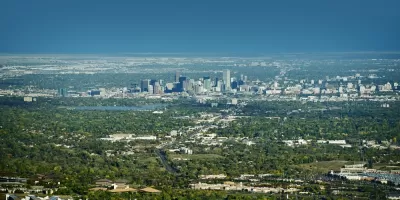
House Bill 1242 may have had the backing of the state's Republican leadership, but that didn't stop Senate Republicans, who control that branch of the General Assembly, from killing the measure in committee.
Despite reducing the size of the sales tax hike from .62 percent to .50 percent, three Republican members of a Senate panel effectively killed the measure, "citing ideological opposition to increasing taxes," reports John Frank for The Denver Post.
The controversial bill had cleared the Democrat-controlled House of Representatives on March 31. "Four Republicans bucked party lines to vote for the measure...The other 24 Republicans voted no, saying lawmakers needed to cut spending on things like Medicaid in order to pay for transportation needs within the state’s existing budget," reported Brian Eason for The Post.
That's the central theme of the transportation lobbying group, Fix Colorado Roads. The first step, they argue, is to establish "a permanent source of general fund dollars for roads" rather than dedicate a new taxing option.
Why a sales tax and not a gas tax?
Colorado's gas tax, 22 cents per gallon was last increased in 1991. In February, it was rated 39th highest in the nation, i.e., only 11 states had a lower tax.
As posted in March, Colorado is the only state to have enacted a TABOR, short for Taxpayer Bill of Rights, which requires legislation that raises taxes be subject to a statewide plebiscite. Polling showed that a sales tax fared better than a gas tax.
The funding plan
"The primary road projects on the list are an expansion of Interstate 25 north and south of Denver and Interstate 70 west through the mountains," reports Frank. "But millions more would have flowed to local governments to repair crumbling local roads and expand transit options."
The emphasis on roadway expansion is also one of the tenets of Fix Colorado Road: "Build large scale roadway expansion programs statewide."
Now what?
"Now that the bill is dead, attention turns to two possible alternatives: a separate far-reaching spending bill aimed at eliminating budget cuts to hospitals that could serve as a vehicle for transportation spending and a handful of potential ballot initiatives," adds Frank.
They don't have much time—the session adjourns on May 10.
Hat tip: AASHTO Daily Transportation Update
Related in Planetizen:
Transportation Sales Tax Advances in Colorado Legislature, March 24, 2017:A bill to ask voters in November to increase the state sales tax by 0.62 percent to fund transportation projects passed its first House committee March 22 on a partisan vote, with Democrats in support and Republican opposed.
FULL STORY: Transportation tax hike proposal reaches end of the road in Colorado

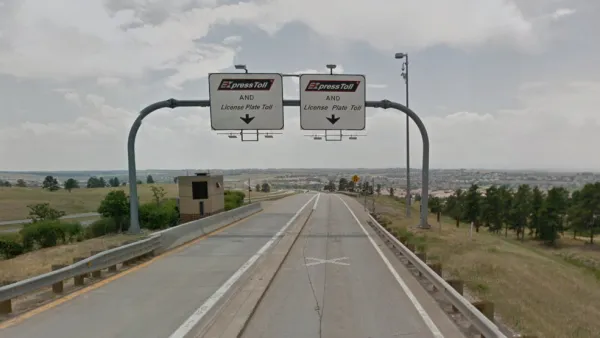
Strong Opposition to Toll Lane Additions Expressed in Colorado
It's not the widening of Interstate 25 that rattled attendees of the public meeting held by the Colorado Department of Transportation on Dec. 7—it's the fact that that they would have to pay to use the new lanes.
Colorado Voters OK New Toll Lanes on Interstate 25 by Passing Two Measures
Colorado Springs and El Paso County voters agreed to add the highway widening to a list of projects that a regional transportation authority can fund. They passed an additional funding measure enabling county funds to be spent rather than refunded.
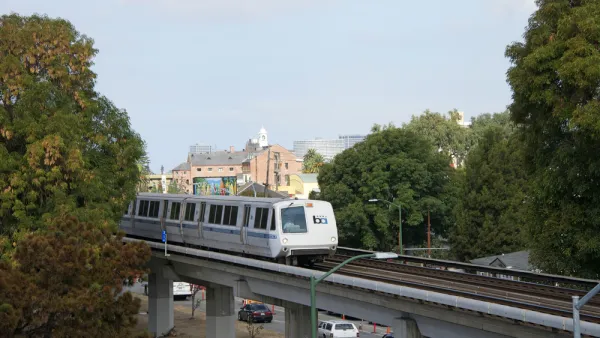
Three Transportation Ballot Measures Could Be Headed to Bay Area Voters Next Year
The California Legislature approved bills to allow voters to decide on hiking sales taxes and tolls for regional transportation. Gov. Jerry Brown already signed a bill to allow San Mateo County voters to hike sales taxes for transportation.

Planetizen Federal Action Tracker
A weekly monitor of how Trump’s orders and actions are impacting planners and planning in America.

The state-sanctioned urbicide of Austin
People don’t kill cities. Freeways do.

US to reduce Colorado River water deliveries to Mexico
A new Colorado Treaty amendment reduces Mexico’s Colorado River water allocation by 250,000 acre feet.

Amtrak not solely to blame for New Jersey commuter rail's unreliability, report finds
A new study from the Garden State initiative found that NJ Transit’s budget grew 20% across a 4 year period, but reliability declined significantly over the same period.

EPA erases limits on planet-warming pollution from power plants
Under Monday’s plan, power plants would still have some limits on how much mercury, arsenic and other contaminants they can emit.

Phoenix announces new on-demand transit service, more frequent RAPID buses
Both new services will launch in October, and are part of Phoenix's Project Effective Access Solutions for Easing Congestion.

FREE Course: Walkable City 1: Why Walkability?
After describing his path towards focusing on walkability as the essence of good planning, Jeff Speck marches through his five principal reasons for making more walkable places.
Reinventing Malls: Planning Alchemy—Turning Gray Fields Into Gold
The course focuses on the opportunities and imperatives that shape reinvention of mall sites.

Eagle County Government
Harvard University Graduate School of Design
Nashville Planning Department
The Architects Foundation
University of Cincinnati Online
The Pocatello Development Authority
The Urban Renewal Agency of the City of Pocatello
Journal of the American Planning Association