The Community Development Block Grant (CDBG) program is under the microscope. As the Trump Administration considers eliminating the program, the Urban Institute recommends a less-is-more approach.


"In a policy brief published last week, the Urban Institute recommends changing the eligibility rules so that CDBG funding would be spread across fewer communities, providing greater assistance to low- and moderate-income neighborhoods," writes J.B. Wogan.
The report follows news that the Trump Administration budget blueprint would eliminate funding for the program. Among the recommendations included in the Urban Institute's report: an increased amount of funding for a program that has been reduced to $3 billion annually in 2015, from a high of $15 billion in the late 1970s. The number of communities that qualify for CDBG funding in that time has also increased dramatically—86 percent since 1980, according to the report.
According to Wogan, the Urban Institute's recommendations for reform of the CDBG program mirrors that of the Obama Administration in 2013—those recommendations were opposed, however, by groups who represent CDBG recipients. Any recommendation that would reduce the number of possible grantees is likely to encounter opposition for the foreseeable future.
Read the full story: Is It Time to Adopt a Less-Is-More Approach to Community Development Block Grants?

Where Community Development Block Grants Money Goes
A Forbes contributor provides analysis of how much states stand to lose if the Trump Administration succeeds in cutting funding for the Community Development Block Grants program.
A Defense of HUD's Grant Funding
Next City explores the possible consequences of reported desire by the Trump Administration to cut $6 billion from the budget of the U.S. Department of Housing and Urban Development.
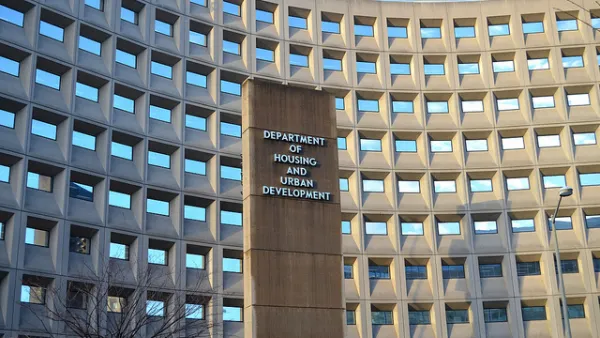
Trump Administration Budget Draft Could Cut HUD Budget, Planning Grants, More
The Washington Post has a big scoop about the early draft of the Trump Administration's budget for the Department of Housing Urban Development.

Planetizen Federal Action Tracker
A weekly monitor of how Trump’s orders and actions are impacting planners and planning in America.

California plans to bury El Niño’s downpour
If the state plays its cards right, it may be able to store a billion acre-feet of El Niño’s water in aquifers.

Desperate measures: Advocates weigh draining Lake Powell to fill Colorado River
Draining the reservoir could reduce evaporation losses by a couple hundred thousand acre-feet.

US buildings threatened, destroyed by fires set to triple by 2060
Researchers found a high fire risk for socioeconomically vulnerable neighborhoods in the American West.

LA residents may be allowed to paint their own crosswalks
Councilwoman Katy Yaroslavsky put out a motion instructing the Los Angeles Department of Public Transportation to study the feasibility of allowing volunteers to paint crosswalks.

Dallas moves to overhaul its zoning code
The city's zoning reform will allow more multi-family and mixed-use developments.

FREE Course: Walkable City 1: Why Walkability?
After describing his path towards focusing on walkability as the essence of good planning, Jeff Speck marches through his five principal reasons for making more walkable places.
Reinventing Malls: Planning Alchemy—Turning Gray Fields Into Gold
The course focuses on the opportunities and imperatives that shape reinvention of mall sites.

City of Rosemead
Rutgers University, Edward J. Bloustein School of Planning and Public Policy
One Hundred Miles
Hunter College, City University of New York (CUNY)
The Architects Foundation
University of Cincinnati Online
City of Cambridge
Montrose County
The Pocatello Development Authority