Next City explores the possible consequences of reported desire by the Trump Administration to cut $6 billion from the budget of the U.S. Department of Housing and Urban Development.


Josh Cohen reports on the potential consequences of draft cuts to the U.S. Department of Housing and Urban Development (HUD) budget, reported last week.
"If implemented, the changes would eliminate the Community Development Block Grant (CDBG) program, shrink the voucher program that provides rental assistance to the poor, reduce housing programs for elderly people and people with disabilities, and much more," writes Cohen to summarizes the draft changes. Cohen examines an affordable housing case study from Austin, Texas to examine the realities of these potential cuts, specifically the portfolio of a non-profit called Foundation Communities.
"Austin’s Foundation Communities doesn’t rely heavily on HUD grants to fund housing construction," according to Cohen. "CDBG paid for just $1.15 million of another recent, $22 million development they built. But [communications director Alyah] Khan says they would certainly feel the pinch and that they, 'need continued support from the federal government.'"
A couple of new reports by the National Low Income Housing Coalition’s (NLIHC) lend additional detail to the article's portrait of the affordable housing landscape if the Trump Administration and Congress manage to slash HUD's funding in the upcoming budget process. "NLIHC estimates that if the rumored budget is enacted, 200,000 housing vouchers would be lost, and the U.S. would lose about 10,000 housing units for seniors and another 6,800 units for people with disabilities," reports Cohen.
Cohen also notes the speculative nature of the draft budget, potential cuts to the HUD budget have a long way to go before they are enacted. Meanwhile, there's already a bipartisan effort underway in Congress to double the size of the Low-Income Housing Tax Credit program.
Read the full story: Investment in Affordable Housing Has Ripple Effect

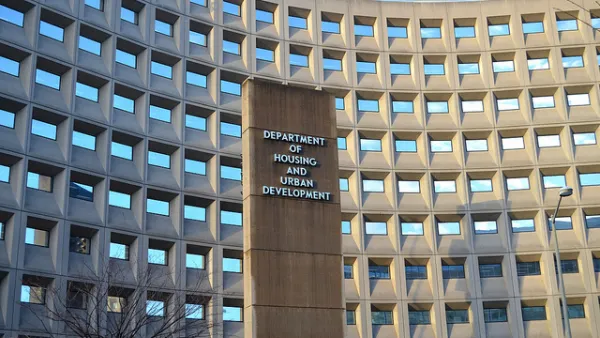
Trump Administration Budget Draft Could Cut HUD Budget, Planning Grants, More
The Washington Post has a big scoop about the early draft of the Trump Administration's budget for the Department of Housing Urban Development.
HUD's New York Leader Suggests Privatizing Public Housing
In The Real Deal, HUD administrator Lynne Patton hints at a 10-point plan for New York and New Jersey.
Affordable Housing Lacking in Every State
A recent report from the Urban Institute warns of potentially expanding catastrophe for affordable housing around the country.

Planetizen Federal Action Tracker
A weekly monitor of how Trump’s orders and actions are impacting planners and planning in America.

The state-sanctioned urbicide of Austin
People don’t kill cities. Freeways do.

Colorado’s Largest Data Center Could Rise Next to Homes — Without a Public Hearing
The proposed campus would consume 11 times the power of Denver International Airport; as it has across the country, opposition mounts.

Nation's most wind-powered state turns to coal as data centers increase energy demand
For the first time in decades, Iowa has increased its generation of coal power.

NYC cools commuters with city's first rain garden above a bus stop
New York City officials say the plants in the rain garden can absorb 16 gallons of rainwater during heavy storms.

Brightline West’s future may rely on $6 billion federal loan
The company has until Nov. 2 to make a $400 million equity investment into its proposed high-speed rail line.

FREE Course: Walkable City 1: Why Walkability?
After describing his path towards focusing on walkability as the essence of good planning, Jeff Speck marches through his five principal reasons for making more walkable places.
Reinventing Malls: Planning Alchemy—Turning Gray Fields Into Gold
The course focuses on the opportunities and imperatives that shape reinvention of mall sites.

Greater Baltimore Committee
Eagle County Government
Harvard University Graduate School of Design
The Architects Foundation
University of Cincinnati Online
The Pocatello Development Authority
The Urban Renewal Agency of the City of Pocatello
Journal of the American Planning Association