In The Real Deal, HUD administrator Lynne Patton hints at a 10-point plan for New York and New Jersey.


Five months into her appointment, regional administrator Lynne Patton joined The Real Deal to defend the administration's "business perspective" and preview a regional policy agenda.
Here are some of the priorities Patton identifies for New York and New Jersey:
- Keeping Private Activity Bonds—loans that finance private development—in the tax reform package. "There's nothing more critical and important to me," Patton says.
- Strengthening job training and placement programs like Section 3 and NYCHA's Jobs-Plus in hopes of getting people out of public housing.
- Selling public housing stock to the private sector—potentially for conversion to market rate. "It's certainly no secret that NYCHA's public housing properties sit on some of the most valuable real estate in New York City. How [developers] choose to leverage that is really up to them," Patton suggests.
Highlighting her monthly meetings with development and real estate industry groups, Patton explains that the proposed policies are part of an overarching effort to empower the private sector. "This administration is extremely developer-friendly given the President's background," she says.
The flip side of that agenda is shrinking public programs, particularly long-term ones, in the interest of fostering "financial independence" among aid recipients. Patton also defends the administration's proposal to reduce HUD funding, framing it as "the efficient and effective allocation of taxpayer dollars." Experts have warned that now is the worst time to cut housing assistance.
A former executive at the Eric Trump Foundation with no experience in public housing, Patton was a controversial choice to lead HUD's New York and New Jersey region. Critics also noted that her appointment coincided with the abrupt dismissal of a Fair Housing case in Westchester County, where she is a resident.
Previous Planetizen coverage of HUD's agenda can be found here, here, and here.
FULL STORY: What does Lynne Patton want?

A Defense of HUD's Grant Funding
Next City explores the possible consequences of reported desire by the Trump Administration to cut $6 billion from the budget of the U.S. Department of Housing and Urban Development.
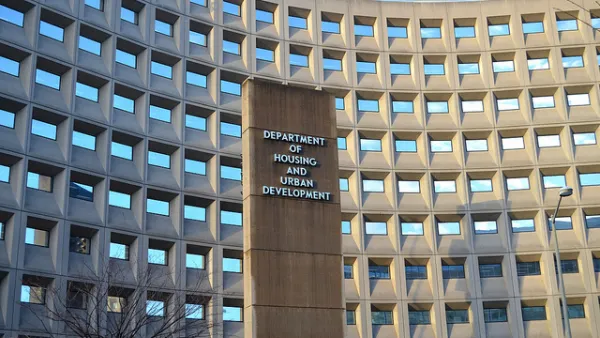
Trump Administration Budget Draft Could Cut HUD Budget, Planning Grants, More
The Washington Post has a big scoop about the early draft of the Trump Administration's budget for the Department of Housing Urban Development.
HUD Threatens Sanctions for Housing Authorities That Don’t Verify Resident Immigration Status
The Trump administration continues its crackdown on undocumented immigrants, claiming it is “rooting out abuse of taxpayer-funded resources.”

The state-sanctioned urbicide of Austin
People don’t kill cities. Freeways do.

US to reduce Colorado River water deliveries to Mexico
A new Colorado Treaty amendment reduces Mexico’s Colorado River water allocation by 250,000 acre feet.

New Jersey’s second-largest city bans standalone data centers
Jersey City will continue to allow co-location facilities, such as those meant for research institutions that store their own data.

Amtrak not solely to blame for New Jersey commuter rail's unreliability, report finds
A new study from the Garden State Initiative found that NJ Transit’s budget grew 20% across a 4 year period, but reliability declined significantly over the same period.

EPA erases limits on planet-warming pollution from power plants
Under Monday’s plan, power plants would still have some limits on how much mercury, arsenic and other contaminants they can emit.

Phoenix announces new on-demand transit service, more frequent RAPID buses
Both new services will launch in October, and are part of Phoenix's Project Effective Access Solutions for Easing Congestion.

FREE Course: Walkable City 1: Why Walkability?
After describing his path towards focusing on walkability as the essence of good planning, Jeff Speck marches through his five principal reasons for making more walkable places.
Reinventing Malls: Planning Alchemy—Turning Gray Fields Into Gold
The course focuses on the opportunities and imperatives that shape reinvention of mall sites.

Eagle County Government
Harvard University Graduate School of Design
Nashville Planning Department
The Architects Foundation
University of Cincinnati Online
The Pocatello Development Authority
The Urban Renewal Agency of the City of Pocatello
Journal of the American Planning Association