On April 7, the illinois Industrial Carbon Capture and Storage commenced operations, taking carbon that corn sequestered from the atmosphere and storing it safely almost a mile and a half underground in a sandstone formation.


, according to a thorough description by the Melbourne-based Global CCS Institute.
Computer models that seek to chart our planet’s energy and climate future have leaned heavily on BECCS as a way to power future transportation and electricity systems while nonetheless keeping the planet’s warming below the dangerous level of 2 degrees Celsius.
“This is the first large scale project in the world on biofuels, and it takes us down the road towards negative emissions, which is the exciting part,” said Jeff Erikson, director of the Global CCS Institute
ICCS is operated by the Archer Daniels Midland (ADM) Company and managed by the National Energy Technology Laboratory (NETL) under agreement with ADM, the University of Illinois through the Illinois State Geological Survey, Schlumberger Carbon Services, and Richland Community College.
Not one but two projects, both funded by U.S. Department of Energy
ICCS follows the earlier Illinois Basin Decatur Project (IBDP) led by the Midwest Geological Sequestration Consortium at the University of Illinois, funded largely by the U.S. Department of Energy in 2007. Carbon injection operations into the Mount Simon Sandstone begin in November 2011 and cease three years later. In January 2015, the U.S. Department of Energy announces the IBDP had successfully captured and stored approximately one million tonnes of CO2, according to the Global CCS Institute's timeline on ICCS.
ICCS receives its first DOE funding in June 2010, begins construction in August 2011, and opens on April 7.
Petra Nova plant ribbon-cutting
The plant's opening was overshadowed a week later by the ribbon-cutting, with U.S. Secretary of Energy Rick Perry participating, marking the opening of the Petra Nova project, the world’s largest post-combustion carbon capture project, at a coal-burning power plant at the W. A. Parish Electric Generating Station in Thompsons, Texas. The project, which commenced operations in January, showcases clean coal technology utilizing enhanced oil recovery.
While the Illinois and Texas plants utilize different applications of both capturing and storing carbon, they share what may be the biggest challenge facing all CCS operations: Without a price on carbon, these operations may not be economically viable. "Not every coal power plant sits near an old oil field," remarks Mooney in his piece on the Petra Nova project ribbon-cutting on April 13.
Read the full story: The quest to capture and store carbon – and slow climate change — just reached a new milestone

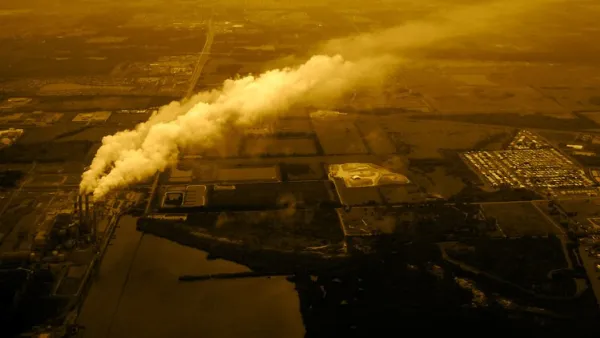
A Silver Bullet for Climate Change?
Even as the world (unsuccessfully) tries to formulate a treaty to get nations to reduce their carbon emissions, researchers indicate it may be too late - the tipping point may have been reached. But what if CO2 could be extracted from the air?
World's Largest Carbon Capture and Storage Project Breaks Ground in Texas
Construction began July 16 on the Petra Nova project, 27 miles from Houston. President Obama and many climate experts are banking on CCS to mitigate carbon emissions from the world's largest source of carbon emissions: coal burning power plants.
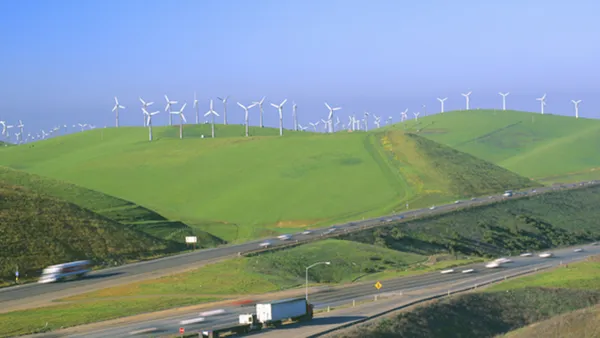
A Path for California to Get to Zero Carbon...And Below
A new study from Lawrence Livermore National Laboratory evaluates strategies to achieve former Gov. Jerry Brown's goal of carbon neutrality by 2045. Unlike other reports that study emission reductions, it evaluates "negative emissions" strategies.

Planetizen Federal Action Tracker
A weekly monitor of how Trump’s orders and actions are impacting planners and planning in America.

Amtrak, CN end decades-long dispute with eight-year agreement
The new operating agreement establishes an updated framework for the companies to work together, including processes to resolve disputes.

Judges permit Denver to divert 77,000 acre feet from the Colorado River for reservoir expansion
Overuse and climate change have caused the Colorado River’s water levels to plummet.

NYC DOT wants faster, more permanent street upgrades
The city is examining ways to build more concrete infrastructure without getting entangled in 'decades-long' projects.

'Something we’ve never seen before:' rising utility rates could strain city finances nationwide
Data centers, climate change and other factors have caused utility rates in the United States to increase by 38% since 2020.

Trump to overrule local leaders, lease millions of acres of America’s Pacific Island territories’ seafloors to mining companies
International law says that the Indigenous people of America’s territories have a right to prior and informed consent regarding projects that impact their countries.

FREE Course: Walkable City 1: Why Walkability?
After describing his path towards focusing on walkability as the essence of good planning, Jeff Speck marches through his five principal reasons for making more walkable places.
Reinventing Malls: Planning Alchemy—Turning Gray Fields Into Gold
The course focuses on the opportunities and imperatives that shape reinvention of mall sites.

Harvard University Graduate School of Design
KFH Group Inc.
Greater Baltimore Committee
The Architects Foundation
University of Cincinnati Online
The Pocatello Development Authority
The Urban Renewal Agency of the City of Pocatello