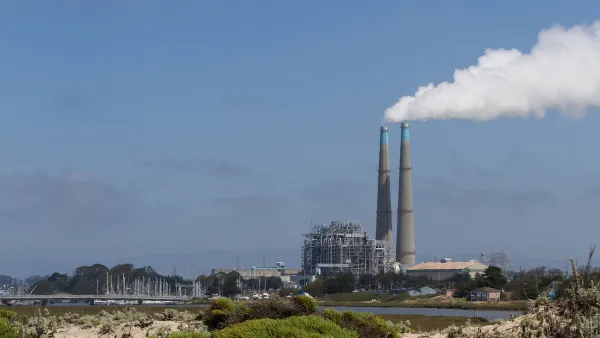
The country's first "clean coal" facility has also been described as "the world's largest post-combustion carbon capture system."


"The first large scale U.S. 'clean coal' facility was declared operational," earlier in January, reports Chris Mooney.
NRG Energy and JX Nippon Oil & Gas Exploration Corp. built the Petra Nova project outside Houston. The facility "captured carbon dioxide from the process of coal combustion for the first time in September, and has now piped 100,000 tons of it from the plant to the West Ranch oil field 80 miles away, where the carbon dioxide is used to force additional oil from the ground."
"The companies say that the plant can capture over 90 percent of the carbon dioxide released from the equivalent of a 240 megawatt, or million watt, coal unit, which translates into 5,000 tons of carbon dioxide per day or over 1 million tons per year," adds Mooney.
According to Mooney, the "post-combustion" process used at Petra Nova is distinct from the process of burning syngas. The Kemper Plant in Mississippi, expected to be operational by the end of this month, uses a syngas process.
Planetizen correspondent wrote a detailed background on the Petra Nova facility when it broke ground in July 2014.
Read the full story: America’s first ‘clean coal’ plant is now operational — and another is on the way

Can 'Clean Coal Technology' Be Cost-Effective for Natural Gas?
Nations have sunk billions of dollars into carbon capture and storage for coal plants and have little to show for it. A new natural gas demonstration plant outside Houston is confident it is up to the task — without using federal grants.
Making Natural Gas Power Plants Cleaner
Carbon capture and storage has long been associated with coal-burning power plants. Calpine Corp. hopes to apply the controversial technology to existing natural gas power plants, beginning with a pilot project to start this month in the Bay Area.
Controversial Clean Coal Plant is Subject of Investigative Journalism
Things have gone terribly wrong at Mississippi's Kemper County energy facility, a federally supported, $6.7 billion carbon capture and storage coal power plant that is now two years behind schedule and $4 billion over budget.

Planetizen Federal Action Tracker
A weekly monitor of how Trump’s orders and actions are impacting planners and planning in America.

California plans to bury El Niño’s downpour
If the state plays its cards right, it may be able to store a billion acre-feet of El Niño’s water in aquifers.

Desperate measures: Advocates weigh draining Lake Powell to fill Colorado River
Draining the reservoir could reduce evaporation losses by a couple hundred thousand acre-feet.

Chicago voters approve permanent festival grounds, penalty for vacant property owners
Currently, major summer and fall festivals take over public parks for weeks at a time, drawing criticism from nearby residents

NYC votes to cut outdoor dining red tape, speed up permitting
New York City also voted to allow the Department of Transportation to begin work on urgent projects before notifying elected officials.

California appears to reject Prop. 45
The proposition would have expanded the projects that qualify for a streamlined environmental review, effectively paring down the California Environmental Quality Act.

FREE Course: Walkable City 1: Why Walkability?
After describing his path towards focusing on walkability as the essence of good planning, Jeff Speck marches through his five principal reasons for making more walkable places.
Reinventing Malls: Planning Alchemy—Turning Gray Fields Into Gold
The course focuses on the opportunities and imperatives that shape reinvention of mall sites.

City of Rosemead
Rutgers University, Edward J. Bloustein School of Planning and Public Policy
One Hundred Miles
Hunter College, City University of New York (CUNY)
The Architects Foundation
University of Cincinnati Online
City of Cambridge
Montrose County
The Pocatello Development Authority