Long relegated to the back of the house, the kitchen as utility space is being replaced by the modern show kitchen. Located squarely front-of-house, newer kitchens often reinstate the "great room" idea.


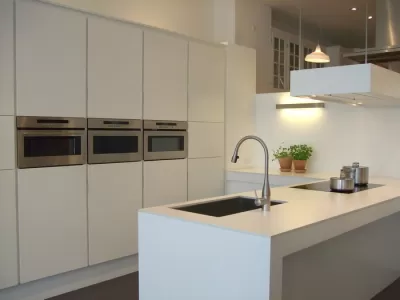
Over the past few decades, kitchens have been coming out of the shadows. Hallie Busta writes about why spaces for food preparation, traditionally considered unsightly and utilitarian, have become one of the showpieces of the modern house.
One factor is that residential design now prioritizes "showing in" as much as showing off. According to U.S. Commission of Fine Arts secretary Thomas Luebke, "'It was the inversion of a historic relationship, which was that the most important thing was the face on the street, and that was the social face [...] It changes the focus from one of the public ream to an extended private realm.'"
The open kitchen bucks a previous trend toward compartmentalizing the middle class household into many rooms, each with a separate function. "Since then, however, the trend has cycled and homeowners seek open plans that seamlessly connect dedicated food prep spaces at the back of the house with living and dining areas that span indoors and outdoors."
Read the full story: Building on History: A kitchen conundrum of historic proportions

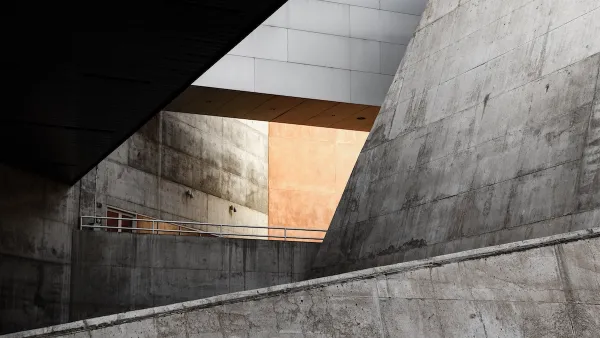
What ‘The Brutalist’ Teaches Us About Modern Cities
How architecture and urban landscapes reflect the trauma and dysfunction of the post-war experience.
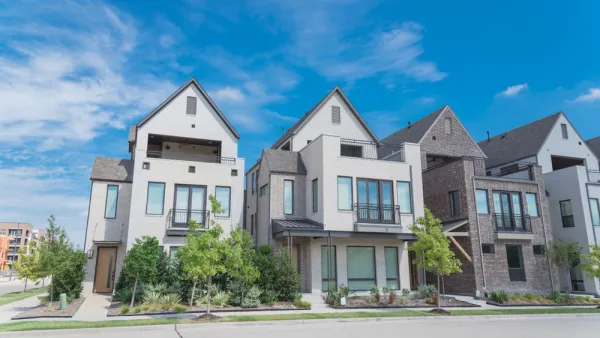
How the Drive for Profit Flattens the American Landscape
Mass-market production and the commodification of housing has led to a ‘flattening’ of design into a limited set of bland, homogeneous options.
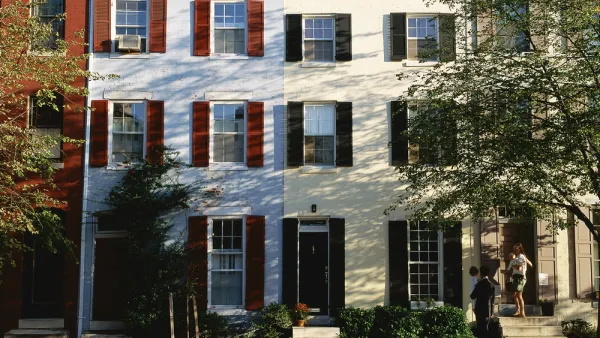
Is it a Rowhouse, or a Rowhome?
Philadelphia has long been acknowledged as the capital of rowhouses in the United States. It’s becoming more common for those rowhouses to be referred to as rowhomes.

Planetizen Federal Action Tracker
A weekly monitor of how Trump’s orders and actions are impacting planners and planning in America.

Amtrak, CN end decades-long dispute with eight-year agreement
The new operating agreement establishes an updated framework for the companies to work together, including processes to resolve disputes.

Northwest rail fans eager for Sept. 30 debut of Amtrak’s Airo fleet
Get ready for that new train smell and more seats. But they won’t go faster or run more frequently on the Cascades route in Washington and Oregon.

Brightline Florida files for bankruptcy
The transit company is over $5 billion in debt.

St. Louis Metro to test if single-car trains can reduce operating costs, maintain rider satisfaction
The pilot program will run from October to spring 2027, and begin with one single-car train operating on Metrolink’s Red and Blue lines.

Pennsylvania is building data centers in abandoned mines
Housing data centers in mines provides an alternative to destroying local forests and may spare residents from data centers’ noise and air pollution.

FREE Course: Walkable City 1: Why Walkability?
After describing his path towards focusing on walkability as the essence of good planning, Jeff Speck marches through his five principal reasons for making more walkable places.
Reinventing Malls: Planning Alchemy—Turning Gray Fields Into Gold
The course focuses on the opportunities and imperatives that shape reinvention of mall sites.

City of Thousand Oaks
City of Wisconsin Rapids
Harvard University Graduate School of Design
The Architects Foundation
University of Cincinnati Online
The Pocatello Development Authority
The Urban Renewal Agency of the City of Pocatello