In medium-sized cities and suburban areas, it's simply easier to drive your own car in most cases. But shared rides might still have a chance to catch on.


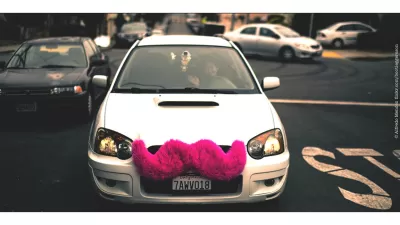
There's driving versus transit, and then there's driving versus rideshare. In places unsuited to transit, or where it's unavailable, are people accustomed to their cars willing to try sharing rides? That means not just taking Uber, for example, but being open to sharing an Uber ride with an unknown fellow passenger.
On Austin, Texas, Paul Mackie writes, "there is no problem parking anywhere in town, so driving is simply what Austinites do. It is a place with some options, like bikeshare and light rail, that make it easy to be a multimodal citizen in the core, but they are often lost against the ease of driving for people who live more than a few miles out."
However, services like a Mercedes-Benz on-demand shuttle pilot in Orange County, California have met with some success. According to the company's business innovation head, "Surprisingly, we were able to change behavior. People liked to be picked up in an on-demand shuttle in 10 to 15 minutes. And they started interacting better and opened a bigger sense of community in that area."
Mackie concludes with some of the reasons why riding (and driving) rideshare doesn't catch on. They include the cost of shared rides, lack of awareness that the option exists, low gas prices, concerns around liability, and lots of easy parking.
Read the full story: Will people ever share rides in small and mid-size cities?
Op-Ed: Why Uber Wasn't Welcome in Austin
In the spirit of civic self-congratulation, Austin resident Richard Parker writes about how the transportation network company giants canceled service after losing a referendum vote. He ascribes this victory to the city's enduring contrarian streak.
Report: Transportation Network Companies Would Benefit St. Louis
According to a Deloitte report, St. Louis commuters could save upwards of $220 million a year, with an additional $493 million in regional road construction savings. All the city needs to do is lift restrictions on rideshare.
Minnesota Lawmakers Reach Ride Share Compromise
A law awaiting the governor’s signature establishes wage rates for drivers. Ride share companies say if the law passes, they plan to continue service in the state.

Planetizen Federal Action Tracker
A weekly monitor of how Trump’s orders and actions are impacting planners and planning in America.

California plans to bury El Niño’s downpour
If the state plays its cards right, it may be able to store a billion acre-feet of El Niño’s water in aquifers.

Desperate measures: Advocates weigh draining Lake Powell to fill Colorado River
Draining the reservoir could reduce evaporation losses by a couple hundred thousand acre-feet.

Chicago voters approve permanent festival grounds, penalty for vacant property owners
Currently, major summer and fall festivals take over public parks for weeks at a time, drawing criticism from nearby residents

NYC votes to cut outdoor dining red tape, speed up permitting
New York City also voted to allow the Department of Transportation to begin work on urgent projects before notifying elected officials.

California appears to reject Prop. 45
The proposition would have expanded the projects that qualify for a streamlined environmental review, effectively paring down the California Environmental Quality Act.

FREE Course: Walkable City 1: Why Walkability?
After describing his path towards focusing on walkability as the essence of good planning, Jeff Speck marches through his five principal reasons for making more walkable places.
Reinventing Malls: Planning Alchemy—Turning Gray Fields Into Gold
The course focuses on the opportunities and imperatives that shape reinvention of mall sites.

City of Rosemead
Rutgers University, Edward J. Bloustein School of Planning and Public Policy
One Hundred Miles
Hunter College, City University of New York (CUNY)
The Architects Foundation
University of Cincinnati Online
City of Cambridge
Montrose County
The Pocatello Development Authority