Fast Company recently recognized the best ideas in social impact.



Fast Company has announced the winners of the first-ever World Changing Ideas Awards. The magazine chose 12 winners out of 1,000 entrees and 192 finalists. "Each of these projects represents the best of social entrepreneurship, where innovation and impact are intersecting," according to the post announcing the winners.
Among the winners are several ideas of direct relevance to planners, planning, and communities of all sizes, such as:
- Fair Value Commuting, by Joint Venture Silicon Valley. This idea would create incentives for shared commuting "by aggregating mobility services like Lyft and Car2Go in a single platform, incentivizing employees to make use of those services by fining single-occupancy vehicle commuters (who will be tracked on real-time commute dashboard), and supporting better public transportation and bike infrastructure."
- Grid OS, by Opus One. According to Fast Company, Grid OS isn't a clean energy source: "It’s a better way of managing the impact of clean energy on the grid." Improvements are achieved by data analysis software that models distributed energy sources in real time, "bringing greater visibility 'inside' the grid." Grid OS aims to provide a key benefit to the expanding use of microgrids.
- Homes for Hope, by the USC School of Architecture and Madworkshop Homeless Studio. Students from the USC School of Architecture "designed modular houses that can be stacked and provide fast and simple housing to get people off the streets."
Read the full story: Announcing The Winners Of The 2017 World Changing Ideas Awards
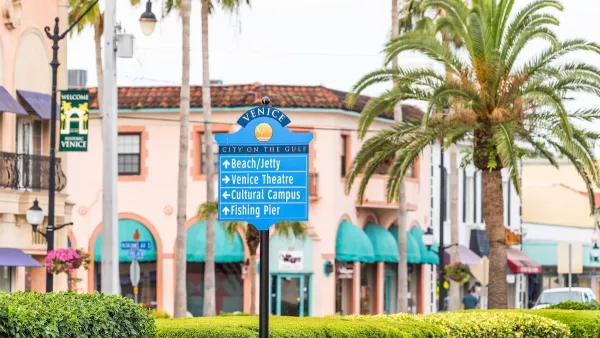
Learning From Venice, Florida
How a community planned in the 1920s has gracefully navigated change, offering a model for other places.

Report: 100 Trends Urban Planners Need to Know About
APA’s third annual Trend Report for Urban Planners is out and offers a comprehensive look at potential drivers of change that could impact communities and the work of planners for decades to come.
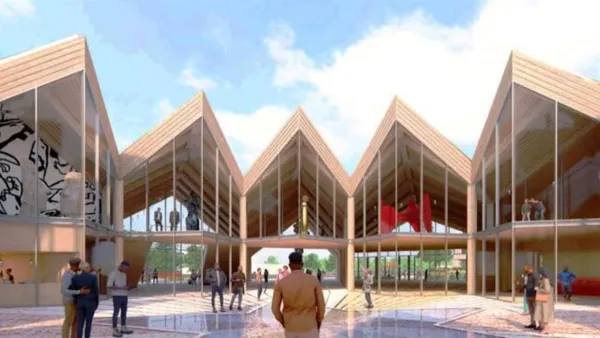
The Best, Worst, and Most Questionable in 2022 Architecture and Design
A list of innovative projects, intriguing design, and flummoxing failures.

Planetizen Federal Action Tracker
A weekly monitor of how Trump’s orders and actions are impacting planners and planning in America.

Washington state to charge fee to drivers with fuel-efficient cars
Revenue from the fee will go towards supporting the state’s highways.

Illinois considers spending $1 billion in taxpayer money on data center
A quantum computing campus and data center are currently under construction in Chicago.

Did data centers change how voters cast their ballots?
Texas, Ohio, and Georgia all flipped party control. But in rural counties, the effect of local data centers was mixed.

Amtrak invests in eight new Airo trainsets
The new trainsets will begin serving passengers in 2031.

HUD to end aid for mixed-immigration-status households
The new rule is projected to impact 80,000 people, nearly half of whom are children.

FREE Course: Walkable City 1: Why Walkability?
After describing his path towards focusing on walkability as the essence of good planning, Jeff Speck marches through his five principal reasons for making more walkable places.
Reinventing Malls: Planning Alchemy—Turning Gray Fields Into Gold
The course focuses on the opportunities and imperatives that shape reinvention of mall sites.

City of Charlotte
City of Rosemead
Rutgers University, Edward J. Bloustein School of Planning and Public Policy
University of Michigan School for Environment and Sustainability (SEAS)
Hunter College, City University of New York (CUNY)
The Architects Foundation
University District Partnership