Washington, D.C. is looking to cut back on one of the incentives that inspire commuters to drive to and from work.


"D.C. officials and transit advocates are pursuing a shift in the way employers offer commuting benefits to encourage more biking, walking and transit over solo driving," reports Luz Lazo.
The proposed policy, called the Transportation Benefits Equity Amendment Act of 2017, would allow workers to cash out of their free or subsidized parking option. The proposal "is one response to growing criticism that historically commuter benefits for drivers are better than those available to people who take other modes of transportation," according to Lazo.
Washington, D.C. already has a relatively high share of commuters choosing to walk, bike, or take transit instead of biking. Although 40 percent of commuters drive, the District is hoping to get that number down to 25 percent. Free parking has been shown to motivate solo automobile commuters, in a doctrine expressed most famously by Donald Shoup.
If approved, Washington, D.C.'s cash-out program would join California's statewide program as high-profile attempts to reduce the number of incentives for solo automobile commutes.
Read the full story: D.C. wants employers to pay workers not to drive to work


Has Anyone at USDOT Read Donald Shoup?
USDOT employees, who are required to go back to the office, will receive free parking at the agency’s D.C. offices — flying in the face of a growing research body that calls for pricing parking at its real value.
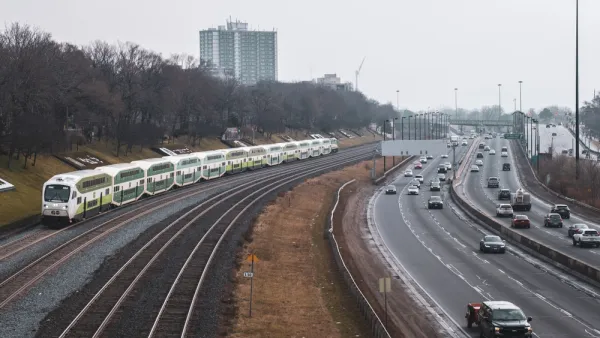
Less Free Parking for Transit Commuters in Southern Ontario
Transit planners in the region around Toronto are planning a "parking modernization" program that will charge for parking at GO stations and hope to provide new ways to access the system—without a car.
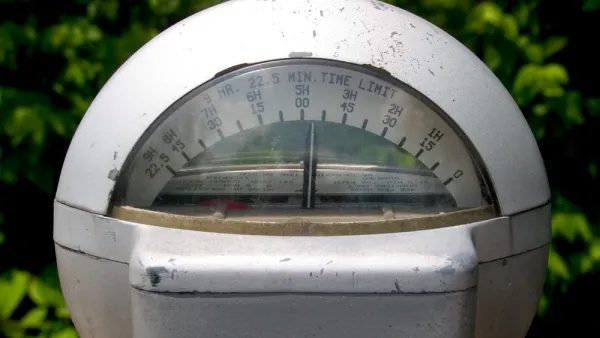
Demand-Based Pricing for On-Street Parking Pilot Finds Success in D.C.
It's rare to see a policy so effective in achieving its goals.

Planetizen Federal Action Tracker
A weekly monitor of how Trump’s orders and actions are impacting planners and planning in America.

California plans to bury El Niño’s downpour
If the state plays its cards right, it may be able to store a billion acre-feet of El Niño’s water in aquifers.

Chicago breaks ground on $3 billion megadevelopment
The new neighborhood, titled Foundry Park, will one day host 3,700 residences.

California High-Speed Rail Authority CEO resigns after $600,000 scandal
Under Ian Choudri, the authority used taxpayer dollars to fund first class flights and trips to nightclubs.

Want to study the Missouri River? Soon, you may need unanimous approval from 10 states
Legislation would require 10 governors’ permission to study or build projects moving water outside the basin.

Desperate measures: Advocates weigh draining Lake Powell to fill Colorado River
Draining the reservoir could reduce evaporation losses by a couple hundred thousand acre-feet.

FREE Course: Walkable City 1: Why Walkability?
After describing his path towards focusing on walkability as the essence of good planning, Jeff Speck marches through his five principal reasons for making more walkable places.
Reinventing Malls: Planning Alchemy—Turning Gray Fields Into Gold
The course focuses on the opportunities and imperatives that shape reinvention of mall sites.

City of Rosemead
Rutgers University, Edward J. Bloustein School of Planning and Public Policy
One Hundred Miles
Hunter College, City University of New York (CUNY)
The Architects Foundation
University of Cincinnati Online
City of Cambridge
Montrose County
The Pocatello Development Authority