California's 23-year-old "parking cash-out" program has been less than effective


After introducing the concept of the parking cash-out program—implemented as an incentive to encourage commuters out of their cars and into carpools, transit, or active commutes—Dan Weikel describes the problem with the program:
"The California Air Resources Board, the administrator, does not know how many employers or employees are participating, nor does it periodically survey workplaces to ensure compliance, although performance assessments were recommended more than a decade ago by the Legislative Analyst's Office, a nonpartisan oversight agency."
Moreover:
"Analysts noted that more outreach was necessary and that the eligibility rules were so narrowly drawn that the law applied to only about 3% of the 11 million free parking spaces provided by employers statewide."
The article goes into more detail about the benefits to air quality and CO2 emissions incurred by cash-out programs (when fully implemented), which were analyzed in detail by Donald Shoup in 1997. Shoup is quoted in the story expressing disappointment in the current state of the program.
Read the full story: Effectiveness of state's 'parking cash-out' program is unclear

Has Anyone at USDOT Read Donald Shoup?
USDOT employees, who are required to go back to the office, will receive free parking at the agency’s D.C. offices — flying in the face of a growing research body that calls for pricing parking at its real value.
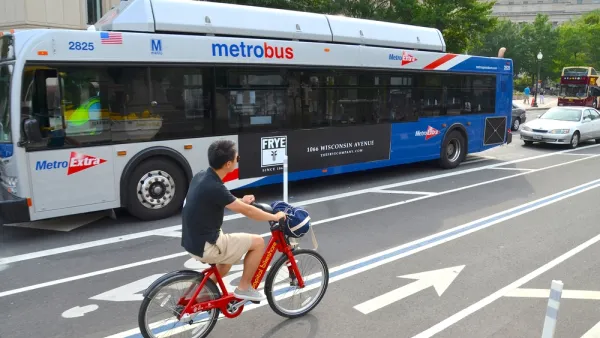
In D.C., Employers Will Refund Workers Who Leave the Car at Home
D.C. has passed a "parking cash-out" law that goes further than a few preexisting examples to reward commuters who leave their cars at home.
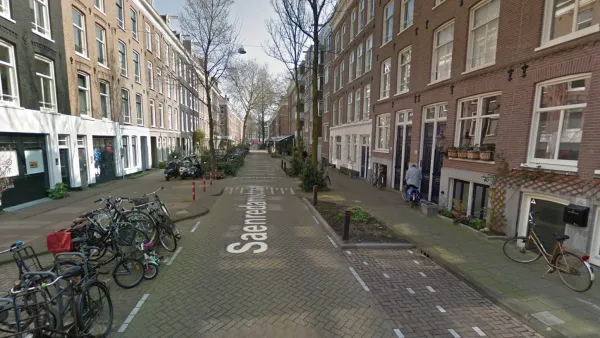
Watch: How to Remove Thousands of Parking Spaces
What the city of Amsterdam will gain by removing cars from on-street parking space.

Planetizen Federal Action Tracker
A weekly monitor of how Trump’s orders and actions are impacting planners and planning in America.

Eastern Nebraska is running out of electricity
Data centers and electrification are straining eastern Nebraska’s grid, throttling economic development.

Washington state to charge fee to drivers with fuel-efficient cars
Revenue from the fee will go towards supporting the state’s highways.

Instead of building new housing, LA developers are turning mansions into mega-mansions
In the richest areas, the number of houses valued at $30 million with demolition permits has skyrocketed since 2018.

Illinois considers spending $1 billion in taxpayer money on data center
A quantum computing campus and data center are currently under construction in Chicago.

As development costs rise, Boston moves to lessen affordable housing requirements
The Boston Zoning Commission and the City Council still need to approve Boston Mayor Michelle Wu’s proposed changes

FREE Course: Walkable City 1: Why Walkability?
After describing his path towards focusing on walkability as the essence of good planning, Jeff Speck marches through his five principal reasons for making more walkable places.
Reinventing Malls: Planning Alchemy—Turning Gray Fields Into Gold
The course focuses on the opportunities and imperatives that shape reinvention of mall sites.

City of Charlotte
City of Rosemead
Rutgers University, Edward J. Bloustein School of Planning and Public Policy
University of Michigan School for Environment and Sustainability (SEAS)
Hunter College, City University of New York (CUNY)
The Architects Foundation
University District Partnership
City of Cambridge
The Pocatello Development Authority