The Association of Collegiate Schools of Planning (ACSP) released a statement on the Trump Administration executive order that enacted a 90-day suspension of visas and other immigration benefits to all nationals of seven Middle Eastern countries.


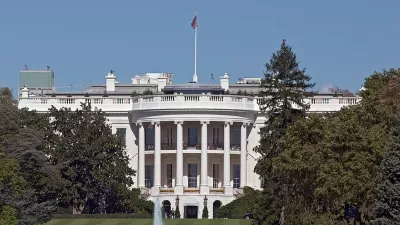
"ACSP officers and elected Governing Board members are deeply concerned about the recent executive order issued by the new White House administration that amounts to a ban of entry to the U.S. for citizens of seven majority-Muslim countries and halt admission of refugees, and other official statements concerning vulnerable populations, such as “Dreamers”, LGBTQ, and others," according to a post on the ACSP website.
The Trump travel ban has intersecting relevance to the ACSP, with the concerns of the academic community in mind (see, for example, articles by USA Today and CBS News) along with the many potential impacts of the ban, should it someday take effect, on issues affected by the work of planners.
The ACSP post includes a link to an online "Academics Against Immigration Executive Order" petition. At the time of this writing, the petition was signed by 42,216 academics.
FULL STORY: ACSP Statement on President Trump's Executive Order


How Might Tariffs and Deportations Affect Affordable Housing Development?
Many affordable housing developers worry Trump’s proposed taxes on imports and crackdown on immigration will be detrimental to the industry. Others hope deregulation reduces development costs enough to offset those effects. What’s the most likely outcome?

Two Demographic Firsts, Both Losses, for California
The nation's most populous state learned from the Census Bureau last month that it would lose a congressional district for the first time in its history. On Friday, it revealed that 2020 was the first year since 1850 to experience a population loss.

The Failures of the U.S.-Mexico Border Wall
Trump's promised "impenetrable" wall has proven to be anything but.

The state-sanctioned urbicide of Austin
People don’t kill cities. Freeways do.

US to reduce Colorado River water deliveries to Mexico
A new Colorado Treaty amendment reduces Mexico’s Colorado River water allocation by 250,000 acre feet.

New Jersey’s second-largest city bans standalone data centers
Jersey City will continue to allow co-location facilities, such as those meant for research institutions that store their own data.

Amtrak not solely to blame for New Jersey commuter rail's unreliability, report finds
A new study from the Garden State Initiative found that NJ Transit’s budget grew 20% across a 4 year period, but reliability declined significantly over the same period.

EPA erases limits on planet-warming pollution from power plants
Under Monday’s plan, power plants would still have some limits on how much mercury, arsenic and other contaminants they can emit.

Phoenix announces new on-demand transit service, more frequent RAPID buses
Both new services will launch in October, and are part of Phoenix's Project Effective Access Solutions for Easing Congestion.

FREE Course: Walkable City 1: Why Walkability?
After describing his path towards focusing on walkability as the essence of good planning, Jeff Speck marches through his five principal reasons for making more walkable places.
Reinventing Malls: Planning Alchemy—Turning Gray Fields Into Gold
The course focuses on the opportunities and imperatives that shape reinvention of mall sites.

Eagle County Government
Harvard University Graduate School of Design
Nashville Planning Department
The Architects Foundation
University of Cincinnati Online
The Pocatello Development Authority
The Urban Renewal Agency of the City of Pocatello
Journal of the American Planning Association