Though the drought is ending in much of California, it's too late for the million's of trees that have died due to the ravages of recent water shortages.


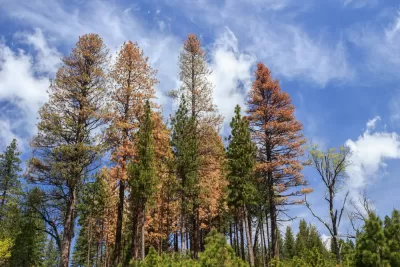
The Sierra Nevada mountains are home to 300-year-old ponderosa pines, but according to Bettina Boxall's reporting in the Los Angeles Times, the drought and beetles are killing of many of the oldest trees. "The U.S. Forest Service estimates that since 2010, more than 102 million drought-stressed and beetle-ravaged trees have died across 7.7 million acres of California forest." Boxall writes. The majority of this die-off happened last year. "The western Sierra pine forest as it was 100 years ago is not coming back," Boxall reports.
The stress from the drought left the pines vulnerable to beetles, which ultimately kill the trees. "Western pine beetles’ squiggles mar the tan inner bark, or phloem, where the dark brown females had tunneled and laid their eggs," Boxall writes. In an increasingly warm world, ecologists say the damage is unlikely to ever be reversed.
Read the full story: What all those dead trees mean for the Sierra Nevada

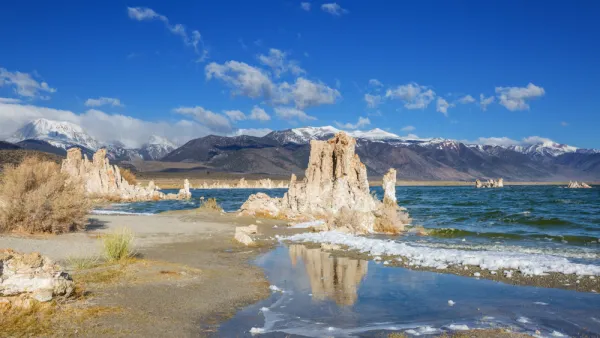
Los Angeles (and Climate Change) Seriously Threaten Air Quality at Mono Lake
With water levels habitually low, officials from the Eastern Sierra say they are "headed for a showdown” with L.A.
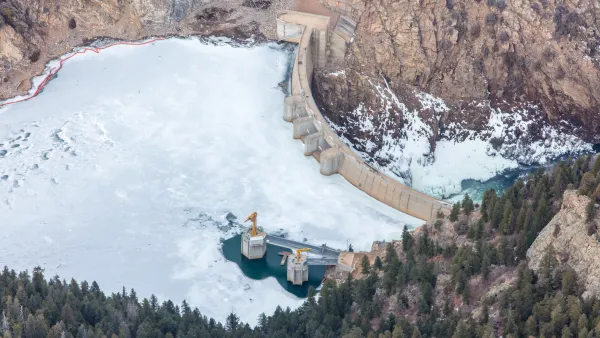
Instead of water, sediment from droughts and wildfire is choking U.S. dams
Sediment has filled 8% of dam storage capacity in the United States. Because of climate change, researchers expect it will only accumulate quicker.

122 ‘carbon major’ companies to blame for half of the West’s lost water
A first-of-its-kind study found that “carbon major” companies drained the west of trillions of gallons of water.

Planetizen Federal Action Tracker
A weekly monitor of how Trump’s orders and actions are impacting planners and planning in America.

California plans to bury El Niño’s downpour
If the state plays its cards right, it may be able to store a billion acre-feet of El Niño’s water in aquifers.

Chicago breaks ground on $3 billion megadevelopment
The new neighborhood, titled Foundry Park, will one day host 3,700 residences.

Satanic place names
From streams and lakes to valleys and canyons, I mapped more than 1,000 places named after the Devil.

California High-Speed Rail Authority CEO resigns after $600,000 scandal
Under Ian Choudri, the authority used taxpayer dollars to fund first class flights and trips to nightclubs.

Want to study the Missouri River? Soon, you may need unanimous approval from 10 states
Legislation would require 10 governors’ permission to study or build projects moving water outside the basin.

FREE Course: Walkable City 1: Why Walkability?
After describing his path towards focusing on walkability as the essence of good planning, Jeff Speck marches through his five principal reasons for making more walkable places.
Reinventing Malls: Planning Alchemy—Turning Gray Fields Into Gold
The course focuses on the opportunities and imperatives that shape reinvention of mall sites.

City of Rosemead
Rutgers University, Edward J. Bloustein School of Planning and Public Policy
One Hundred Miles
Hunter College, City University of New York (CUNY)
The Architects Foundation
University of Cincinnati Online
City of Cambridge
Montrose County
The Pocatello Development Authority