With water levels habitually low, officials from the Eastern Sierra say they are "headed for a showdown” with L.A.


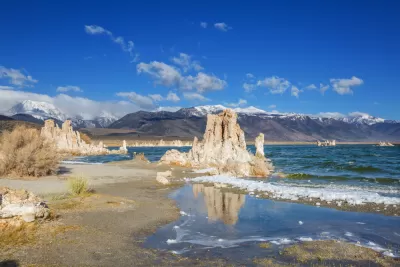
When the Sierra Nevada sees less snow, Mono Lake—which makes up part of the water supply for Los Angeles—sees less water, and its exposed shoreline becomes the “largest source of powder-fine air pollution in the United States,” reports Louis Sahagun for the Los Angeles Times.
Now, officials in the Great Basin say that climate change means that water levels are too low, too often, and “that means if Los Angeles keeps taking its allocated share, it will lead to a decline in lake levels and increased health risks for those exposed to windblown dust from the receding shoreline.”
Water supply has always been a contentious issue in Southern California, with recent questions centered around growth and the potential for another major drought. Possibly with that in mind, recent plans from the cities of the region has focused on reducing the need to import water.
FULL STORY: A changing climate at Mono Lake could mean more dust storms in the Eastern Sierra — or less water for L.A.

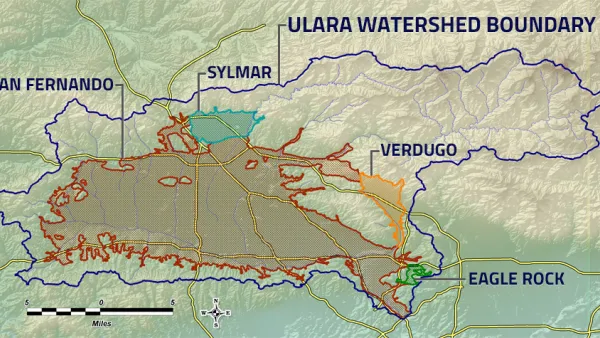
Superfund Project to Deliver Massive Water Supply Boon to Los Angeles
The semi-arid region of Los Angeles is often mistaken for a desert, but the local water supply is also constrained by the environmental sins of the 20th century. The water supply equation of Los Angeles will soon change, however.
Southern California's Water Conservation and Storage Efforts Paying Off
The region has poured over a billion dollars into storage infrastructure and demand management policies in anticipation of worsening drought conditions.
Las Vegas' Growth Tied to its Dwindling Water Supply
Las Vegas has almost maximized its growth potential given projects for its future water supply—something has to give.

Planetizen Federal Action Tracker
A weekly monitor of how Trump’s orders and actions are impacting planners and planning in America.

The state-sanctioned urbicide of Austin
People don’t kill cities. Freeways do.

US to reduce Colorado River water deliveries to Mexico
A new Colorado Treaty amendment reduces Mexico’s Colorado River water allocation by 250,000 acre feet.

5 New England states march closer to 800 megawatt wind energy project
Securing federal approval for the project may be complicated under the Trump administration, which has historically been hostile towards domestic wind power.

Baltimore to break ground on $50 million Transit Priority Project
The project will bring faster bus trips, safer streets and better bike connections to Baltimore.

Airbnb launches $250 million 'last-dollar financing' housing accelerator, makes first investment in Austin
The company will put $6.4 million towards affordable housing development in Texas’ capital.

FREE Course: Walkable City 1: Why Walkability?
After describing his path towards focusing on walkability as the essence of good planning, Jeff Speck marches through his five principal reasons for making more walkable places.
Reinventing Malls: Planning Alchemy—Turning Gray Fields Into Gold
The course focuses on the opportunities and imperatives that shape reinvention of mall sites.

Eagle County Government
Harvard University Graduate School of Design
Nashville Planning Department
The Architects Foundation
University of Cincinnati Online
The Pocatello Development Authority
The Urban Renewal Agency of the City of Pocatello
Journal of the American Planning Association