Just because a study says density is more effective than energy system retrofits in reducing emissions, doesn't mean that we have to settle for just one.


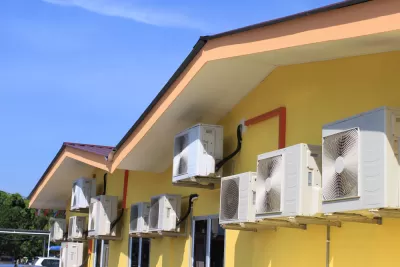
"Densifying cities could cut emissions more than doing energy retrofits on buildings," reports Ben Adler.
Those findings are included in a new study published in Proceedings of the National Academy of Sciences.
The researchers projected emissions from buildings under different potential urban densities between now and 2050. They found that denser development patterns lead to lower emissions because people live and work in smaller units that consume less energy. Attached buildings are also more efficient for heating and cooling.
Read the full story: You Are My Density

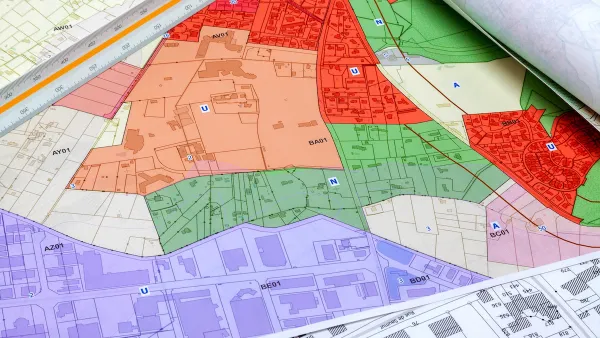
How Zoning Affects Greenhouse Gas Emissions
As the urgency of the climate crisis increases, a paper in the Notre Dame Law Review argues that increased density is not a universally effective strategy to reduce emissions and that different strategies are needed for low-carbon places versus high-carbon ones.

The Path to Hyperdensity
The federal government has an opportunity to make a generational investment in the country's infrastructure that could fundamentally shift the way we live and move around cities.

Study: Low-Rise Density Is Better for the Climate
New research analyzing carbon emissions throughout the life cycle of buildings shows that high-rises create more carbon emissions than dense, low-rise developments.

Planetizen Federal Action Tracker
A weekly monitor of how Trump’s orders and actions are impacting planners and planning in America.

‘Going backwards:’ Baltimore mayor, students rally against state's transit funding plan
Maryland's proposed six-year plan provides no funding for Baltimore’s BMORE bus program and reduces its road maintenance funding.

Detroit to transform waterfront with $2.2 billion investment
Developers will convert about 18 acres of unused parking lot space into civic spaces.

Californians can now transform balconies into power generators
Gov. Gavin Newsom has legalized plug-in solar technology, which allows residents to plug solar panels directly into their outlets

85-year-old ranch is Texas’ newest state park
The 650 acre ranch is one of the largest parcels of land along Lake Palestine.

MIT to create AI-powered hub for public transportation companies
Google awarded the project, titled the Public Transit Intelligence Hub, $2.1 million in funding.

FREE Course: Walkable City 1: Why Walkability?
After describing his path towards focusing on walkability as the essence of good planning, Jeff Speck marches through his five principal reasons for making more walkable places.
Reinventing Malls: Planning Alchemy—Turning Gray Fields Into Gold
The course focuses on the opportunities and imperatives that shape reinvention of mall sites.

City of Thousand Oaks
City of Wisconsin Rapids
Harvard University Graduate School of Design
The Architects Foundation
University of Cincinnati Online
Northern Illinois Transit Authority (NITA)
The Pocatello Development Authority
The Urban Renewal Agency of the City of Pocatello