Traffic safety and Vision Zero advocates scored a major victory recently at the New York Court of Appeals.


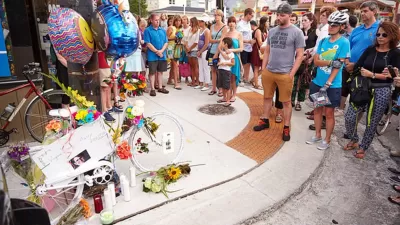
"The Court of Appeals, New York’s highest court, ruled that New York City and other municipalities can be held liable for failing to redesign streets with a history of traffic injuries and reckless driving," reports Brad Aaron.
The ruling dates back to a crash from 2004, when "Louis Pascarella, driving 'at least' 54 miles per hour in a 30 mph zone, struck 12-year-old Anthony Turturro as he rode a bike on Gerritsen Avenue," according to Aaron. "A civil trial jury awarded Turturro $20 million, finding the city 40 percent responsible for the crash. The city appealed, and the case made its way to the Court of Appeals, which last month rendered a 6-1 finding in favor of Turturro."
The case could add ammunition to the idea that transportation engineering and transportation agencies are responsible for unsafe road conditions. The fact that departments of transportation can be held liable when they create or allow unsafe road conditions should inspire more actions to implement traffic calming measures. In New York City, for example, Mayor de Blasio "has resisted calls from the City Council to increase funding for Vision Zero street improvements."
Read the full story: State’s Highest Court Holds NYC Liable for Injuries on Streets Without Traffic Calming

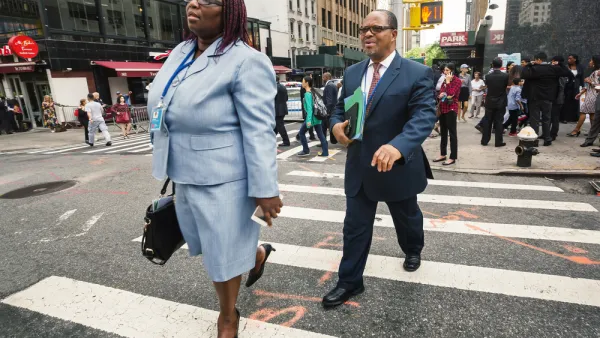
Which Road Safety Interventions Work Best?
Data from New York City show that traffic safety projects that give pedestrians the most space are the most effective in reducing fatal crashes and injuries.
Traffic Safety Requires a 'Psychological Speed Limit'
New York Governor Andrew M. Cuomo signed a bill this month reducing the speed limit in New York City. But what will it take to get people to actually slow down, especially when speeding is an acceptable social norm?
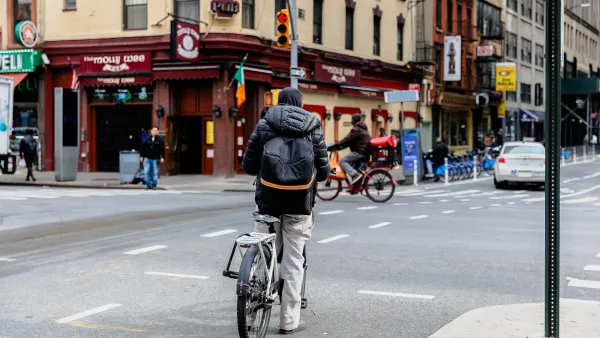
NYC e-bike injury study highlights 'critical infrastructure deficiencies'
The sharp rise in e-mobility injuries points to a need for safer roads, not more punitive laws.

Planetizen Federal Action Tracker
A weekly monitor of how Trump’s orders and actions are impacting planners and planning in America.

The state-sanctioned urbicide of Austin
People don’t kill cities. Freeways do.

US to reduce Colorado River water deliveries to Mexico
A new Colorado Treaty amendment reduces Mexico’s Colorado River water allocation by 250,000 acre feet.

Nation's most wind-powered state turns to coal as data centers increase energy demand
For the first time in decades, Iowa has increased its generation of coal power.

NYC cools commuters with city's first rain garden above a bus stop
New York City officials say the plants in the rain garden can absorb 16 gallons of rainwater during heavy storms.

Brightline West’s future may rely on $6 billion federal loan
The company has until Nov. 2 to make a $400 million equity investment into its proposed high-speed rail line.

FREE Course: Walkable City 1: Why Walkability?
After describing his path towards focusing on walkability as the essence of good planning, Jeff Speck marches through his five principal reasons for making more walkable places.
Reinventing Malls: Planning Alchemy—Turning Gray Fields Into Gold
The course focuses on the opportunities and imperatives that shape reinvention of mall sites.

Eagle County Government
Harvard University Graduate School of Design
Nashville Planning Department
The Architects Foundation
University of Cincinnati Online
The Pocatello Development Authority
The Urban Renewal Agency of the City of Pocatello
Journal of the American Planning Association