Boston Mayor, Martin Walsh's, climate change plan is one of the most thorough in the country. The question remains: Will any of the plan be put into action?


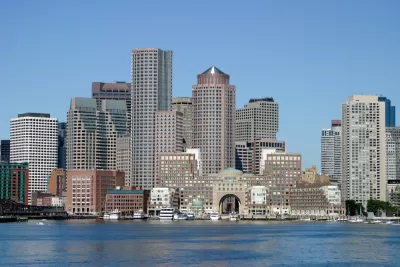
The office of Boston Mayor Martin Walsh released a climate preparedness report on December 8, 2016. "The 400-page report outlines an array of options for 'climate-proofing' the city, including the creation of a decentralized energy grid, the construction of a barrier in Boston Harbor to protect against storm surges, [and] expanded flood insurance coverage," according to reporting from Rob Deleo in Next City.
Still, Deleo worries that the plan may be easier to construct than to realize. "Anticipatory policymaking is political kryptonite. Voters reward politicians for projects that procure immediate benefits, not long-term and potentially intrusive planning projects that take years to produce clearly observable outputs," he writes. While Deleo argues that preparation will be much less expensive than later repair, preparation can be difficult to sell to voters who can be more easily persuaded by immediate problems than looming disasters.
Read the full story: Why Boston’s Mayor Alone Can’t Save the City From Flooding
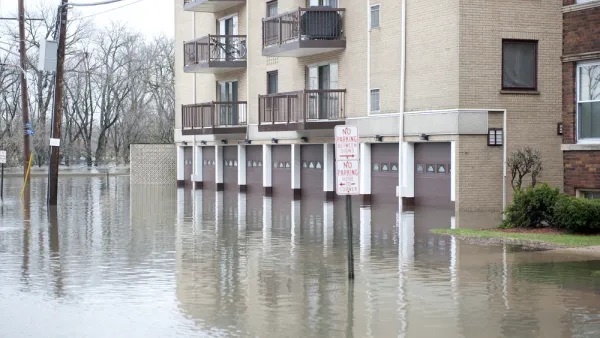
New Study Reveals Massive, Unaccounted Flood Risk
The Federal Emergency Management Agency undercounts the humber of homes at substantial risk of flooding by some 70 percent, according to a report released this week.
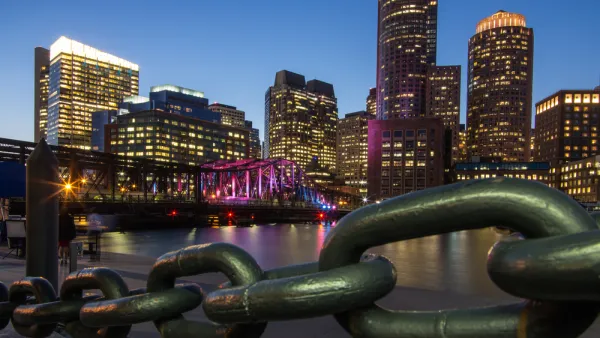
Boston Unveils New Shoreline Resilience Plan
With the news of the UN Intergovernmental Panel on Climate Change's report predicting dire consequences of climate change and seal level rise still fresh, the city of Boston has released a plan for how it will shore up its coastline.
Boston to Require Developers to Detail Resilience Efforts
Hurricane Sandy served as a wake up call for many cities to the dangers of rising seas and more extreme storms. To prepare for these threats, officials in Boston have proposed zoning rules that would require developers to detail mitigation measures.

Planetizen Federal Action Tracker
A weekly monitor of how Trump’s orders and actions are impacting planners and planning in America.

Washington state to charge fee to drivers with fuel-efficient cars
Revenue from the fee will go towards supporting the state’s highways.

Trump to blast ‘hydrocarbon highway’ through ‘world’s longest art gallery’
Environmental and historic preservation groups are suing to stop the project.

A data center developer is going back on its promises to nearby residents
Data center developer HostDime originally promised free at-home Wi-Fi to residents of Eatonville, Florida.

Trump administration takes another swing at Solar for All
Since the Environmental Protection Agency announced its intent to end Solar for All in August 2025, two federal judges have ruled in favor of protecting it.

The MTA wants to entice international bus manufacturers to set up shop in America
The MTA hopes to create more competition for better bus options while still "buying American."

FREE Course: Walkable City 1: Why Walkability?
After describing his path towards focusing on walkability as the essence of good planning, Jeff Speck marches through his five principal reasons for making more walkable places.
Reinventing Malls: Planning Alchemy—Turning Gray Fields Into Gold
The course focuses on the opportunities and imperatives that shape reinvention of mall sites.

City of Charlotte
City of Rosemead
Rutgers University, Edward J. Bloustein School of Planning and Public Policy
University of Michigan School for Environment and Sustainability (SEAS)
Hunter College, City University of New York (CUNY)
The Architects Foundation
University District Partnership