This year has seen a significant uptick in wildfires across much of the South, spurred by drought and heat waves. The region's pattern of development increases the potential danger.


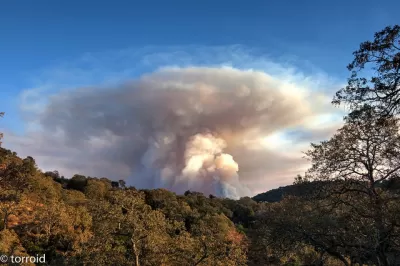
The fires are spreading to another region of the country. "According to the Forest Service, wildfires have scorched more than 1.4 million acres in the South so far this year — more than double the total in 2015."
Many Western states are accustomed to this reality, but some areas of the South need to adapt. Lyndsey Gilpin writes, "Fueled by possible signals of climate change such as widespread drought and record-setting heat waves, this wildfire season may be a sign of things to come for the Southeast, which is densely populated and, in some areas, less accustomed to dealing with so many vicious fires."
"The dry, hot conditions in the region have been building since early this year. The U.S. Drought Monitor shows that 24.2 million people in its Southeast region live in drought-affected areas." In addition, tropical storms, which usually account for much of the region's precipitation, stayed near the coasts this year.
The South's pattern of semi-rural development increases the threat to property. "Wildfires present such danger in the region partly because a significant amount of the population — more than in any other region — lives in wildland-urban interfaces, where development meets natural areas."
Read the full story: The Southeast Is Becoming A Wildfire Hotspot
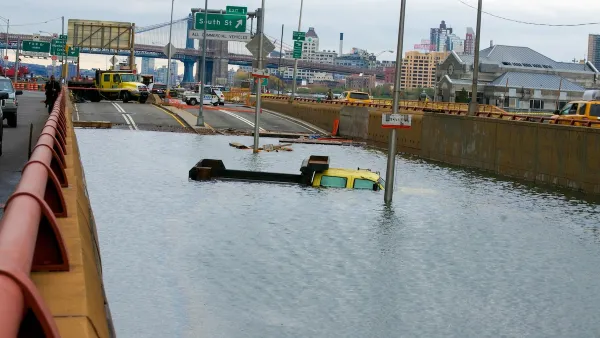
Over a Quarter of US Homes Face ‘Severe or Extreme’ Climate Risk
The number of U.S. homes at risk from hurricanes, fires, or flooding is valued at close to $13 trillion.
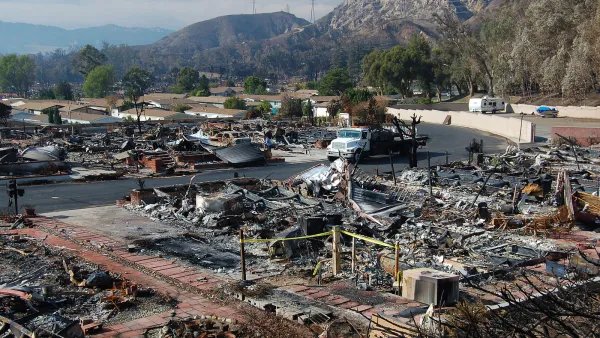
U.S. Communities Increasingly at Risk of Extreme Weather Events
As development pushes into more wildfire-prone areas and climate change makes extreme weather conditions more common, more Americans are experiencing the destructive impacts of climate disasters.
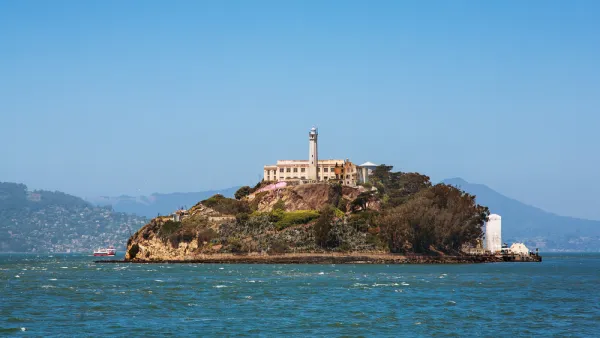
Climate Change Already Obvious in California
We've all seen the maps that show the water rising around the edges of costal and waterfront communities as sea-level rise and climate change take effect. A new report shows the effects that have already changed the state of California.

Planetizen Federal Action Tracker
A weekly monitor of how Trump’s orders and actions are impacting planners and planning in America.

California plans to bury El Niño’s downpour
If the state plays its cards right, it may be able to store a billion acre-feet of El Niño’s water in aquifers.

Desperate measures: Advocates weigh draining Lake Powell to fill Colorado River
Draining the reservoir could reduce evaporation losses by a couple hundred thousand acre-feet.

Chicago voters approve permanent festival grounds, penalty for vacant property owners
Currently, major summer and fall festivals take over public parks for weeks at a time, drawing criticism from nearby residents

NYC votes to cut outdoor dining red tape, speed up permitting
New York City also voted to allow the Department of Transportation to begin work on urgent projects before notifying elected officials.

California appears to reject Prop. 45
The proposition would have expanded the projects that qualify for a streamlined environmental review, effectively paring down the California Environmental Quality Act.

FREE Course: Walkable City 1: Why Walkability?
After describing his path towards focusing on walkability as the essence of good planning, Jeff Speck marches through his five principal reasons for making more walkable places.
Reinventing Malls: Planning Alchemy—Turning Gray Fields Into Gold
The course focuses on the opportunities and imperatives that shape reinvention of mall sites.

City of Rosemead
Rutgers University, Edward J. Bloustein School of Planning and Public Policy
One Hundred Miles
Hunter College, City University of New York (CUNY)
The Architects Foundation
University of Cincinnati Online
City of Cambridge
Montrose County
The Pocatello Development Authority