The benefits of authentic community are extensive. Maybe even transcendent. But how do we get to that point? Scott Doyon's latest blog has a few thoughts.


"Looking at the types of neighborhoods ... where many if not most people lack the option of just buying their way out of their problems — should tell us something."
"When we need each other we naturally organize ourselves in particular ways. Those ways work, from a purely functional standpoint. But they also work on a deeper level. By bringing us closer and enabling the give-and-take of daily human negotiation, they also make us something more. Something better."
"There’s the idea of community as it’s often presented in marketing literature and then there’s this. When people say they yearn for community, whether they realize it or not, this is what they’re pining for."
Scott Doyon references Kristen Jeffers of the Black Urbanist and Michael Harriot's The Caucasian's Guide to Black Neighborhoods to broach this subject, and then looks at sharing economy tools like Josephine to talk about alternative approaches to community building.
Read the full story: Achieving Community: Let’s get real

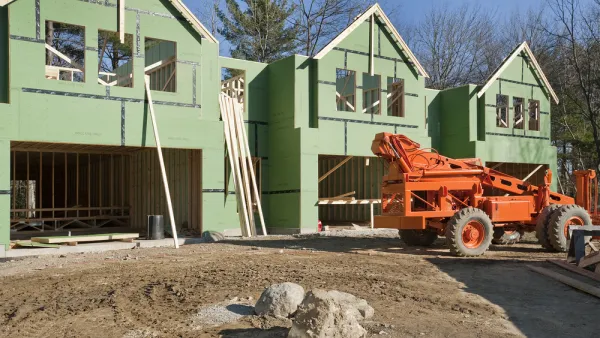
Affordable Housing Finance: Show Me the Money
Ben Brown continues his weekly blog series in lead-up to the day-long exploration at CNU Savannah, "Affordability: The Intersection of Everything."
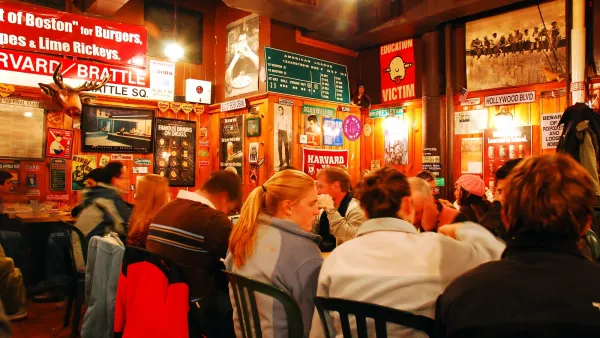
The Restaurant Industry’s ‘Missing Middle’
Locally owned restaurants affordable to middle-income families are disappearing or being forced to raise prices as costs grow.
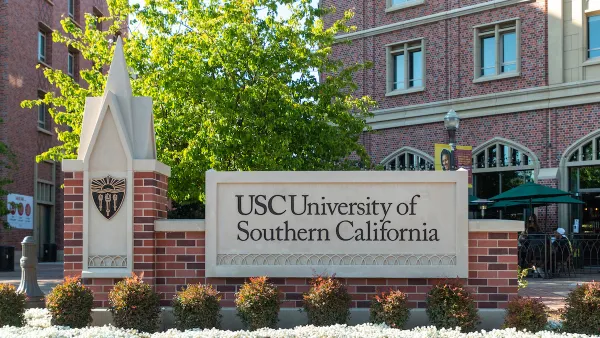
Sustainability Expert Becomes Dean of USC’s School of Public Policy
Chris Boone, a sustainability leader, becomes dean of the USC Price School of Public Policy, where he aims to advance interdisciplinary solutions and sustainability initiatives while building on the school’s legacy of public policy leadership.

Planetizen Federal Action Tracker
A weekly monitor of how Trump’s orders and actions are impacting planners and planning in America.

California plans to bury El Niño’s downpour
If the state plays its cards right, it may be able to store a billion acre-feet of El Niño’s water in aquifers.

Chicago breaks ground on $3 billion megadevelopment
The new neighborhood, titled Foundry Park, will one day host 3,700 residences.

California High-Speed Rail Authority CEO resigns after $600,000 scandal
Under Ian Choudri, the authority used taxpayer dollars to fund first class flights and trips to nightclubs.

Want to study the Missouri River? Soon, you may need unanimous approval from 10 states
Legislation would require 10 governors’ permission to study or build projects moving water outside the basin.

Desperate measures: Advocates weigh draining Lake Powell to fill Colorado River
Draining the reservoir could reduce evaporation losses by a couple hundred thousand acre-feet.

FREE Course: Walkable City 1: Why Walkability?
After describing his path towards focusing on walkability as the essence of good planning, Jeff Speck marches through his five principal reasons for making more walkable places.
Reinventing Malls: Planning Alchemy—Turning Gray Fields Into Gold
The course focuses on the opportunities and imperatives that shape reinvention of mall sites.

City of Rosemead
Rutgers University, Edward J. Bloustein School of Planning and Public Policy
One Hundred Miles
Hunter College, City University of New York (CUNY)
The Architects Foundation
University of Cincinnati Online
City of Cambridge
Montrose County
The Pocatello Development Authority