Santa Monica is the first city in California to adopt an ordinance requiring new single-family homes be built to net-zero energy standards.


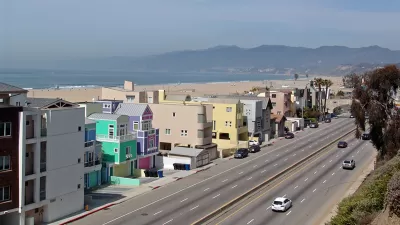
"The Santa Monica, CA, City Council last week approved an ordinance requiring new single-family homes built in the city to be net-zero energy based on the standards set forth in the 2016 California Green Building Standards Code," reports Hallie Busta for Construction Dive.
"Santa Monica is proud to take a global lead in zero net energy building standards that put the State’s environmental policy to action. Council's adoption of this new ordinance reflects our city's continued commitment to the environment," said Mayor Tony Vazquez in a statement announcing the new ordinance.
According to Busta, the California Energy Commission will still have to approve the ordinance. "Previously, the California Public Utilities Commission put forth a roadmap for all residential buildings in the state to be net-zero energy by 2020 and all commercial buildings to be so by 2030."
Read the full story: Santa Monica, CA wants all new housing to be net-zero energy
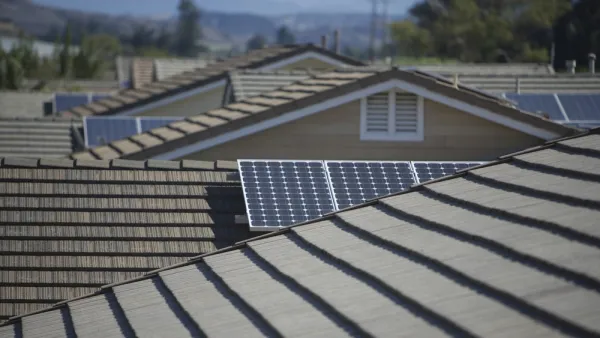
California to Require Solar on New Residential Buildings
The California Energy Commission will decide on new energy standards for residential construction this week.
Planning for a Microgrid: Santa Monica Reclaims Industrial Space for Renewable Energy
Cities throughout California, including Santa Monica, have been awarded research and development funding through the California Energy Commission to plan community-scale microgrid solutions.
Report Shows Which States Lead the Net-Zero Building Market
Although net-zero buildings have yet to scale to mass adoption, a new report hopes to inspire architects and developers to join the ranks of the most energy efficient buildings in the country.

Planetizen Federal Action Tracker
A weekly monitor of how Trump’s orders and actions are impacting planners and planning in America.

Washington state to charge fee to drivers with fuel-efficient cars
Revenue from the fee will go towards supporting the state’s highways.

Trump to blast ‘hydrocarbon highway’ through ‘world’s longest art gallery’
Environmental and historic preservation groups are suing to stop the project.

Data centers need power – lower income, rural residents pay the price
In 2025, data centers paid only 38% of the energy infrastructure costs linked to their growth, with households, especially rural and low-income residents, bearing the remaining burden.

MBTA Green Line project moved to next phrase of CIG program
The modernization effort will cost $4.08 billion.

22-mile pedestrian and bike path to encircle Atlanta by 2030
The project will also support affordable housing.

FREE Course: Walkable City 1: Why Walkability?
After describing his path towards focusing on walkability as the essence of good planning, Jeff Speck marches through his five principal reasons for making more walkable places.
Reinventing Malls: Planning Alchemy—Turning Gray Fields Into Gold
The course focuses on the opportunities and imperatives that shape reinvention of mall sites.

City of Charlotte
City of Rosemead
Rutgers University, Edward J. Bloustein School of Planning and Public Policy
University of Michigan School for Environment and Sustainability (SEAS)
Hunter College, City University of New York (CUNY)
The Architects Foundation
University District Partnership