The California Energy Commission will decide on new energy standards for residential construction this week.


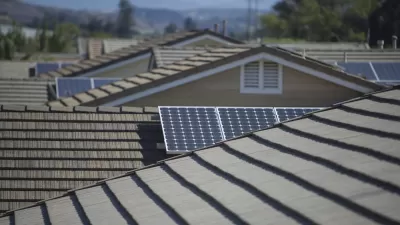
"Now, California is on the verge of making solar standard on virtually every new home built in the Golden State," reports Jeff Collins.
The California Energy Commission will vote next week on new energy standards mandating solar panels for most new homes starting in 2020.
The decision to require solar marks a departure from a potential standard that requires net zero energy standards. Collins includes a discussion of the distinction between these two policy paths.
As for the details of the new energy standards, Collins reports: "The new solar mandate would apply to all houses, condos and apartment buildings up to three stories tall that obtain building permits after Jan. 1, 2020." There are exceptions, which Collins lists in the article.
Another important angle for the new energy requirements are the additional cost solar arrays and other features of the proposed energy standard will add to housing construction. "The new energy standards add about $25,000 to $30,000 to the construction costs compared with homes built to the 2006 code," according to estimates cited in the article.
FULL STORY: California to become first U.S. state mandating solar on new homes

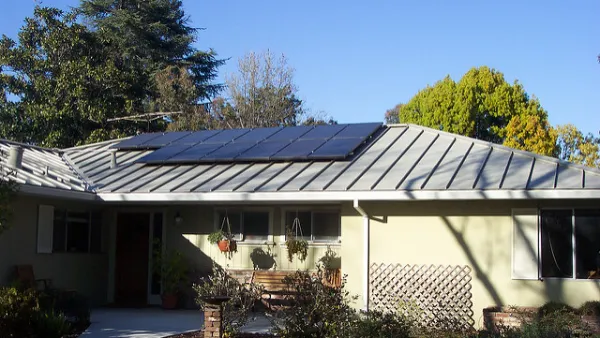
Details of the Golden State's Residential Solar Requirement
San Francisco Chronicle energy reporter David R. Baker sheds some light on the nation's first state building code requiring that solar panels be included in new home construction, adopted by the California Energy Commission on May 9.
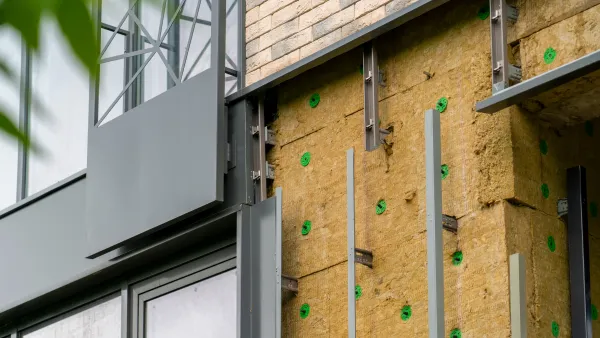
‘Passive House’ Standard Gaining Ground in Multifamily Housing
Developers in Chicago and around the country are taking notice of a design standard that encourages energy efficiency and sustainable materials.

Fighting Climate Change With Green Building Standards
Localities in Canada's Durham Region are implementing green building regulations to promote sustainable development and reduce resource use.

Planetizen Federal Action Tracker
A weekly monitor of how Trump’s orders and actions are impacting planners and planning in America.

The state-sanctioned urbicide of Austin
People don’t kill cities. Freeways do.

US to reduce Colorado River water deliveries to Mexico
A new Colorado Treaty amendment reduces Mexico’s Colorado River water allocation by 250,000 acre feet.

Colorado’s Largest Data Center Could Rise Next to Homes — Without a Public Hearing
The proposed campus would consume 11 times the power of Denver International Airport; as it has across the country, opposition mounts.

5 New England states march closer to 800 megawatt wind energy project
Securing federal approval for the project may be complicated under the Trump administration, which has historically been hostile towards domestic wind power.

Baltimore to break ground on $50 million Transit Priority Project
The project will bring faster bus trips, safer streets and better bike connections to Baltimore.

FREE Course: Walkable City 1: Why Walkability?
After describing his path towards focusing on walkability as the essence of good planning, Jeff Speck marches through his five principal reasons for making more walkable places.
Reinventing Malls: Planning Alchemy—Turning Gray Fields Into Gold
The course focuses on the opportunities and imperatives that shape reinvention of mall sites.

Eagle County Government
Harvard University Graduate School of Design
Nashville Planning Department
The Architects Foundation
University of Cincinnati Online
The Pocatello Development Authority
The Urban Renewal Agency of the City of Pocatello
Journal of the American Planning Association