Results showing progress in the fight to end traffic fatalities have disappeared, just like some of the safety projects installed under the banner of Vision Zero.


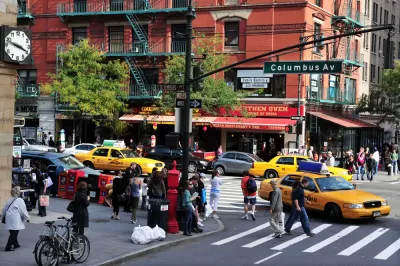
Nicole Gelinas reflects on a deadly week on the streets of New York City—"six people killed in car crashes in just two days"—following a "bloody summer for walkers and bicyclists."
According to Gelinas, the death toll raises the question of how seriously Mayor Bill de Blasio is taking his Vision Zero campaign to end road deaths by 2024. According to Gelinas, the city reduced traffic deaths an encouraging amount in 2014 and 2015, but 2016 isn't looking likely to continue that trend.
Gellinas suggests that the city isn't doing enough, fast enough, to invest in pedestrian and bike safety. The city has also worked to opposite effect recently, as exemplified by city's recent decision to remove "pedestrian islands along Brooklyn’s dangerous Eastern Parkway," designed "to help schoolchildren cross the street more safely."
An article by David Meyer puts that decision in perspective:
DOT removed pedestrian islands on Eastern Parkway in Crown Heights yesterday, undoing years of street safety advocacy work on the part of local residents and community board members with no public process, and no one in the de Blasio administration is taking responsibility.
Meyer's article also shows evidence of the buck being passed around by the Mayor's Office, the NYPD, and the DOT. A follow-up article the next day, also by Meyer, reports that Mayor de Blasio eventually blamed the decision on an unnamed local politician.
Read the full story: Why de Blasio hit a wall on stopping traffic deaths

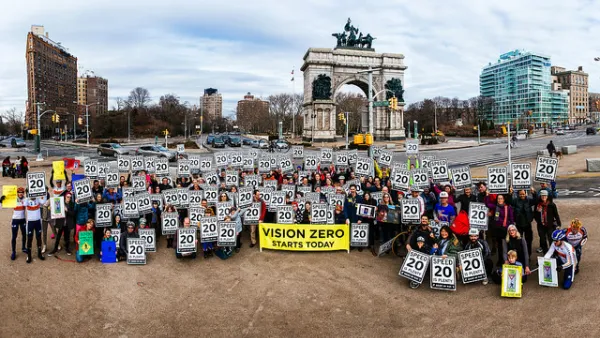
Zero Vision Zero: Streets Deadlier Now Than When De Blasio Started
Mayor Bill de Blasio in 2014 set a goal to eliminate traffic fatalities from New York City. Now, with de Blasio preparing to leave office, more people are dying on the city's streets than when he made that announcement.
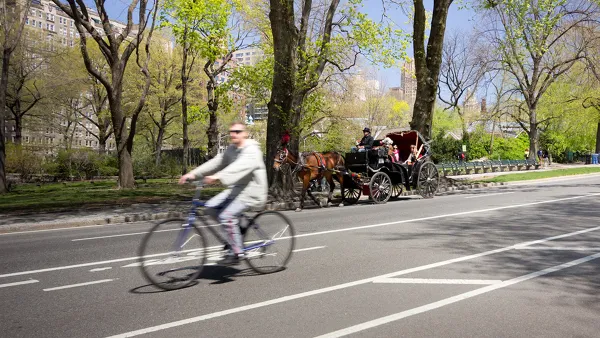
After Compromise, 'Streets Master Plan' Headed for Approval in New York City
The New York City Council is expected to pass a "Streets Master Plan" this week that City Council Speaker Corey Johnson describes as designed to "break the car culture."
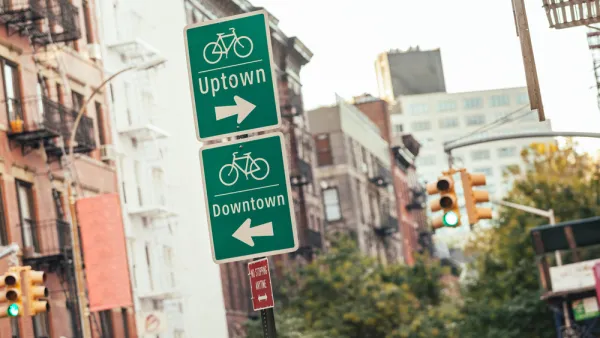
After 17 Deaths in 2019, New York Has a New Bike Safety Plan
Vision Zero has tragically failed 17 people on bikes in New York City this year, and Mayor Bill de Blasio couldn't stick with the status quo any longer.

Planetizen Federal Action Tracker
A weekly monitor of how Trump’s orders and actions are impacting planners and planning in America.

Amtrak, CN end decades-long dispute with eight-year agreement
The new operating agreement establishes an updated framework for the companies to work together, including processes to resolve disputes.

Northwest rail fans eager for Sept. 30 debut of Amtrak’s Airo fleet
Get ready for that new train smell and more seats. But they won’t go faster or run more frequently on the Cascades route in Washington and Oregon.

St. Louis Metro to test if single-car trains can reduce operating costs, maintain rider satisfaction
The pilot program will run from October to spring 2027, and begin with one single-car train operating on Metrolink’s Red and Blue lines.

Pennsylvania is building data centers in abandoned mines
Housing data centers in mines provides an alternative to destroying local forests and may spare residents from data centers’ noise and air pollution.

If Corpus Christi can’t revive desalination plant project, it may owe Texas $235 million
Earlier this month, city officials declined to pursue developing the plant for the second time in a year.

FREE Course: Walkable City 1: Why Walkability?
After describing his path towards focusing on walkability as the essence of good planning, Jeff Speck marches through his five principal reasons for making more walkable places.
Reinventing Malls: Planning Alchemy—Turning Gray Fields Into Gold
The course focuses on the opportunities and imperatives that shape reinvention of mall sites.

City of Thousand Oaks
City of Wisconsin Rapids
Harvard University Graduate School of Design
The Architects Foundation
University of Cincinnati Online
The Pocatello Development Authority
The Urban Renewal Agency of the City of Pocatello