The expanded Dallas Streetcar began service the Bishop Arts District this week, an expansion of three-quarters-of-a-mile beyond the original route.


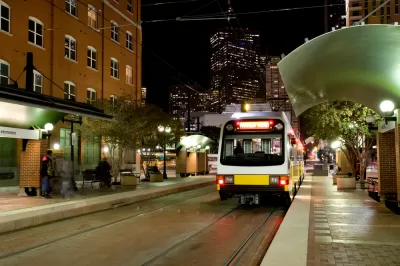
Bill Zeeble reports on the occasion of the first day of service of an expanded Dallas Streetcar. The line, with the nation's first hybrid-powered streetcars, opened a year and a half ago, with service between Downtown and Methodist Hospital. Now the line travels an extra three-quarters-of-a-mile to the popular Bishop Arts District.
Rides on the streetcar are still free, though the article quotes Frank Honeycutt, from the Dallas Public Works Department, who says that the free cost of admission might not be a permanent feature of streetcar service.
The streetcar will require federal funding to complete its subsequent expansion plans—to the Kay Bailey Hutchison Convention Center in Downtown and also connecting to the McKinney Trolley line uptown.
FULL STORY: Dallas Streetcar Extension To Bishop Arts District Rolls Out

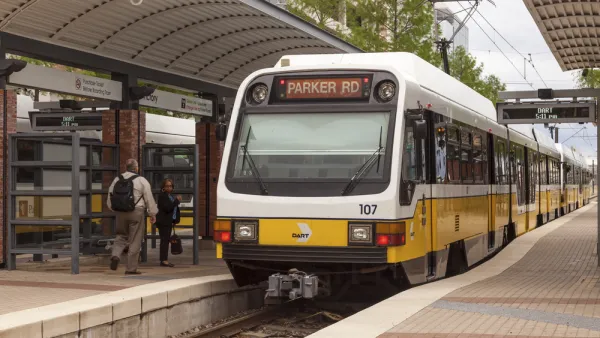
Dallas Council Begrudgingly Keeps Downtown Streetcar Alive
Council members complain that the Oak Cliff Streetcar is a "vanity project" that drains money from other potential transit improvements.
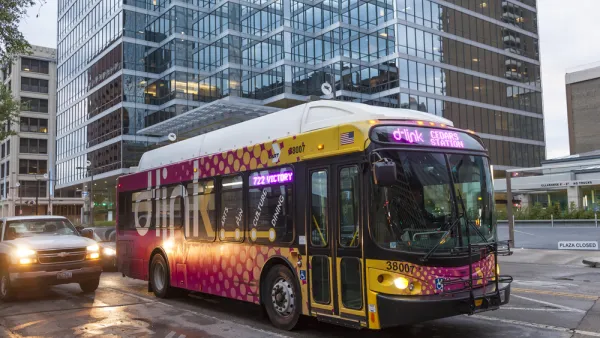
Editorial: Expand Bus Service in Dallas
An Dallas Morning News editorial suggests DART spending should favor bus service over train service to make more efficient use of its funds.
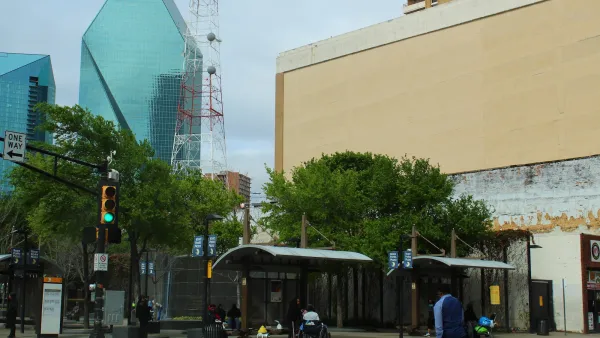
Dallas transit to invest up to $71.5M in upgraded bus shelters
The new shelters will feature solar-powered lighting and materials designed to protect riders from extreme weather.

Planetizen Federal Action Tracker
A weekly monitor of how Trump’s orders and actions are impacting planners and planning in America.

The state-sanctioned urbicide of Austin
People don’t kill cities. Freeways do.

US to reduce Colorado River water deliveries to Mexico
A new Colorado Treaty amendment reduces Mexico’s Colorado River water allocation by 250,000 acre feet.

Mamdani overhauls NYC's Vision Zero plan with 100 new policy goals
The overhaul aims to reduce traffic deaths and make streets safer for pedestrians, cyclists and drivers through lower speed limits, new safety infrastructure and more.

Amtrak not solely to blame for New Jersey commuter rail's unreliability, report finds
A new study from the Garden State Initiative found that NJ Transit’s budget grew 20% across a 4 year period, but reliability declined significantly over the same period.

EPA erases limits on planet-warming pollution from power plants
Under Monday’s plan, power plants would still have some limits on how much mercury, arsenic and other contaminants they can emit.

FREE Course: Walkable City 1: Why Walkability?
After describing his path towards focusing on walkability as the essence of good planning, Jeff Speck marches through his five principal reasons for making more walkable places.
Reinventing Malls: Planning Alchemy—Turning Gray Fields Into Gold
The course focuses on the opportunities and imperatives that shape reinvention of mall sites.

Eagle County Government
Harvard University Graduate School of Design
Nashville Planning Department
The Architects Foundation
University of Cincinnati Online
The Pocatello Development Authority
The Urban Renewal Agency of the City of Pocatello
Journal of the American Planning Association