The village of Shishmaref would be the first town in the United States to decide to move in the face of climate change.


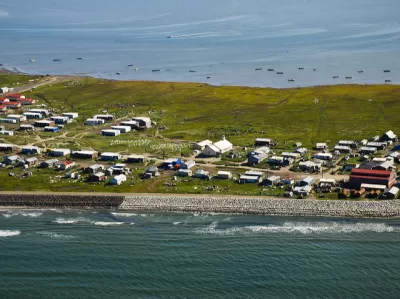
"The residents of a small coastal Alaskan village have voted to move to the mainland because of rising sea levels, but they may not have the funds to do it," according to an article by Amanda Holpuch.
"The 600-person village of Shishmaref, located on an island just north of the Bering Strait, has for decades been ravaged by erosion tied to climate change, leading residents to seek a more sustainable place to live," adds Holpuch.
The decision follows a special election held earlier this week. Of the 600 residents, 89 voted to relocate, and 78 voted to remain. One large, remaining hurdle for relocating: the cost. A 2004 U.S. Army Corps of Engineers report estimated a cost of $180 million to move the town. The same report also estimated a cost of $110 million to build the necessary infrastructure for the town to stay where it is.
Holpuch also reports that the U.S. Government Accountability Office estimates that 31 villages face "imminent threats" from flooding and coastal erosion. Shishmaref is the first to decide to relocate. In February, however, a group of Native Americans in Louisiana become the country's first climate refugees.
FULL STORY: Alaskan village threatened by rising sea levels votes for costly relocation

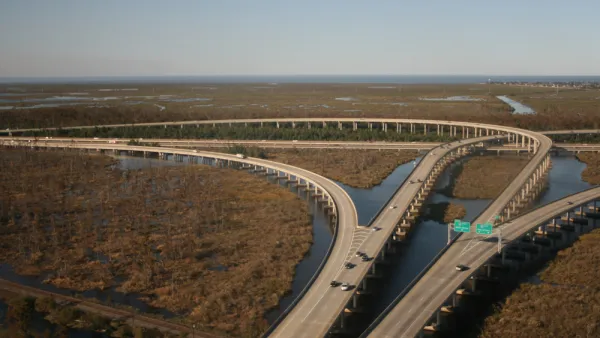
$50 Billion Coastal Master Plan Updated in Louisiana
Louisiana is losing coastal lands, quickly, along with the habitat and economic resources located there. A Coastal Master Plan plots $50 billion in spending to protect the coast.
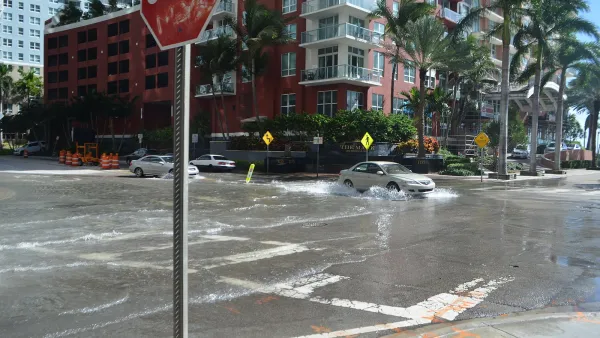
Florida Home Insurance Prices Increasingly a Burden for Residents
Climate change is coming for the state of Florida, and it’s already showing up in the insurance market.
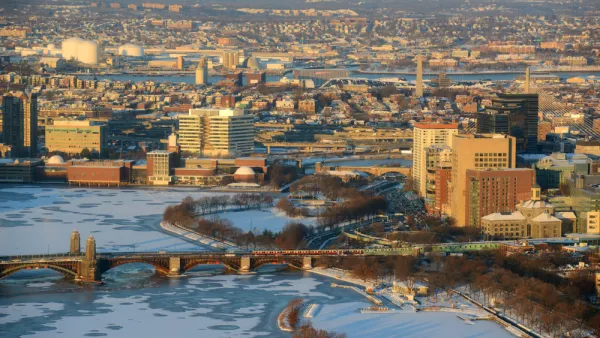
Tracking Boston’s Emissions Reduction Progress
The Boston Foundation published the “Inaugural Boston Climate Progress Report” earlier this month. Other U.S. cities should follow their lead.

Planetizen Federal Action Tracker
A weekly monitor of how Trump’s orders and actions are impacting planners and planning in America.

The state-sanctioned urbicide of Austin
People don’t kill cities. Freeways do.

US to reduce Colorado River water deliveries to Mexico
A new Colorado Treaty amendment reduces Mexico’s Colorado River water allocation by 250,000 acre feet.

Brightline West’s future may rely on $6 billion federal loan
The company has until Nov. 2 to make a $400 million equity investment into its proposed high-speed rail line.

LA Metro’s ultimatum: no extra buses for LA28 if federal funding isn’t imminently secured
If Metro does not provide additional buses, LA28 organizers will have to find a new way to manage Olympic traffic. LA28’s budget does not include a line item for transit.

Colorado’s Largest Data Center Could Rise Next to Homes — Without a Public Hearing
The proposed campus would consume 11 times the power of Denver International Airport; as it has across the country, opposition mounts.

FREE Course: Walkable City 1: Why Walkability?
After describing his path towards focusing on walkability as the essence of good planning, Jeff Speck marches through his five principal reasons for making more walkable places.
Reinventing Malls: Planning Alchemy—Turning Gray Fields Into Gold
The course focuses on the opportunities and imperatives that shape reinvention of mall sites.

Eagle County Government
Harvard University Graduate School of Design
Nashville Planning Department
The Architects Foundation
University of Cincinnati Online
The Pocatello Development Authority
The Urban Renewal Agency of the City of Pocatello
Journal of the American Planning Association