A bill moving through the California Legislature, SB 734, would extend the reach of legislation from 2011 that benefitted the defunct Farmers Field football stadium in downtown Los Angeles.



"Two Hollywood mega-projects could mark the Los Angeles skyline years sooner than planned if state lawmakers pass a bill intending to cut down on lawsuits against large developments in California," reports Liam Dillon.
"Under the bill, both projects — a $1-billion redevelopment of the Crossroads of the World complex and a $200-million hotel and residential development at the corner of Yucca Street and Argyle Avenue — would receive a new defense against potential lengthy litigation under the state’s main environmental law governing development," adds Dillon.
Though SB 734 would assist these two developments and others already underway in Los Angeles and San Francisco, the bill's reach is potentially much broader. It would expedite litigation through the California Environmental Quality Act (CEQA) for "any project in California that costs more than $100 million to build, provides for higher wages for construction workers and meets strict targets for greenhouse gas emissions and renewable energy."
Read the full story: Hollywood skyscrapers are in line for environmental fast-tracking

California lawmakers approve bill that would shield housing, sports arena project from environmental lawsuits
The bill passed the Assembly with 72 votes out of a possible 80 and later cleared the Senate on a unanimous vote.
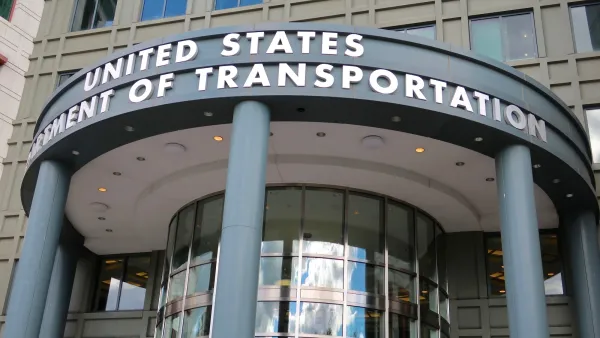
DOT Will Use AI to Write “Good Enough” Regulations: “We’re Flooding the Zone”
The agency wants to speed up the rulemaking process to as little as 30 days.

Land Use: Chasing Utopia, 2025?
History has taught us the risks of undervaluing the power of planning decisions. Overvaluing them might be just as dangerous.

Planetizen Federal Action Tracker
A weekly monitor of how Trump’s orders and actions are impacting planners and planning in America.

California plans to bury El Niño’s downpour
If the state plays its cards right, it may be able to store a billion acre-feet of El Niño’s water in aquifers.

Desperate measures: Advocates weigh draining Lake Powell to fill Colorado River
Draining the reservoir could reduce evaporation losses by a couple hundred thousand acre-feet.

Housing is the top priority of Seattle’s sole new councilmember
Jenks campaigned on building 1,000 new units of affordable housing.

New tax cuts may slash $1.5 billion in funding for Miami transit, public parks
Amendment 3 will save Miami-Dade homeowners $2,700 in 2028.

Arizona, Wisconsin, Pennsylvania hope to finally advance climate goals post-midterms
The three states have spent years under Republican or divided control.

FREE Course: Walkable City 1: Why Walkability?
After describing his path towards focusing on walkability as the essence of good planning, Jeff Speck marches through his five principal reasons for making more walkable places.
Reinventing Malls: Planning Alchemy—Turning Gray Fields Into Gold
The course focuses on the opportunities and imperatives that shape reinvention of mall sites.

City of Rosemead
Rutgers University, Edward J. Bloustein School of Planning and Public Policy
One Hundred Miles
University of Michigan School for Environment and Sustainability (SEAS)
Hunter College, City University of New York (CUNY)
The Architects Foundation
City of Cambridge
Montrose County
The Pocatello Development Authority