The U.S. Department of Transportation announced the latest round of TIGER grants on July 28.


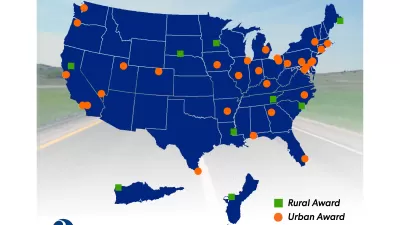
"The U.S. Dept. of Transportation’s Transportation Investment Generating Economic Recovery (TIGER) program announced 40 new winners on July 28, distributing $484 million to applicants from around the country. Competition was fierce with 585 applications," according to the Construction Equipment website.
"The Chicago Transit Authority (CTA) won the largest single grant of $25 million to help upgrade Chicago's Green Line 'L' Garfield Station," adds the article. $20 million grants went to New Haven, Connecticut; Flint, Michigan; and Salt lake City, Utah.
A separate article by Tom Ichniowski digs deeper into the new group of TIGER grant winners, breaking down the funding on non-geographic lines: "Pedestrian and bicycle paths received $97 million, followed by $93 million for transit projects, $54 million for maritime infrastructure, and $47 million for passenger and freight rail." Ichniowski also notes that the TIGER program, though popular with local leaders, "lacks a multiyear authorization—something the Obama administration had proposed—and, instead, has relied on year-by-year congressional appropriations."
The U.S. Department of Transportation also released a document with details on the entire round of grant funding [pdf].
Read the full story: US DOT Picks Winners of $484M in TIGER Grants
New RAISE Grant Program Replaces BUILD Grants at the U.S. Department of Transportation
The policy whiplash from the Obama administration to the Trump administration and now to the Biden administration continues.

Corrected: The Bell Tolls for the TIGER Grant Program
The Trump Administration signaled a desire to scrap a funding program that helped fund transit, pedestrian, and bike infrastructure. A new program likely focused on rural and toll roads could take its place.
Federal Judge Rules Trump Can’t Tie Transportation Funding to Immigration Policy
The judge said the administration did not offer “any plausible connection” between transportation projects and immigration enforcement.

Planetizen Federal Action Tracker
A weekly monitor of how Trump’s orders and actions are impacting planners and planning in America.

Washington state to charge fee to drivers with fuel-efficient cars
Revenue from the fee will go towards supporting the state’s highways.

Illinois considers spending $1 billion in taxpayer money on data center
A quantum computing campus and data center are currently under construction in Chicago.

‘Demolition of our heritage:’ Some US tribes speak out against BAAJA
A coalition of indigenous groups in the United States are concerned about provisions in the bill that may weaken their ability to halt large energy projects.

How LA’s new mayor plans to tackle affordable housing crisis
Mayor-elect Nithya Raman has proposed overhauling the city’s permitting process.

Interactive map reveals Pennsylvania's abandoned oil, gas wells — many on residential property
It is difficult for residents to know if a well is near their home, or if it poses a threat to them.

FREE Course: Walkable City 1: Why Walkability?
After describing his path towards focusing on walkability as the essence of good planning, Jeff Speck marches through his five principal reasons for making more walkable places.
Reinventing Malls: Planning Alchemy—Turning Gray Fields Into Gold
The course focuses on the opportunities and imperatives that shape reinvention of mall sites.

City of Charlotte
City of Rosemead
Rutgers University, Edward J. Bloustein School of Planning and Public Policy
University of Michigan School for Environment and Sustainability (SEAS)
Hunter College, City University of New York (CUNY)
The Architects Foundation
University District Partnership