The Better Bike Share Conference convened in Philadelphia on June 22-24, 2016. Attendees gathered to find solutions for challenges of equity, social justice, and mobility in the country's emerging bikeshare infrastructure.



April Corbin tells the story of the Better Bike Share Conference, held recently in Philadelphia, through the use of Storify and a collection of Tweets blasted out under the #bikeshare4all hashtag.
Among those giving presentations at the event were Tamika Butler, executive director of the Los Angeles County Bicycle Coalition, and Philadelphia Mayor Jim Kenney.
Yes @SimplySJG @betterbikeshare!! There is a difference between equity and buzz phrase of the moment smart growth! #bikeshare4all
— Tamika Butler (@TamikaButler) June 23, 2016
"All public space is shared space." - @PhillyMayor on role of govt making it safer for people on bikes on roads #bikeshare4all
— Marisa Jones (@marisacjones) June 23, 2016
The most dangerous streets are in the poorest neighborhoods. Not just guns. Crashes. #bikeshare4all pic.twitter.com/t1fwcp7PG7
— Jim Saksa (@Saksappeal) June 23, 2016
Corbin also produced a separate article to examine one of the big ideas from the opening presentation by Tamika Butler: How are we supposed to talk about equity when we don’t even have a shared definition half the time?
The issue of equity in bikeshare has been gaining prevalence in the discussions about transit and mobility. A 2014 report by the Mineta Transportation Institute dug into the systematic challenges of delivering bikeshare to low-income neighborhoods. Washington, D.C.'s bikeshare system, Capital Bikeshare, made news in April 2015 when data revealed a widening gap in use between people identifying as white, Hispanic, and black. A more recent article from May 2016 presents a kind of playbook for bikeshare equity.
FULL STORY: The Better Bike Share Conference: A tweet roundup

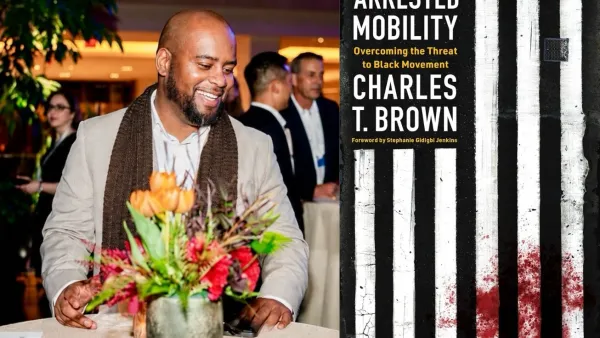
'Arrested mobility' and the fight for Black movement
Author Charles T. Brown explains how his experience growing up in rural Mississippi shaped his worldview and his current work for equitable transportation.
‘Week Without Driving’ Highlights Needs of Non-Drivers
The event encourages public officials to use their local public transit and engage with the people who rely on it every day.

The Link Between Public Transit and Justice
The chancellor of the Philadelphia Bar Association argues that a robust transit system is key to ensuring people on all sides of the justice system can access courts and resources.

Planetizen Federal Action Tracker
A weekly monitor of how Trump’s orders and actions are impacting planners and planning in America.

The state-sanctioned urbicide of Austin
People don’t kill cities. Freeways do.

US to reduce Colorado River water deliveries to Mexico
A new Colorado Treaty amendment reduces Mexico’s Colorado River water allocation by 250,000 acre feet.

5 New England states march closer to 800 megawatt wind energy project
Securing federal approval for the project may be complicated under the Trump administration, which has historically been hostile towards domestic wind power.

Baltimore to break ground on $50 million Transit Priority Project
The project will bring faster bus trips, safer streets and better bike connections to Baltimore.

Airbnb launches $250 million 'last-dollar financing' housing accelerator, makes first investment in Austin
The company will put $6.4 million towards affordable housing development in Texas’ capital.

FREE Course: Walkable City 1: Why Walkability?
After describing his path towards focusing on walkability as the essence of good planning, Jeff Speck marches through his five principal reasons for making more walkable places.
Reinventing Malls: Planning Alchemy—Turning Gray Fields Into Gold
The course focuses on the opportunities and imperatives that shape reinvention of mall sites.

Eagle County Government
Harvard University Graduate School of Design
Nashville Planning Department
The Architects Foundation
University of Cincinnati Online
The Pocatello Development Authority
The Urban Renewal Agency of the City of Pocatello
Journal of the American Planning Association