California has suffered at least 700 wildfires since the beginning of 2016, and that number is only expected to rise this summer. Orange County Fire Chief Jeff Bowman explains what California must do to combat unprecedented risks.


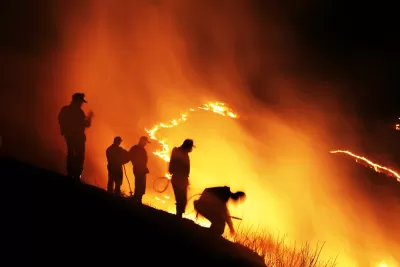
California’s fire season is now year round, due to historic drought conditions and a century of fire suppression that has left much of the state a tinderbox. In the Planning Report, Orange County Fire Chief Jeff Bowman talks about his concerns for this upcoming fire season. Bowman, fire chief of San Diego prior to his Orange County leadership, has been an important voice in aligning local and state resources for fighting fires.
With fires already erupting in Santa Barbara and Los Angeles County, Bowman explains how California's landscape became so vulnerable to catastrophic fires. He explains, "The bottom line is that extended periods of heat—plus California’s infamous wind conditions—equate the millions of dead trees [killed by drought] to standing matches waiting for an ignition source. We were supposed to have a decent El Niño this year, and unfortunately in Southern California that didn’t happen. So here we are, in year five of the drought."
Bowman charts some solutions for creating a united California front, such as implementing the recommendations of a Blue Ribbon Fire Commission he previously served on. Commenting on the necessary political conditions for people to act prospectively, Bowman is less optimistic about change:
"Unfortunately, humans have fairly short memories for these disasters. I was the chief in the City of San Diego in 2003 when the Cedar Fire blew threw that county. It was largest wildfire in California history. They had been told in advance of that fire that the potential was there, and ignored the warnings. After the fire blew through, there was a lot of talk about revisiting the problem. Six months after the fires came through, the only ones who wanted it as a priority were those who lost property, homes, or lives. One would think that, when you’ve suffered the largest wildfire in California history, that the focus would be on what we can do to change preparedness for that."
Read more from The Planning Report’s interview with Orange County Fire Chief Jeff Bowman.
FULL STORY: Orange County Fire Chief Opines on a Fire Season Aggravated by Drought

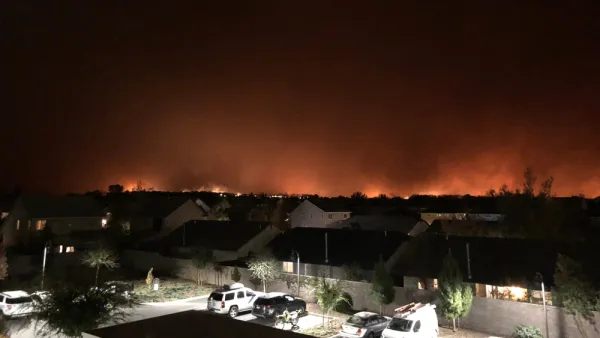
Study: Climate Change Overwhelmingly Responsible for 'Fire Weather'
New research points to global warming as the biggest factor in fueling longer, more destructive wildfire seasons.
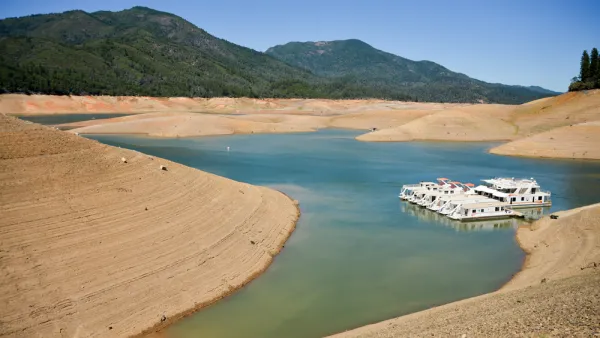
Climate Change Requires a Different Paradigm for California's Water Supply
Jeff Kightlinger, general manager of the Metropolitan Water District of Southern California, explains how the impacts of California’s historic drought are already changing the landscape of the American Southwest.
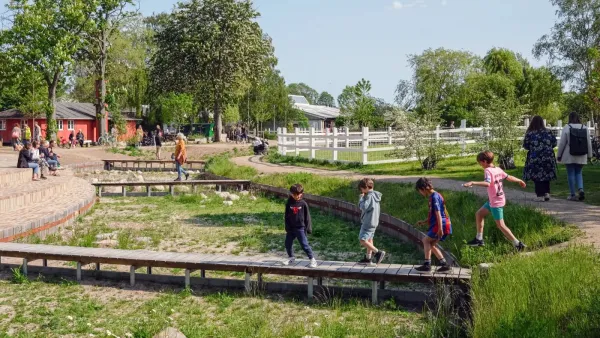
Copenhagen is losing its cool
In a city long designed to maximize light during dark Scandinavian winters, climate change is forcing the Danish capital to rethink its relationship with the sun.

Planetizen Federal Action Tracker
A weekly monitor of how Trump’s orders and actions are impacting planners and planning in America.

The state-sanctioned urbicide of Austin
People don’t kill cities. Freeways do.

US to reduce Colorado River water deliveries to Mexico
A new Colorado Treaty amendment reduces Mexico’s Colorado River water allocation by 250,000 acre feet.

LA Metro’s ultimatum: no extra buses for LA28 if federal funding isn’t imminently secured
If Metro does not provide additional buses, LA28 organizers will have to find a new way to manage Olympic traffic. LA28’s budget does not include a line item for transit.

Colorado’s Largest Data Center Could Rise Next to Homes — Without a Public Hearing
The proposed campus would consume 11 times the power of Denver International Airport; as it has across the country, opposition mounts.

5 New England states march closer to 800 megawatt wind energy project
Securing federal approval for the project may be complicated under the Trump administration, which has historically been hostile towards domestic wind power.

FREE Course: Walkable City 1: Why Walkability?
After describing his path towards focusing on walkability as the essence of good planning, Jeff Speck marches through his five principal reasons for making more walkable places.
Reinventing Malls: Planning Alchemy—Turning Gray Fields Into Gold
The course focuses on the opportunities and imperatives that shape reinvention of mall sites.

Eagle County Government
Harvard University Graduate School of Design
Nashville Planning Department
The Architects Foundation
University of Cincinnati Online
The Pocatello Development Authority
The Urban Renewal Agency of the City of Pocatello
Journal of the American Planning Association