The Washington Post details each of the seven proposals competing for $40 million in the U.S. Department of Transportation's Smart Cities Challenge.


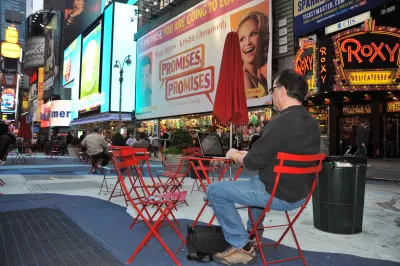
An article by Michael Laris, with illustrations by Nick Slater, previews the proposals by the seven cities competing in the U.S. Department of Transportation's Smart Cities Challenge.
The article breaks down each of the seven proposals on the following criteria: the problem, "by the numbers," the idea, and "how?".
So, for instance, Kansas City is faced with the problem of neighborhoods isolated "by geography and an information void." The idea is to "[e]xpand an ambitious but limited tech blitz surrounding a just-opened streetcar line to include struggling neighborhoods" by expanding advanced technologies like free wi-fi and public internet kiosks along an eight-mile bus line on Prospect Avenue.
Other cities competing in the competition include San Francisco, Austin, Columbus, Portland, Pittsburgh, and Denver.
Read the full story: Designing Tomorrowland

Five Years Later, 'Smart Cities Challenge' Promise Unfulfilled
The "Smart Cities Challenge" paid Columbus, Ohio $50 million to kick start a revolution of urban technology. The revolution never arrived, according to a recent assessment by Wired writer Aarian Marshall.
Making the Leap From Smart Projects to Smart Cities
Most "smart city" projects to-date are somewhat isolated and are not part of a more comprehensive network.
Critics Pushing Back on Columbus' Vision of a 'Smart City'
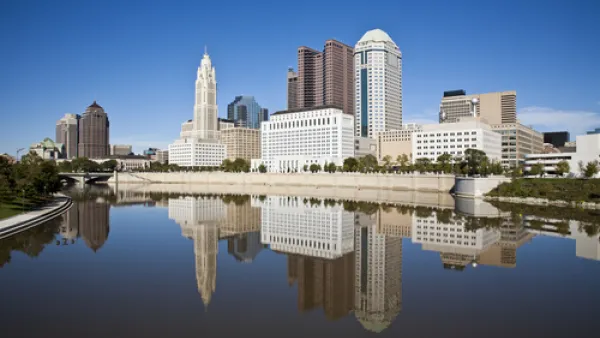
Not everyone is buying in to the city of Columbus' vision for the future of transportation.

Planetizen Federal Action Tracker
A weekly monitor of how Trump’s orders and actions are impacting planners and planning in America.

‘Going backwards:’ Baltimore mayor, students rally against state's transit funding plan
Maryland's proposed six-year plan provides no funding for Baltimore’s BMORE bus program and reduces its road maintenance funding.

Detroit to transform waterfront with $2.2 billion investment
Developers will convert about 18 acres of unused parking lot space into civic spaces.

MTA invests $1.1 billion in ‘nearly-impossible’-to-evade fare gates
The new technology marks the Metropolitan Transit Authority's first turnstile redesign in decades.

HUD modernizes 50-year-old manufactured housing framework
The Next Generation Manufactured Housing Action Plan establishes new energy-efficiency standards for manufactured homes, and new guidelines for anchoring them.

New CA housing laws tear down development red tape
Recently-signed legislation makes building starter homes and ADUs cheaper and faster in California.

FREE Course: Walkable City 1: Why Walkability?
After describing his path towards focusing on walkability as the essence of good planning, Jeff Speck marches through his five principal reasons for making more walkable places.
Reinventing Malls: Planning Alchemy—Turning Gray Fields Into Gold
The course focuses on the opportunities and imperatives that shape reinvention of mall sites.

One Hundred Miles
County of Mendocino
planning NEXT
The Architects Foundation
University of Cincinnati Online
Montrose County
Northern Illinois Transit Authority (NITA)
The Pocatello Development Authority