Rather than supporting an increase in gas taxes and vehicle registration fees like many states are doing to fund transportation spending, Gov. Chris Christie asks the legislature to find funds by making cuts within the general fund.


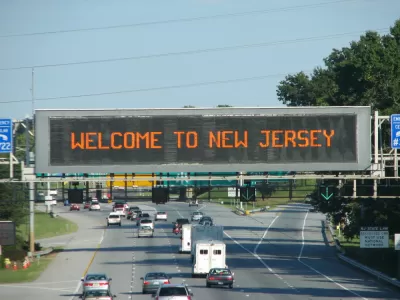
"With the state Transportation Trust Fund (TTF) nearly out of cash and few signs of progress in the Legislature, Gov. Chris Christie said on Wednesday that he was loath to back an increase in the state’s gasoline tax and said lawmakers should seriously consider developing a plan built around general-fund spending," writes Ryan Hutchins, POLITICO's New Jersey bureau chief.
"...Make choices inside the general fund. There’s places to cut.”, the Republican governor said at an unrelated news conference in Trenton.
Christie went on to declare the Transportation Trust Fund, in existence since 1985, to be "obsolete," ironically because the tax hasn't been raised since 1988. However, that argument has also been applied to the Highway Trust Fund as the 18.4 cent gas tax hasn't been raised since 1993. Like Christie, President Barack Obama has opposed increasing the gas tax increase in his two terms but has looked to the general fund for subsidies, though he proposed an oil fee to fund transportation spending last February.
Christie's position is a dramatic turnaround from September 2014 when he insisted that "all options were on the table," including gas tax hikes, as reported in a transportation analysis by Mark J. Magyar in N.J. Spotlight:
When a reporter at the governor’s press conference did not believe that Christie was actually considering a tax increase, the governor was adamant that he was open to all solutions: "Is there something about 'Everything's on the table' that's confusing to you?" he demanded.
"The Garden State's 14.5-cent gas tax (10.5 cent excise tax plus 4.0 cpg Petroleum Products Gross Receipts Tax) is the second lowest in the United States after Alaska," notes a post in April about a proposal to reduce the estate tax as a tradeoff for hiking the gas tax.
Finding funding from the general fund, "at least in the short term — would likely require enormous spending reductions to produce anywhere near the level of resources the state has grown accustomed to since the infrastructure trust was created more than two decades ago," adds Hutchins.
The TTF currently spends $1.6 billion per year in state revenues on road, bridge and transit projects, supported in part by the state’s gas tax. But the fund’s debt has grown to such extraordinary levels that the fuel taxes can no longer sustain new spending or bond offerings....The current trust fund will be out of cash by early August, state officials have said.
Why the turnaround?
With the state's economy doing better, Christie figures there's no reason to raise user fees, but the General Fund is fair game for cutting to increase transportation funding.
And he's backing a proposal by a proposal offered by state Sen. Jennifer Beck (R-Red Bank), premised on an uncertain "3 percent annual hike in state’s revenues," according to the NJ Spotlight, that "has called for consolidating transportation agencies, implementing cuts to public worker health benefits and tapping revenues from various sources to produce enough money for a new, $1.6 billion trust fund — all with no tax increase," writes Hutchins.
Hat tip to Martine Powers of POLITICO Morning Transportation newsletter.
Read the full story: Christie: Concept of Transportation Trust Fund is 'obsolete'

New Jersey Democrats Propose Hiking Gas Tax in Tradeoff for Estate Tax Reduction
The estate tax reduction, plus increasing the retirement income tax exemption, would be traded for an unspecified hike in the gas tax to keep the Transportation Trust Fund solvent. But the $400 million in tax cuts won't satisfy Gov. Chris Christie.
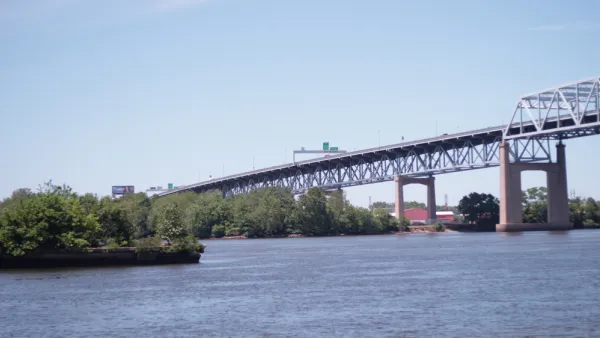
New Jersey Gas Tax Standoff Leaves Construction Workers in the Lurch
The plight of laid-off laborers who had been repaving a New Jersey bridge illustrates that people suffer as well as infrastructure and mobility when transportation funding bills fail to pass.
Landmark Agreement Reached to Increase New Jersey Gas Tax by 23 Cents
A day after a fatal NJ Transit train crash at the Hoboken Terminal, Republican Gov. Chris Christie and Democratic leaders of the legislature announced the agreement to raise the tax by 159 percent; the first increase to the *14.5-cent tax since 1990.

Planetizen Federal Action Tracker
A weekly monitor of how Trump’s orders and actions are impacting planners and planning in America.

Chicago breaks ground on $3 billion megadevelopment
The new neighborhood, titled Foundry Park, will one day host 3,700 residences.

This MA town is drowning in its own sewage — and residents like it that way
Susan Murcott, a waste water expert, said if Carlisle didn't address their leaking sewage, the problem could turn “deadly.”

Feds to more closely scrutinize proposed Amtrak facility’s environmental impact
The Federal Railroad Administration had initially said the facility qualified for a less extensive environmental review.

Boston is hard to build housing in: its chief of planning wants to keep it that way
Chief of Planning Kairos Shen said she would not make changes to Boston’s affordability requirements for new housing, which critics say have slowed down development.

California plans to bury El Niño’s downpour
If the state plays its cards right, it may be able to store a billion acre-feet of El Niño’s water in aquifers.

FREE Course: Walkable City 1: Why Walkability?
After describing his path towards focusing on walkability as the essence of good planning, Jeff Speck marches through his five principal reasons for making more walkable places.
Reinventing Malls: Planning Alchemy—Turning Gray Fields Into Gold
The course focuses on the opportunities and imperatives that shape reinvention of mall sites.

City of Rosemead
Rutgers University, Edward J. Bloustein School of Planning and Public Policy
One Hundred Miles
Hunter College, City University of New York (CUNY)
The Architects Foundation
University of Cincinnati Online
Montrose County
The Pocatello Development Authority
The Urban Renewal Agency of the City of Pocatello