The Chicago neighborhood of Bridgeport provides a case study of the collision between neighborhood advocacy, politics, and transit planning.


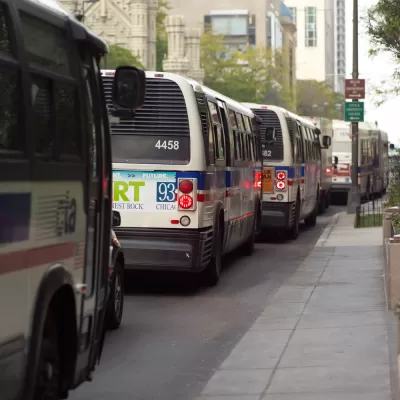
Ed Komenda reports: "The Chicago Transit Authority Board on Wednesday [May 11] voted to revive both the No. 11 bus on Lincoln Avenue, set to start on June 20, and the No. 31 bus, slated to begin in September."
Local groups who advocated for the 31st Street bus route are concerned, however, that the proposal is designed to fail. The line will enter a six-month pilot program, with buses running every 30 minutes from 10 am to 7 pm between Ashland and King Drive. "The CTA plans to monitor ridership. If enough people ride the buses, the transportation authority will restore the routes permanently. The target is 830 rides per day," according to Komenda.
Among the concerns of the local groups that negotiated the return of the route to the neighborhood—that the pilot won't be tracking ridership during the summer, when users are traveling in higher numbers to the beach. According to Komenda, local activists have been fighting for the No. 31 line ever since it was axed in 1997 due to low ridership.
Read the full story: 31st Street Bus Pilot Program A 'Slap In The Face': Bridgeport Alliance

Chicago's South Side May Lose Number 31 Bus
Chicago's South Side got its 31st Street (number 31) bus back for some weekday service in 2016, but it's likely that service will be canceled again.
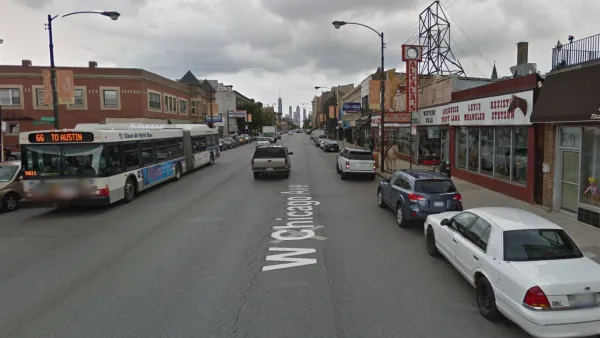
Bus Lane, Not Bike Lane, Should Be Chicago Avenue's Priority
Chicago Avenue bus is one of Chicago's busiest. It deserves a bus lane.
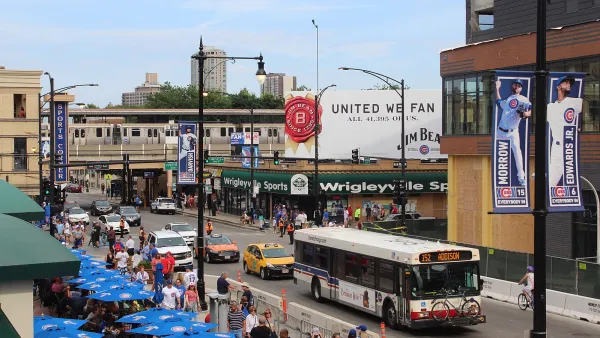
Chicago Plans ‘Better Streets for Buses’
The city of Chicago is taking first steps toward a commitment to better bus service in the design and configuration of the city's streets.

Planetizen Federal Action Tracker
A weekly monitor of how Trump’s orders and actions are impacting planners and planning in America.

Amtrak, CN end decades-long dispute with eight-year agreement
The new operating agreement establishes an updated framework for the companies to work together, including processes to resolve disputes.

Judges permit Denver to divert 77,000 acre feet from the Colorado River for reservoir expansion
Overuse and climate change have caused the Colorado River’s water levels to plummet.

NYC DOT wants faster, more permanent street upgrades
The city is examining ways to build more concrete infrastructure without getting entangled in 'decades-long' projects.

'Something we’ve never seen before:' rising utility rates could strain city finances nationwide
Data centers, climate change and other factors have caused utility rates in the United States to increase by 38% since 2020.

Trump to overrule local leaders, lease millions of acres of America’s Pacific Island territories’ seafloors to mining companies
International law says that the Indigenous people of America’s territories have a right to prior and informed consent regarding projects that impact their countries.

FREE Course: Walkable City 1: Why Walkability?
After describing his path towards focusing on walkability as the essence of good planning, Jeff Speck marches through his five principal reasons for making more walkable places.
Reinventing Malls: Planning Alchemy—Turning Gray Fields Into Gold
The course focuses on the opportunities and imperatives that shape reinvention of mall sites.

Harvard University Graduate School of Design
KFH Group Inc.
Greater Baltimore Committee
The Architects Foundation
University of Cincinnati Online
The Pocatello Development Authority
The Urban Renewal Agency of the City of Pocatello