A Boston Globe columnist met the news that the city would reduce speed limits to 20 mph on some residential streets with scorn and snark.


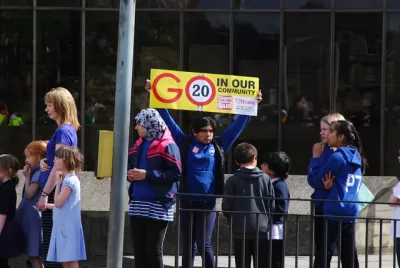
Yvonne Abraham writes a satirical take on the recent unanimous decision by the Boston City Council to lower the speed limit on some city streets to 20 miles per hour. Abraham's conceit: though the 20 mph speed limit might be a nice idea, Bostonians could not possibly drive 20 miles per hour.
Abraham reports the results of an experiment, undertaken with Reporter David Filipov: "We jumped into his car and proceeded to creep along city streets, careful to stay below the proposed speed limit." The result: "Boy, was it annoying — to us, sure, but especially to our fellow motorists."
In the end Abraham concludes the driving 20 mph simply does not reconcile with the priorities of Boston residents:
But we are no Finland. We’re mean-streets Boston, our drivers proudly among the worst in the nation (though the science on that is hinky). We deride blinkers, slam on brakes, floor it whenever we can.
For less snark and more objective analysis of the city's decision to lower speed limits on some of its streets, see an article by Meghan E. Irons, written prior to the City Council decision.
FULL STORY: Can Bostonians really drive as slowly as 20 m.p.h.?

Edinburgh Sets 20-mph Speed Limit
Citing pedestrian and cyclist casualties, the Scottish capital will reduce speed limits on 80 percent of its streets to a mere 20 mph. Backers are pushing for additional complete streets improvements.
Maryland Plans Quick-Build Complete Streets Projects
The state will use low-cost interventions to improve road safety in five Maryland counties.
San Francisco Slow Streets Bucks Citywide Trend, Reducing Injuries by 61 Percent
Low-cost interventions aimed at slowing traffic are making a major impact on road safety.

Planetizen Federal Action Tracker
A weekly monitor of how Trump’s orders and actions are impacting planners and planning in America.

The state-sanctioned urbicide of Austin
People don’t kill cities. Freeways do.

US to reduce Colorado River water deliveries to Mexico
A new Colorado Treaty amendment reduces Mexico’s Colorado River water allocation by 250,000 acre feet.

LA Metro’s ultimatum: no extra buses for LA28 if federal funding isn’t imminently secured
If Metro does not provide additional buses, LA28 organizers will have to find a new way to manage Olympic traffic. LA28’s budget does not include a line item for transit.

Colorado’s Largest Data Center Could Rise Next to Homes — Without a Public Hearing
The proposed campus would consume 11 times the power of Denver International Airport; as it has across the country, opposition mounts.

5 New England states march closer to 800 megawatt wind energy project
Securing federal approval for the project may be complicated under the Trump administration, which has historically been hostile towards domestic wind power.

FREE Course: Walkable City 1: Why Walkability?
After describing his path towards focusing on walkability as the essence of good planning, Jeff Speck marches through his five principal reasons for making more walkable places.
Reinventing Malls: Planning Alchemy—Turning Gray Fields Into Gold
The course focuses on the opportunities and imperatives that shape reinvention of mall sites.

Eagle County Government
Harvard University Graduate School of Design
Nashville Planning Department
The Architects Foundation
University of Cincinnati Online
The Pocatello Development Authority
The Urban Renewal Agency of the City of Pocatello
Journal of the American Planning Association