A Vox explainer describes the complex political, economic, and cultural obstacles to overcome in achieving a carbon tax equal to the social cost of carbon.


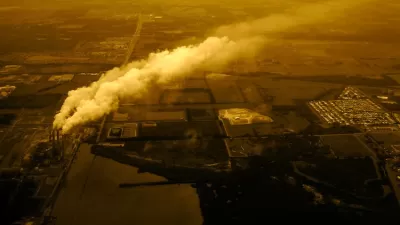
"A consensus has formed among economists, climate wonks, and progressives that a carbon tax is the best way to address climate change," according to an article by David Roberts, adding, "In some quarters, rhetorical support for a carbon tax is seen as a litmus test for whether policymakers are serious about climate change."
Roberts has actually produced back to back articles on the subject of a carbon tax. The first, published on Earth Day, questioned the idea that the carbon tax is the "first best" carbon policy. In the follow-up post, Roberts instead assumes "that a carbon tax, equal to the social cost of carbon, is the ideal climate policy." The question Roberts seeks to answer then: If a carbon tax is the most efficient and effective mechanism for addressing climate change, how should the policy's apologists go about enacting a new regulatory system?
Roberts begins by noting that carbon tax proponents have yet to play the game of politics, thus commencing what he describes as "a better, more grounded conversation about what's possible for carbon pricing."
Read the full story: The political hurdles facing a carbon tax — and how to overcome them
Washington Voters Keep Carbon Tax
An initiative that would have ended the state’s “cap and invest” program failed, leaving the program in place.
The Inflation Reduction Act's Secret Climate Weapon
While the impact on inflation of the questionably-titled Inflation Reduction Act remains to be seen, the law will mitigate the damage done by a landmark Supreme Court case in June that gutted the EPA's authority to regulate greenhouse gas emissions.

Biden’s Environmental Legacy (So Far)
President Biden campaigned on promises to restore many of the environmental regulations rolled back by the previous administration, while promising new efforts to tackle environmental injustice and climate change.

Planetizen Federal Action Tracker
A weekly monitor of how Trump’s orders and actions are impacting planners and planning in America.

California plans to bury El Niño’s downpour
If the state plays its cards right, it may be able to store a billion acre-feet of El Niño’s water in aquifers.

Desperate measures: Advocates weigh draining Lake Powell to fill Colorado River
Draining the reservoir could reduce evaporation losses by a couple hundred thousand acre-feet.

Chicago voters approve permanent festival grounds, penalty for vacant property owners
Currently, major summer and fall festivals take over public parks for weeks at a time, drawing criticism from nearby residents

NYC votes to cut outdoor dining red tape, speed up permitting
New York City also voted to allow the Department of Transportation to begin work on urgent projects before notifying elected officials.

California appears to reject Prop. 45
The proposition would have expanded the projects that qualify for a streamlined environmental review, effectively paring down the California Environmental Quality Act.

FREE Course: Walkable City 1: Why Walkability?
After describing his path towards focusing on walkability as the essence of good planning, Jeff Speck marches through his five principal reasons for making more walkable places.
Reinventing Malls: Planning Alchemy—Turning Gray Fields Into Gold
The course focuses on the opportunities and imperatives that shape reinvention of mall sites.

City of Rosemead
Rutgers University, Edward J. Bloustein School of Planning and Public Policy
One Hundred Miles
Hunter College, City University of New York (CUNY)
The Architects Foundation
University of Cincinnati Online
City of Cambridge
Montrose County
The Pocatello Development Authority