Building permits for Accessory Dwelling Units have been stopped by court order in Los Angeles.


The city of Los Angeles may face two major ballot measures in the coming year dealing with development concerns as part of a heated conversation about how to fix its planning process. As this debate rages, Carlyle W. Hall—an attorney and founder of Los Angeles Neighbors in Action—highlights one example of how land-use practices in the city are “broken”: permitting for Accessory Dwelling Units (ADUs), also know as “granny flats.”
A February court ruling, brought by Neighbors in Action, found that the city was not following its own rules regarding the permitting of ADUs. Hall explains that the City of LA has been ignoring its own standards for these backyard units since 2010, instead relying on weaker state requirements. He criticizes the city’s response to the ruling against it: to "fast track" ADUs.
The city's actions in attempting this "fast-track," which Carlyle describes as lacking transparency, "exemplifies its continuing broken planning system and completely undermines the City’s credibility at a critical point in time," he says.
Hall’s analysis suggests that Los Angeles Neighbors in Action view ADUs is as an infringement on communities, potentially increasing density without consent of neighbors. With the city’s ongoing attempts to increase housing in light of a major shortage, others see ADUs as a promising tool. How this will play out remains to be seen, with the Los AngelesPlanning Commission taking up the issue on May 12.
Read the full story: Second Units and Los Angeles’ Broken Planning System
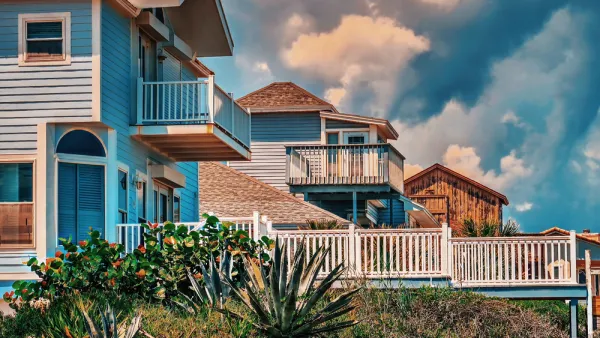
Jacksonville Legalizes Accessory Dwelling Units
The city expanded the areas where homeowners can build ADUs in an effort to boost housing supply and affordable rental units.
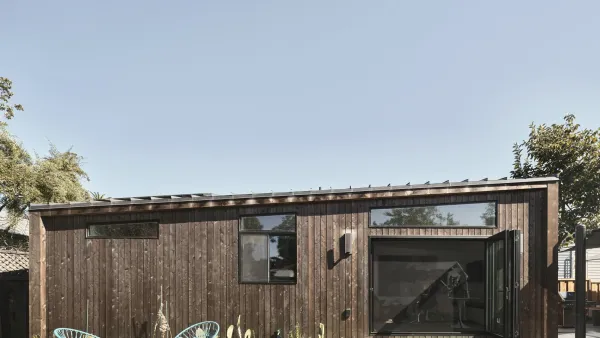
Los Angeles Streamlines ADU Permits with High-Design Templates
Los Angeles' ADU Standard Plan Program will offer homeowners a set of pre-approved designs that will save them time and money.
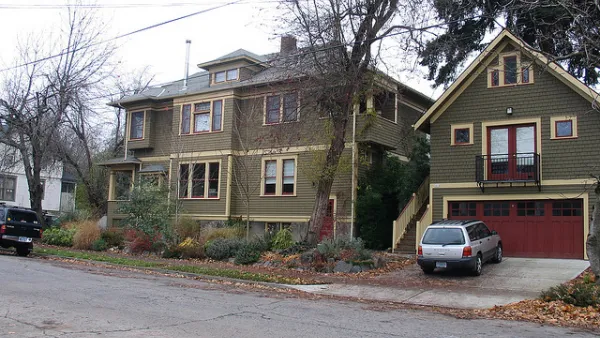
Granny Flats Take on the Los Angeles Homelessness Crisis
A program financed by Bloomberg Philanthropies will pay homeowners to build accessory dwelling units (ADUs) and rent them to the recently homeless.

Washington state to charge fee to drivers with fuel-efficient cars
Revenue from the fee will go towards supporting the state’s highways.

Illinois considers spending $1 billion in taxpayer money on data center
A quantum computing campus and data center are currently under construction in Chicago.

Trump to blast ‘hydrocarbon highway’ through ‘world’s longest art gallery’
Environmental and historic preservation groups are suing to stop the project.

NYC, state sue feds over mixed-immigration-status housing assistance rule
The state’s lawsuit argues that the rule change violates the Administrative Procedure Act.

Michigan to turn neighborhood into virtual power plant
Residents will soon be able to divert their excess energy to the grid in exchange for compensation.

Data center, mining project swarm to long-awaited Alaska railroad line
The state-owned railroad approved final plans for the spur line this week; the project is expected to cost $311 million, mostly funded by the federal government

FREE Course: Walkable City 1: Why Walkability?
After describing his path towards focusing on walkability as the essence of good planning, Jeff Speck marches through his five principal reasons for making more walkable places.
Reinventing Malls: Planning Alchemy—Turning Gray Fields Into Gold
The course focuses on the opportunities and imperatives that shape reinvention of mall sites.

City of Charlotte
City of Rosemead
Rutgers University, Edward J. Bloustein School of Planning and Public Policy
University of Michigan School for Environment and Sustainability (SEAS)
Hunter College, City University of New York (CUNY)
The Architects Foundation
University District Partnership