Los Angeles' ADU Standard Plan Program will offer homeowners a set of pre-approved designs that will save them time and money.


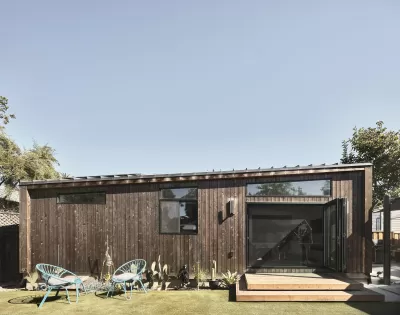
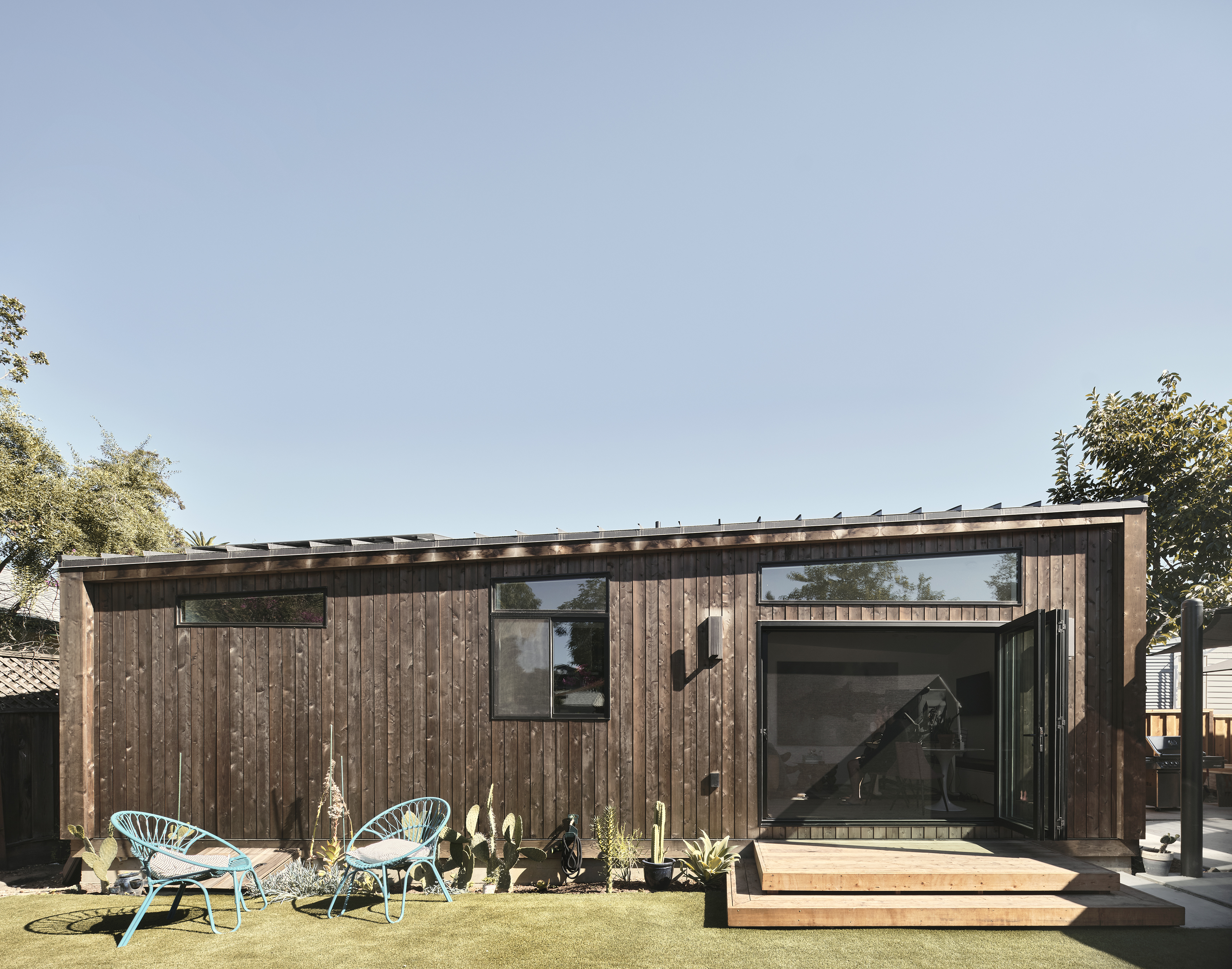
On the heels of legislation that legalized the construction of stand-alone residential units on lots traditionally zones for single-family homes, the Los Angeles mayor's office and the city's Building and Safety Department are launching an initiative aimed at reducing the red tape involved in securing permits for accessory dwelling units (ADUs), commonly known as "granny flats." By pre-approving a set of designs appropriate for backyard units, reports Carolina Miranda in the Los Angeles Times, the city is "shaving weeks off the permitting process" and providing property owners with more than a dozen "over-the-counter" designs for backyard units. Proponents of ADUs believe that looser regulations will help ease the housing crunch, add more affordable rentals to the market, and lower the barriers for moderate-income landowners to become landlords.
The ADU Standard Plan Program "will feature designs by a range of architectural studios, from the well-established to the up-and-coming, including Escher GuneWardena, Fung + Blatt, Taalman Architecture, Design, Bitches and wHY, the Culver City-based firm led by Kulapat Yantrasast that has had a hand in numerous museum expansions — most recently, the Asian Art Museum in San Francisco. The New York-based SO-IL, the designers behind the well-reviewed Jan Shrem and Maria Manetti Shrem Museum of Art at UC Davis, contributed the flower-shaped-studio concept." The pre-approved designs range in style and function in keeping with some of L.A.'s most iconic styles, from a modernist flower-shaped pavilion to a Spanish-styled bungalow.
L.A. Mayor Eric Garcetti praised the initiative for its combination of efficiency and style. "We want to solve the housing crisis; we want to stabilize our neighborhoods," the mayor said, "but we also want to see beautiful design."
FULL STORY: How Los Angeles is bringing high design to the granny flat — while saving time and money

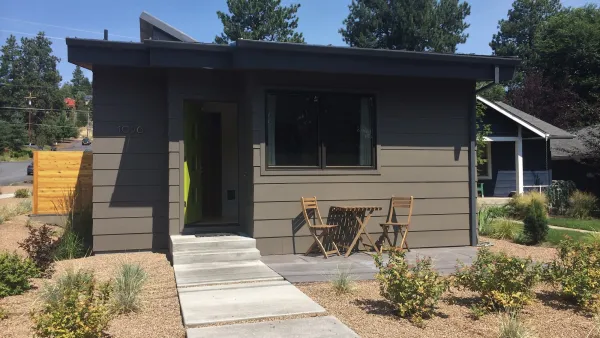
San Diego Residents Challenge the City's ADU Regulations
Residents in some of the city's single-family neighborhoods worry about the potential impacts of ADU construction on local character and parking.
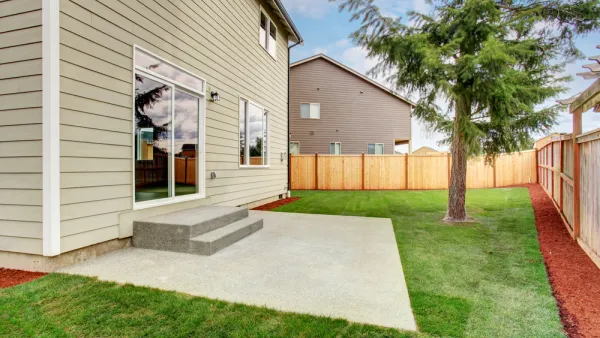
With Regulations Loosened, Granny Flat Construction Soars in California
Less restrictive permit laws and pre-fabricated, pre-approved building options are spurring more homeowners to build backyard additions.
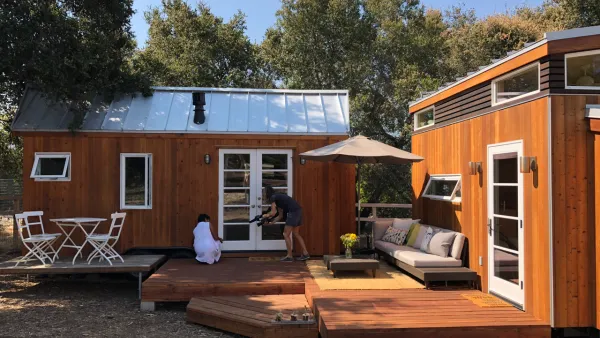
Appetite for ADUs Rises in San Jose
San Jose has issued a steadily-rising number of ADU permits in recent years. Now, Mayor Sam Liccardo has implemented measures to ease the process for homeowners who want to build granny flats.

The state-sanctioned urbicide of Austin
People don’t kill cities. Freeways do.

US to reduce Colorado River water deliveries to Mexico
A new Colorado Treaty amendment reduces Mexico’s Colorado River water allocation by 250,000 acre feet.

New Jersey’s second-largest city bans standalone data centers
Jersey City will continue to allow co-location facilities, such as those meant for research institutions that store their own data.

Amtrak not solely to blame for New Jersey commuter rail's unreliability, report finds
A new study from the Garden State Initiative found that NJ Transit’s budget grew 20% across a 4 year period, but reliability declined significantly over the same period.

EPA erases limits on planet-warming pollution from power plants
Under Monday’s plan, power plants would still have some limits on how much mercury, arsenic and other contaminants they can emit.

Phoenix announces new on-demand transit service, more frequent RAPID buses
Both new services will launch in October, and are part of Phoenix's Project Effective Access Solutions for Easing Congestion.

FREE Course: Walkable City 1: Why Walkability?
After describing his path towards focusing on walkability as the essence of good planning, Jeff Speck marches through his five principal reasons for making more walkable places.
Reinventing Malls: Planning Alchemy—Turning Gray Fields Into Gold
The course focuses on the opportunities and imperatives that shape reinvention of mall sites.

Eagle County Government
Harvard University Graduate School of Design
Nashville Planning Department
The Architects Foundation
University of Cincinnati Online
The Pocatello Development Authority
The Urban Renewal Agency of the City of Pocatello
Journal of the American Planning Association