The debate over the impacts of parking isn't new, but San Francisco planners are hoping that their approach to parking will provide new mobility solutions in a growing city.


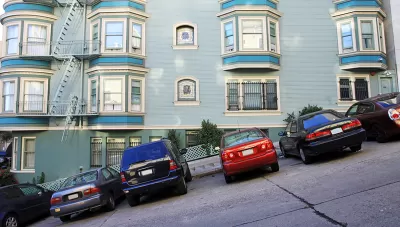
John Cote details the efforts of San Francisco to implement a new approach to parking as the city tackles an explosion of growth in the 21st century. First, Cote describes the problem:
This information comes as San Francisco is in the midst of one of its biggest new-housing construction booms in history, projected to add 100,000 households and more than 190,000 new jobs by 2040. If everyone arrives with a car, that’s going to be a recipe for gridlock and economic stagnation. The effects on the environment, quality of life and pedestrian safety will be substantial. The city will grind to a halt.
After noting that research proves that parking induces driving, Cote describes how planners are acting as if parking will exacerbate those problems, rather than providing any solutions. The city's primary planning effort focused on new solutions to the mobility challenges of the future is the Transportation Sustainability Program—a three-part program "designed to invest more in our transportation system, align our environmental rules with policy goals like emissions reductions and smart growth along transit, and shift choices to makes it easier for people to get around by transit, walking, biking, or carsharing," explains Cote.
Read the full story: The Growing Case for a New Approach to SF's Parking Problem

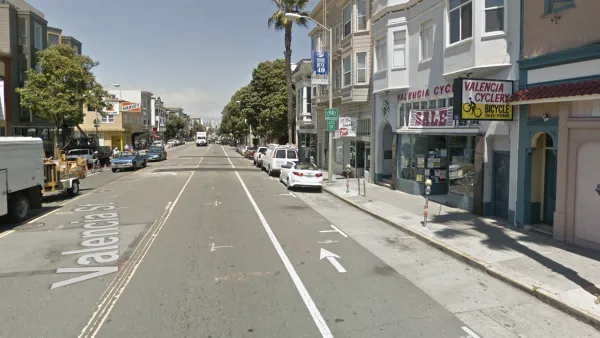
Latest San Francisco Bike Battlefront: Valencia Street
With most private auto traffic banned on Market Street in downtown, a battle is brewing in the Mission District between Valencia Street merchants, led by a bike store owner, and cyclists who support converting a bike lane into a cycletrack.
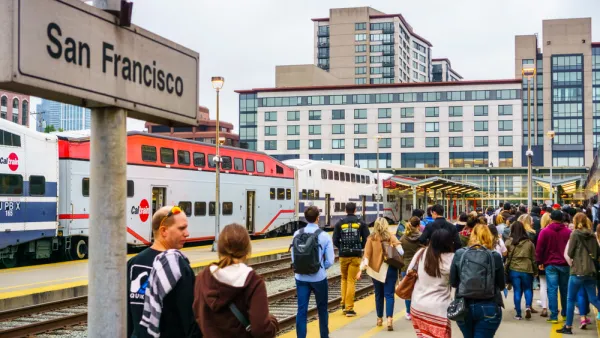
'100-Year Decision': First Approval for Train Route to S.F.'s Salesforce Transit Center
John Rahaim, director of the San Francisco Planning Department, calls the decision to route Caltrain to the newly opened Salesforce Transit center a "100-year decision."
More Details of Bus Rapid Transit's Expanding Reach in San Francisco
The Geary bus corridor was the #1 pick for a subway according to a Muni survey, but commuters will have to settle for bus rapid transit. A milestone was reached when the San Francisco County Transportation Authority approved the design and EIR.

Planetizen Federal Action Tracker
A weekly monitor of how Trump’s orders and actions are impacting planners and planning in America.

Amtrak, CN end decades-long dispute with eight-year agreement
The new operating agreement establishes an updated framework for the companies to work together, including processes to resolve disputes.

Judges permit Denver to divert 77,000 acre feet from the Colorado River for reservoir expansion
Overuse and climate change have caused the Colorado River’s water levels to plummet.

NYC DOT wants faster, more permanent street upgrades
The city is examining ways to build more concrete infrastructure without getting entangled in 'decades-long' projects.

'Something we’ve never seen before:' rising utility rates could strain city finances nationwide
Data centers, climate change and other factors have caused utility rates in the United States to increase by 38% since 2020.

Trump to overrule local leaders, lease millions of acres of America’s Pacific Island territories’ seafloors to mining companies
International law says that the Indigenous people of America’s territories have a right to prior and informed consent regarding projects that impact their countries.

FREE Course: Walkable City 1: Why Walkability?
After describing his path towards focusing on walkability as the essence of good planning, Jeff Speck marches through his five principal reasons for making more walkable places.
Reinventing Malls: Planning Alchemy—Turning Gray Fields Into Gold
The course focuses on the opportunities and imperatives that shape reinvention of mall sites.

Harvard University Graduate School of Design
KFH Group Inc.
Greater Baltimore Committee
The Architects Foundation
University of Cincinnati Online
The Pocatello Development Authority
The Urban Renewal Agency of the City of Pocatello