The 40-year-old system, second busiest in the nation after New York's, has seen ridership decline since 2010 as the region grows. A major cause is "frequency delays." The Washington Post reporters state that the subway has entered a death spiral.


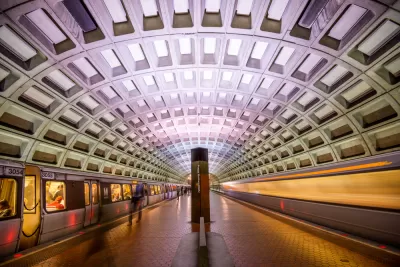
"'America’s subway,' which opened in 1976 to great acclaim — promoted as a marvel of modern transit technology and design — has been reduced to an embarrassment, scorned and ridiculed from station platforms to the halls of Congress," write politics reporter, Robert McCartney, and Metro system reporter, Paul Duggan, for The Washington Post. "Metrorail is in crisis, losing riders and revenue and exhausting public confidence."
Take a trip back in time—watch The Post's video that includes a 1975 promotion, "Off the Rails: See Metro go from shiny to shaky," that also promoted public transit. Commentary by Zachary M. Schrag, author of The Great Society Subway: A History of the Washington Metro (The Johns Hopkins University Press, 2006) and Douglas B. Feaver, Washington Post staff writer who covered the early years of the Metro system.
Metro’s failure-prone subway — once considered a transportation jewel — is mired in disrepair because the transit agency neglected to heed warnings that its aging equipment and poor safety culture would someday lead to chronic breakdowns and calamities. [See accompanying graphic article: "A complete guide to the major problems facing Metrorail."]
McCartney and Duggan indicate that America's second busiest subway, after New York's has entered a "death spiral".
Subway ridership, which increased annually for 13 years starting in 1996, is down 5 percent since 2010 and continues to fall, even as the region’s population grows. Metro has long blamed the decline on economic and social factors. But in October, for the first time, the agency acknowledged another reason: “the frequency of severe delays.”
The on-time rate for Metro trains, which hovered above 90 percent for most of 2012, was down to 84 percent last year because of “railcar, power and track equipment problems”...
What went wrong?
McCartney and Duggan begin with the era of birth. Unlike the older Boston and New York subways, "Metro was built with two tracks, not four as in New York — and with few pocket tracks, where trains can be parked out of the way — to hold down costs and minimize public disruption during the work."
It’s also a story about the agency’s early faith in automation — that computers would negate human error — which seemed to stunt the development of a safety culture, resulting in disasters.
They add that "the National Transportation Safety Board faulted Metro for overreliance on automation and neglecting safety procedures."
And it’s a story about money, about elected leaders unwilling to seek a special tax to pay for Metro, afraid of a voter backlash. It’s about a $3 billion-a-year agency without dedicated funding (unique among big U.S. transit systems) going hat in hand to the governments of Maryland, Virginia and the District, seeking annual operating subsidies from three jurisdictions.
Feaver, in the video, states, "The issues were always money. How do we keep the costs down. Every government has to kick (funds) in."
The video ends with Schrag stating, "I think we do want (and) need Metro. I don't know how we are going to pay for Metro."
The Three Siblings
To understand Metro's problems, it may be helpful to look at its older and younger siblings. They are quite similar, even looking alike. Bay Area Rapid Transit (BART) opened four years earlier, in 1972. [Note Nixon and wife Pat in the photo in Michael Cabanatuan's 2012 (40-year-old birthday) SF Gate article on the Bay Area regional heavy rail system.]. While Bay Area transit advocates are quick to fault BART, the nation's fifth highest ridership subway after #3, Chicago and #4, Boston, per Wikipedia, for having non-standard gauge rail (a mistake not repeated by Metro), it does have dedicated funding from the original three Bay Area counties it serves, and goes to the voters for additional capital funding.
While suffering from electrical problems and the same two-track issues plaguing Metro, ridership is growing, "up 6 percent in FY2015 and 2.5 percent in the first six months of FY2016," according to The Registry.
And the younger sister, Metropolitan Atlanta Rapid Transit Authority (MARTA), which opened three years laters than Metro in 1979, has its own regional funding difficulties among the counties it serves. Watch for a November election in the city of Atlanta, but not the surrounding counties, "to increase their investment in MARTA by a half-penny sales tax for 40 years – adding to the penny it passed in 1971," according to an April post.
Read the full story: Metro sank into crisis despite decades of warnings

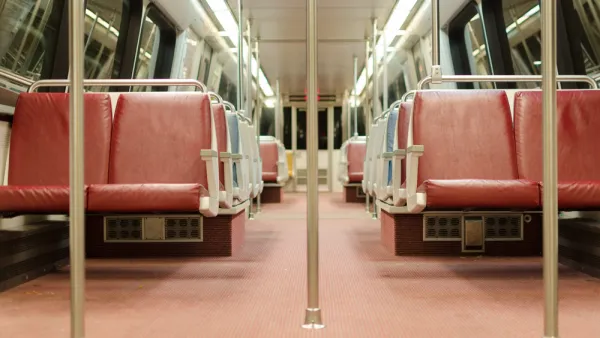
Transit Agencies Struggling to Predict Ridership, Even as They Raise Fares
At transit agencies like D.C, Metro, bad ridership projections beget bad fare scheduling which begets bad budgets. And so on.
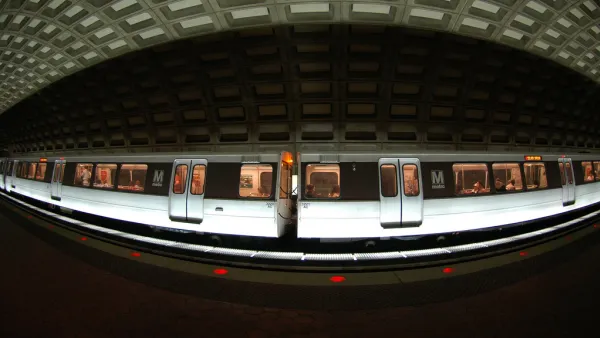
D.C. Metro Will End Late-Night Rail Service for Two Years
A tough decision that has been on the table since the summer has now been made official by the WMATA's board of directors.
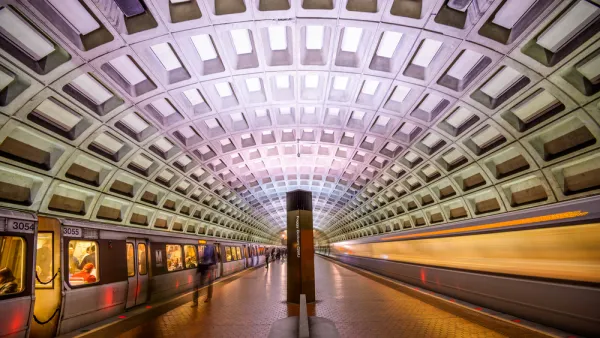
D.C. Metro to Test Free WiFi at Six Subway Stations
The beleaguered D.C.-area transit agency finally had something to talk about besides repair schedules, delays, and debt.

Planetizen Federal Action Tracker
A weekly monitor of how Trump’s orders and actions are impacting planners and planning in America.

Amtrak, CN end decades-long dispute with eight-year agreement
The new operating agreement establishes an updated framework for the companies to work together, including processes to resolve disputes.

Northwest rail fans eager for Sept. 30 debut of Amtrak’s Airo fleet
Get ready for that new train smell and more seats. But they won’t go faster or run more frequently on the Cascades route in Washington and Oregon.

LAX SkyLink opening delayed again, contractor won’t commit to new deadline
The project was supposed to open its doors to the public in 2023.

Caltrain may slash over one-third of its stations
If Bay Area voters reject two transit tax measures, Caltrain, BART and AC Transit will see steep service cuts.

A 'dangerous' precedent: North Carolina successfully pressures communities into voting for toll roads
Two mayors resigned from the Charlotte Regional Transportation Planning Organization after it voted in favor of the toll roads.

FREE Course: Walkable City 1: Why Walkability?
After describing his path towards focusing on walkability as the essence of good planning, Jeff Speck marches through his five principal reasons for making more walkable places.
Reinventing Malls: Planning Alchemy—Turning Gray Fields Into Gold
The course focuses on the opportunities and imperatives that shape reinvention of mall sites.

City of Thousand Oaks
City of Wisconsin Rapids
Harvard University Graduate School of Design
The Architects Foundation
University of Cincinnati Online
The Pocatello Development Authority
The Urban Renewal Agency of the City of Pocatello