It's easy to focus on the shrinking market share and layoffs in the coal industry and see the demise of the industry, but construction of new coal burning power plants is still booming in countries like China and India.


Brad Plumer shares the latest findings on the size and strength of the coal industry, as reported in the 2016 "Boom and Bust" report prepared by CoalSwarm, the Sierra Club, and Greenpeace. The report provides a yearly review of "all the new coal plants that have been announced, permitted, or are currently being built around the world."
The 2016 report finds 1,500 coal plants at various stages of development around the world. Here's how Plumer sums up the impact of that figure:
That's a staggering number. If even a fraction of these plants get built and operate for their full lifetime, we'll likely bust through the 2°C global warming threshold that world leaders have promised to stay below. Even 3°C could be tough to avoid.
Plumer notes an important caveat: China, like the United States, might be losing its appetite for coal-powered electricity. China is home to half the world's planned coal capacity, so a sea change there would be a major loss for the coal industry. Plumer has already noted in a previous, separate article that much of China's planned coal power capacity might be superfluous. Plumer also delves into India's electricity market. "Prime Minister Narendra Modi has called for a near doubling of coal production by 2020," according to Plumer, but even that target is in doubt.
Read the full story: Hundreds of coal plants are still being planned worldwide — enough to cook the planet

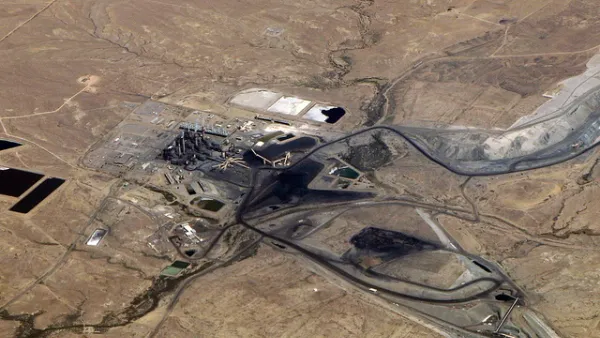
Decline in Coal-Fired Power Reduces U.S. Carbon Emissions in 2019
The energy sector produced ten percent less carbon emissions in 2019 than the previous year—the largest drop in decades. Still, the decline of the coal industry is not enough to meet the goals of the Paris Climate Accord.

Trump Officials Want to Keep Coal Plants “100% Open”
While officials tout the return of coal power as the answer to the affordability crisis, critics point to America’s aging coal infrastructure as a pain point in its return.
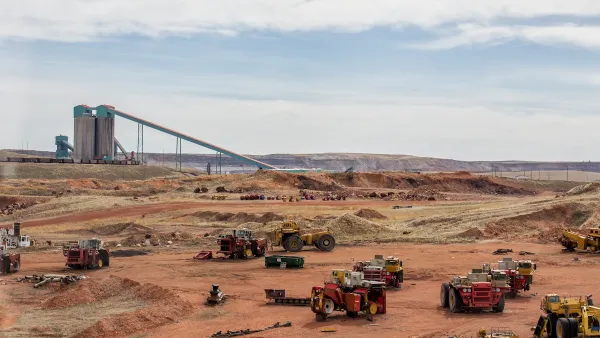
A Win for ‘Keep it in the Ground’
Coal mining in Wyoming will take a major hit as a result of a U.S. Department of Interior plan to cease future leasing of coal mines in the nation's most productive coal mining basin. The decision casts a spotlight on the presidential election.

Planetizen Federal Action Tracker
A weekly monitor of how Trump’s orders and actions are impacting planners and planning in America.

Amtrak, CN end decades-long dispute with eight-year agreement
The new operating agreement establishes an updated framework for the companies to work together, including processes to resolve disputes.

Judges permit Denver to divert 77,000 acre feet from the Colorado River for reservoir expansion
Overuse and climate change have caused the Colorado River’s water levels to plummet.

NYC DOT wants faster, more permanent street upgrades
The city is examining ways to build more concrete infrastructure without getting entangled in 'decades-long' projects.

'Something we’ve never seen before:' rising utility rates could strain city finances nationwide
Data centers, climate change and other factors have caused utility rates in the United States to increase by 38% since 2020.

Trump to overrule local leaders, lease millions of acres of America’s Pacific Island territories’ seafloors to mining companies
International law says that the Indigenous people of America’s territories have a right to prior and informed consent regarding projects that impact their countries.

FREE Course: Walkable City 1: Why Walkability?
After describing his path towards focusing on walkability as the essence of good planning, Jeff Speck marches through his five principal reasons for making more walkable places.
Reinventing Malls: Planning Alchemy—Turning Gray Fields Into Gold
The course focuses on the opportunities and imperatives that shape reinvention of mall sites.

Harvard University Graduate School of Design
KFH Group Inc.
Greater Baltimore Committee
The Architects Foundation
University of Cincinnati Online
The Pocatello Development Authority
The Urban Renewal Agency of the City of Pocatello