In the hopes of letting some air into the congested rush hour commute, BART is considering a social-media focused program to entice riders onto trains at times other than the peak commute.


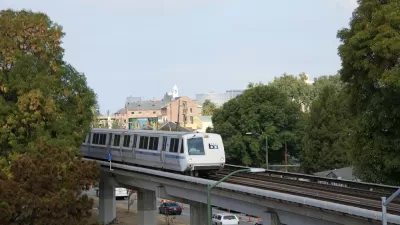
Michael Cabanatuan reported earlier this month on a new experiment underway at BART to relieve its crowded system: "using a mix of social media, gaming and cash as an incentive to get some BART riders to travel outside of the busiest parts of the commute."
A program known as BART Perks will be rolled out this spring with the goal of 'nudging passenger travel times' from the heart of the commute to slightly less-crowded times. Enticing just 1,250 people — about the capacity of a 10-car train — to commute a bit earlier or later, officials said, could significantly reduce crowding on trains and station platforms.
According to the article, ridership on BART has boomed along with the regional economy, outpacing the capacity of the system, especially at rush hour. The article also includes the details available at the time of what is intended as a six-month pilot test of the program.
Jack Morse also provides the local blogger take on the program in an article for SFist.
Read the full story: BART riders get perks? There’s a catch
BART's Six-Month Transit Incentive Experiment Reports Mixed Success
The BART Perks pilot program was the first transit incentive program in the country.
BART Announces Major Service Cuts, Fare Increases in Face of $376M Deficit
If a November ballot measure fails to bring new funding, BART’s ‘alternative service plan’ would reduce frequencies to 30 minutes, raise fares by 30%, and close up to 15 stations.
BART Service Cuts, Station Closures Could ‘Set Back the System 50 Years’
The agency could close dozens of stations and eliminate the Blue line between Daly City and Dublin-Pleasanton entirely.

Planetizen Federal Action Tracker
A weekly monitor of how Trump’s orders and actions are impacting planners and planning in America.

Washington state to charge fee to drivers with fuel-efficient cars
Revenue from the fee will go towards supporting the state’s highways.

Illinois considers spending $1 billion in taxpayer money on data center
A quantum computing campus and data center are currently under construction in Chicago.

Senate passes bill overhauling permitting
The bill still needs to pass the House.

Did data centers change how voters cast their ballots?
Texas, Ohio, and Georgia all flipped party control. But in rural counties, the effect of local data centers was mixed.

Amtrak invests in eight new Airo trainsets
The new trainsets will begin serving passengers in 2031.

FREE Course: Walkable City 1: Why Walkability?
After describing his path towards focusing on walkability as the essence of good planning, Jeff Speck marches through his five principal reasons for making more walkable places.
Reinventing Malls: Planning Alchemy—Turning Gray Fields Into Gold
The course focuses on the opportunities and imperatives that shape reinvention of mall sites.

City of Charlotte
City of Rosemead
Rutgers University, Edward J. Bloustein School of Planning and Public Policy
University of Michigan School for Environment and Sustainability (SEAS)
Hunter College, City University of New York (CUNY)
The Architects Foundation
University District Partnership