Michael Andersen reports on the evolving Powell-Division Transit and Development Project, recently revealed to fall short of its intended goal to speed up bus service in the planning area.


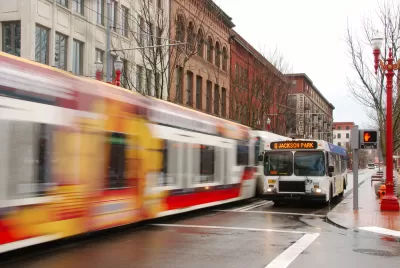
"A $200 million project to improve bus service and change zoning through Southeast Portland and Gresham is in limbo after project managers realized that it wouldn’t actually make it faster to ride the bus," reports Michael Andersen.
Powell-Division Transit and Development Project will now be up for revisions by the regional transit agency Metro. A January article by Andersen argued that the proposal's lack of a dedicated bus lane on 82nd Avenue meant "the proposed 'bus rapid transit' would actually travel more slowly there in 2035 than the #72 bus does today."
Andersen reports that some of the impetus for sending the project back to the drawing board is a desire to qualify for matching grants from the federal Small Starts program. Andersen also describes in detail each of the six alternative options that Metro will consider for the project as a result of this change of direction.
Read the full story: ‘Rapid’ bus plan on Powell-Division stalls after it turns out not to be rapid
Two Regional Transit Planning Efforts Underway in Portland
With a light rail network now reaching 60 miles, the Portland region is ready to explore its next regional transit options.
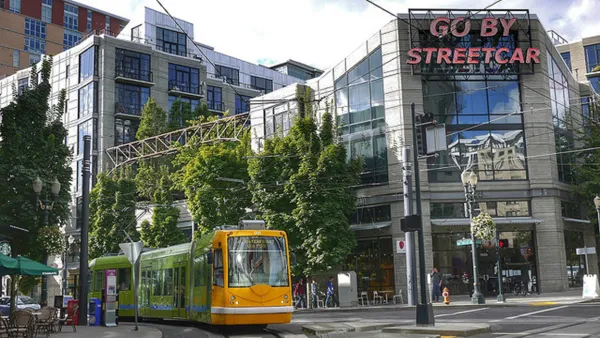
New Details for Portland's Transit Plan as Voters Head to the Polls
Voters in Portland-area voters will decide on a transportation funding measure for the "Get Moving 2020" plan, with details of four bus rapid transit project targeted for funding announced within weeks of the election.
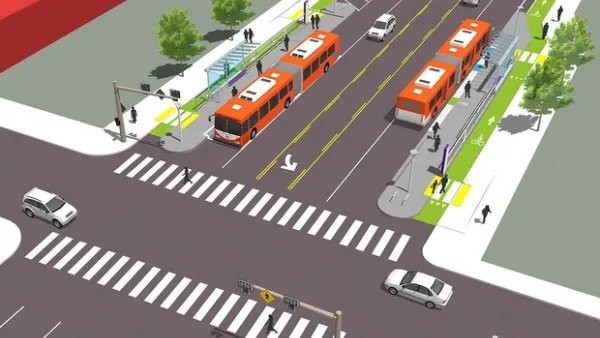
Funding Pieces Starting to Come Together for Portland Bus Rapid Transit Project
The Division Transit Project recently received some badly needed funding from the city of Portland, finally reversing a streak of bad news. The project will still need a substantial allocation from the federal government.

Planetizen Federal Action Tracker
A weekly monitor of how Trump’s orders and actions are impacting planners and planning in America.

Eastern Nebraska is running out of electricity
Data centers and electrification are straining eastern Nebraska’s grid, throttling economic development.

Move over, LA: St. Louis gears up for Olympics, invests millions in downtown redevelopment
The Missouri city will host the 2028 Olympic soccer group stage and knockout matches.

Dallas releases zoning code overhaul to officials
The drafted overhaul is over 400 pages long.

NYC renovations for dangerous, ‘mercilessly crammed’ street delayed until 2027
Construction was supposed to begin this fall.

San Diego’s Midway Rising project gets greenlight from city council
The project looks to become the largest affordable housing development in California's history.

FREE Course: Walkable City 1: Why Walkability?
After describing his path towards focusing on walkability as the essence of good planning, Jeff Speck marches through his five principal reasons for making more walkable places.
Reinventing Malls: Planning Alchemy—Turning Gray Fields Into Gold
The course focuses on the opportunities and imperatives that shape reinvention of mall sites.

City of Rosemead
Rutgers University, Edward J. Bloustein School of Planning and Public Policy
One Hundred Miles
University of Michigan School for Environment and Sustainability (SEAS)
Hunter College, City University of New York (CUNY)
The Architects Foundation
City of Cambridge
The Pocatello Development Authority
The Urban Renewal Agency of the City of Pocatello