The Golden State attracts high-end workers, while its high housing costs cause a disproportionate number of low and middle income workers to flee the state. The non-profit think tank, Next 10, delves into this crisis in three new reports.


The California Report nicely summarized the findings of the three reports in this one-and-one half-minute audio report:
San Francisco-based Next 10 delved into housing, employment, and California's economic development with the release of three reports all prepared by Los Angeles-based Beacon Economics
Too often politicians, particularly those from out-of-California looking for companies to relocate to their lower-taxed states, point the finger at California's high income taxes as the source of its problems. The reports, based on "the latest data from the U.S. Census Bureau’s American Community Survey and the U.S. Bureau of Labor Statistics’ Quarterly Census of Employment and Wages," according to Next 10's press release [PDF], should dispel that notion. High housing costs are the primary reason workers are leaving the state.
Home prices are more expensive than in all other states, particularly in major metropolitan areas. In 2014, California homeowners spent more of their household income on housing costs than homeowners in any other state, and California rental apartments cost 35.7% more than the national average.
At the same time that the state suffers from a lack of housing, it "leads the nation in both middle-wage and high-wage job creation during the post-recession recovery," writes Kelsey Thompson for HousingWire.
“California has an employment boom with a housing problem,” said Christopher Thornberg, co-author of the reports and founding partner of Beacon Economics. “The state continues to offer great employment opportunities for all kinds of workers. But housing affordability and supply represent a major problem. If we want to attract and keep low- and middle-income families in California, we need to address it.”
The migration data speaks for itself. Despite higher taxes, the report "shows a net increase in migration of high-wage earners—exactly those who would be most affected by higher personal income tax rates," states the press release [PDF].
More high-income people are moving in than moving out, and the margin continues to grow. Further evidence that people moving to California are not deterred by tax rates:
Thornberg doesn't hold any punches in pointing at some of the reasons housing production isn't meeting demand, writes Kevin Smith of the San Gabriel Valley Tribune.
This issue has been going on for the last 20 years,” Thornberg said. “We have been busily empowering NIMBYs (Not in My Back Yard) and disincentivizing cities from building enough housing to meet our needs.”
“Left unchecked, housing costs could severely hamper the state’s ability to retain the low- and middle-income workers that help to power our economy,” sain Next 10 founder F. Noel Perry.
Readers can compare California to the U.S. and other states with the "Compare 50" tool. For example, this chart shows that California had the fifth highest tax paid per capita in 2014.
Hat tip to KQED News.
FULL STORY: Next 10: Current State of the California Housing Market – Mar 3


Study: Affordable Housing Development Raises Nearby Property Values
More evidence that a common talking point of affordable housing opposition is more fear than fact.
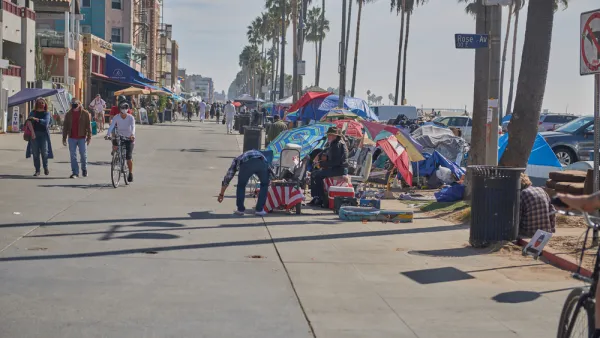
Locals Vehemently Oppose Venice Beach Homeless Housing
The controversies about homelessness in what was once a beach community full of hippies and surfers has boiled over in response to a large proposed development of supportive housing on a surface parking lot owned by the city.
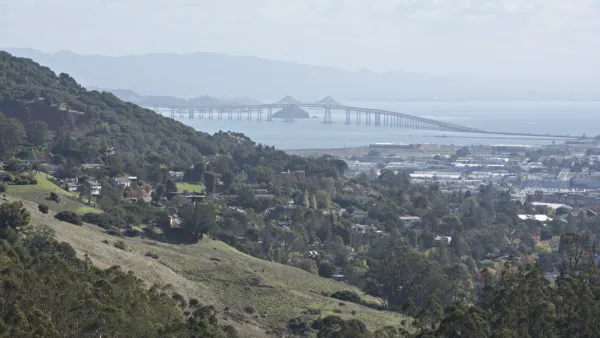
Water, Affordable Housing on a Collision Course in California
Marin County, the wealthy county in the North Bay Area with a history of exclusionary land use and transportation practices, is using the shortage of water to justify blocking the development of an affordable housing project.

Planetizen Federal Action Tracker
A weekly monitor of how Trump’s orders and actions are impacting planners and planning in America.

The state-sanctioned urbicide of Austin
People don’t kill cities. Freeways do.

US to reduce Colorado River water deliveries to Mexico
A new Colorado Treaty amendment reduces Mexico’s Colorado River water allocation by 250,000 acre feet.

Mamdani overhauls NYC's Vision Zero plan with 100 new policy goals
The overhaul aims to reduce traffic deaths and make streets safer for pedestrians, cyclists and drivers through lower speed limits, new safety infrastructure and more.

Amtrak not solely to blame for New Jersey commuter rail's unreliability, report finds
A new study from the Garden State Initiative found that NJ Transit’s budget grew 20% across a 4 year period, but reliability declined significantly over the same period.

EPA erases limits on planet-warming pollution from power plants
Under Monday’s plan, power plants would still have some limits on how much mercury, arsenic and other contaminants they can emit.

FREE Course: Walkable City 1: Why Walkability?
After describing his path towards focusing on walkability as the essence of good planning, Jeff Speck marches through his five principal reasons for making more walkable places.
Reinventing Malls: Planning Alchemy—Turning Gray Fields Into Gold
The course focuses on the opportunities and imperatives that shape reinvention of mall sites.

Eagle County Government
Harvard University Graduate School of Design
Nashville Planning Department
The Architects Foundation
University of Cincinnati Online
The Pocatello Development Authority
The Urban Renewal Agency of the City of Pocatello
Journal of the American Planning Association