Put another way, Shoup's case against parking requirements is that they make life harder for the poor.


Donald Shoup takes to the Opinion pages of The Washington Post to explain how parking requirements hurt people living in poverty, or, more specifically: "Parking requirements also undermine public transit and make life harder for people who are too poor to own a car."
According to Shoup, who references his work in the High Cost of Free Parking in the article, goes into more detail about the negative effects of parking requirements. Though the arguments pioneered by Shoup in the past have become more commonplace in planning circles, it's helpful to see how Shoup presents his case to the broader public. Also, Shoup concludes the op-ed with an appeal directly to planners:
City planners cannot do much to counter the inequality of wealth in the United States, but they can help to reform parking requirements that place heavy burdens on minorities and the poor.
Read the full story: How parking requirements hurt the poor
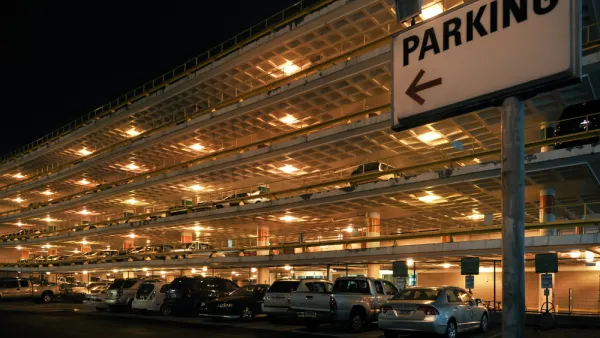
Editorial: Pittsburgh Fails to Provide Adequate Parking Around Downtown
New development coming to Downtown Pittsburgh lacks sufficient parking, according to the Pittsburgh Post-Gazette.
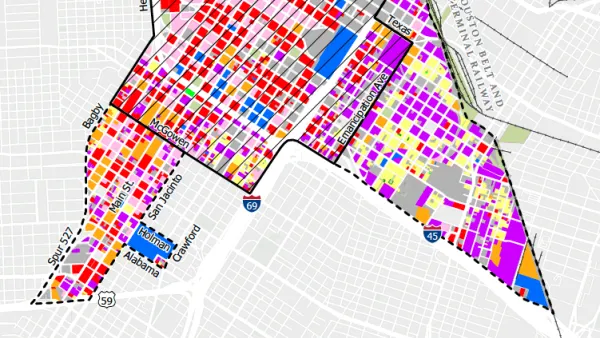
Parking Minimums Not Required in a Larger Section of Houston
The Houston Council voted yesterday to extend its market-base parking program.

Has Anyone at USDOT Read Donald Shoup?
USDOT employees, who are required to go back to the office, will receive free parking at the agency’s D.C. offices — flying in the face of a growing research body that calls for pricing parking at its real value.

Planetizen Federal Action Tracker
A weekly monitor of how Trump’s orders and actions are impacting planners and planning in America.

California plans to bury El Niño’s downpour
If the state plays its cards right, it may be able to store a billion acre-feet of El Niño’s water in aquifers.

Desperate measures: Advocates weigh draining Lake Powell to fill Colorado River
Draining the reservoir could reduce evaporation losses by a couple hundred thousand acre-feet.

US buildings threatened, destroyed by fires set to triple by 2060
Researchers found a high fire risk for socioeconomically vulnerable neighborhoods in the American West.

LA residents may be allowed to paint their own crosswalks
Councilwoman Katy Yaroslavsky put out a motion instructing the Los Angeles Department of Public Transportation to study the feasibility of allowing volunteers to paint crosswalks.

Dallas moves to overhaul its zoning code
The city's zoning reform will allow more multi-family and mixed-use developments.

FREE Course: Walkable City 1: Why Walkability?
After describing his path towards focusing on walkability as the essence of good planning, Jeff Speck marches through his five principal reasons for making more walkable places.
Reinventing Malls: Planning Alchemy—Turning Gray Fields Into Gold
The course focuses on the opportunities and imperatives that shape reinvention of mall sites.

City of Rosemead
Rutgers University, Edward J. Bloustein School of Planning and Public Policy
One Hundred Miles
Hunter College, City University of New York (CUNY)
The Architects Foundation
University of Cincinnati Online
City of Cambridge
Montrose County
The Pocatello Development Authority