OpenGrid gathers together Chicago's open data, letting users specify areas of focus on a map of the city. Users can also overlay different datasets on the same map.


Chicago's open data community have already created tools to curate what the city makes public. OpenGrid is an effort by the city to collect that data and make it more accessible. Whet Moser writes, "It's an interface for the city's open data that allows users to run their searches off a map, creating their own geographies as they go and mashing up data as they wish."
Prior to OpenGrid, the city used a similar tool called WindyGrid to help plan events, services, and public safety. "With backing from Bloomberg Philanthropies and hosting by the Smart Chicago Collaborative, the city built a public version—OpenGrid—atop Plenar.io, an open-source infrastructure for open data."
Brenna Berman, Chicago's chief information officer, sees OpenGrid as a way for researchers to define neighborhoods and communities independently from official distinctions. "'Lots of people, the neighborhood that they recognize is not in their ward or community area,' Berman says. 'The polygon that I'd draw crosses two wards and community areas. These formal things are not where we live.'"
FULL STORY: Want Chicago Data? OpenGrid Makes It Easier Than Ever


A Website to Report and Map Street Repair Work
The ChiSreetWork website, which updates the location of street repairs and was originally intended for internal use at City Hall, is now publicly available in Chicago.

First City to Make Ride-Hailing Trip Data Public: Chicago
Data geeks in Chicago will get the first chance to crunch detailed data on transportation network company trips in their city.
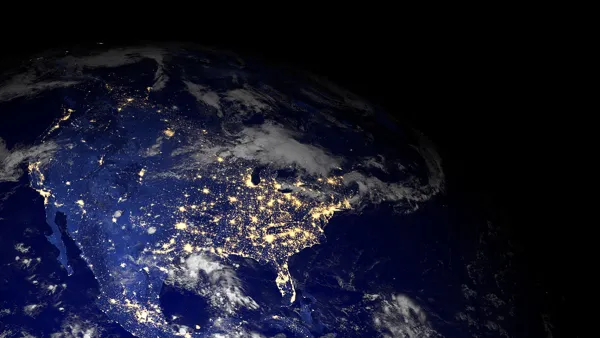
DataUSA: An Intuitive Tool for Public Data
A collaboration between Deloitte, Datawheel, and MIT has produced an intuitive aesthetically-pleasing gathering point for public data in the United States. Specific locations and industries boast easy-to-read profiles.

Planetizen Federal Action Tracker
A weekly monitor of how Trump’s orders and actions are impacting planners and planning in America.

The state-sanctioned urbicide of Austin
People don’t kill cities. Freeways do.

US to reduce Colorado River water deliveries to Mexico
A new Colorado Treaty amendment reduces Mexico’s Colorado River water allocation by 250,000 acre feet.

5 New England states march closer to 800 megawatt wind energy project
Securing federal approval for the project may be complicated under the Trump administration, which has historically been hostile towards domestic wind power.

Baltimore to break ground on $50 million Transit Priority Project
The project will bring faster bus trips, safer streets and better bike connections to Baltimore.

Airbnb launches $250 million 'last-dollar financing' housing accelerator, makes first investment in Austin
The company will put $6.4 million towards affordable housing development in Texas’ capital.

FREE Course: Walkable City 1: Why Walkability?
After describing his path towards focusing on walkability as the essence of good planning, Jeff Speck marches through his five principal reasons for making more walkable places.
Reinventing Malls: Planning Alchemy—Turning Gray Fields Into Gold
The course focuses on the opportunities and imperatives that shape reinvention of mall sites.

Eagle County Government
Harvard University Graduate School of Design
Nashville Planning Department
The Architects Foundation
University of Cincinnati Online
The Pocatello Development Authority
The Urban Renewal Agency of the City of Pocatello
Journal of the American Planning Association