Research conducted in Flint, Michigan, found that changing the location of the local farmers' market had a dramatic effect in how residents shopped.


"Making farmers markets more accessible to Americans in food deserts can boost the number of low-income customers who regularly shop there, and may even offer more promise for improving diets than bringing in traditional grocers," reports Tracie McMillan, in sharing the findings of researchers from the Flint campus of Michigan State University.
Rick Sadler, a public health professor at the Flint campus of Michigan State University, interviewed customers at the Flint Farmers' Market in both 2011 and 2015—on either side of a relocation "from an industrial area north of the city core — inaccessible to public transit and pedestrians — to a central downtown location across from the bus station." Sandler found that the customer demographics in the interim: "At the new location, the market was seeing far more shoppers from the city's poorer neighborhoods."
Sadler also found significant changes in how the customers arrived at the farmers' market and what they bought when they were there. The article provides more details about the study's findings and their implications for planners, policy makers, and retailers.
Read the full story: In Flint, Mich., Moving The Farmers Market Drew More Poor Shoppers

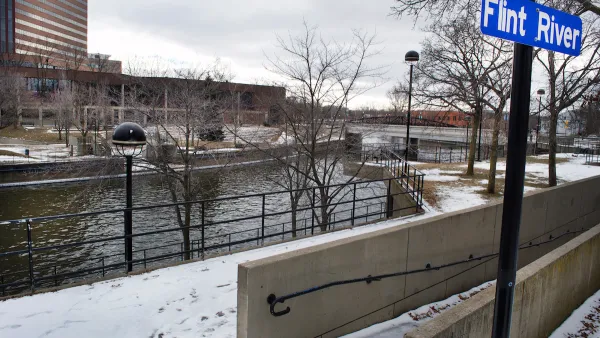
Lead Pipes Make Up Nearly One Tenth of US Water Service Lines
A decade after the Flint crisis captured national attention, tens of thousands of US water transmission lines can still leach dangerous chemicals.
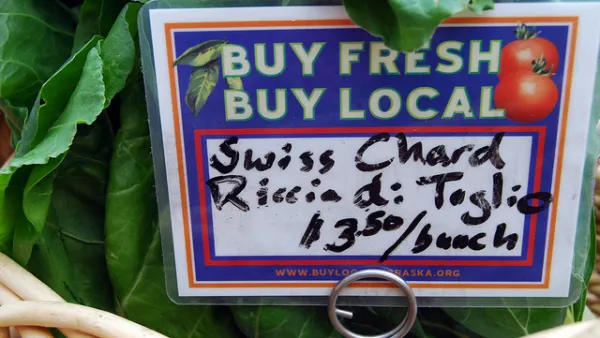
Crisis Could Result in a More Sustainable Food System
The food system, from supply to distribution and consumption, is undergoing a rapid transformation. Community supported agriculture could potentially benefit.
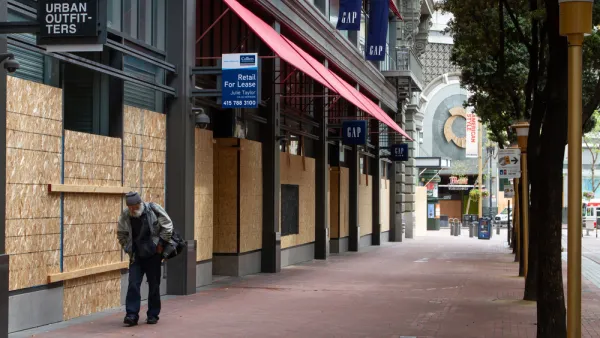
After the Plague: Go Big or Go Backwards?
Among unwelcome lessons of COVID-19 is growing evidence of what was already broken in politics and business. Ben Brown looks at making bold changes in order to improve the lives of the left out and left behind.

Planetizen Federal Action Tracker
A weekly monitor of how Trump’s orders and actions are impacting planners and planning in America.

Amtrak, CN end decades-long dispute with eight-year agreement
The new operating agreement establishes an updated framework for the companies to work together, including processes to resolve disputes.

Judges permit Denver to divert 77,000 acre feet from the Colorado River for reservoir expansion
Overuse and climate change have caused the Colorado River’s water levels to plummet.

NYC DOT wants faster, more permanent street upgrades
The city is examining ways to build more concrete infrastructure without getting entangled in 'decades-long' projects.

'Something we’ve never seen before:' rising utility rates could strain city finances nationwide
Data centers, climate change and other factors have caused utility rates in the United States to increase by 38% since 2020.

Trump to overrule local leaders, lease millions of acres of America’s Pacific Island territories’ seafloors to mining companies
International law says that the Indigenous people of America’s territories have a right to prior and informed consent regarding projects that impact their countries.

FREE Course: Walkable City 1: Why Walkability?
After describing his path towards focusing on walkability as the essence of good planning, Jeff Speck marches through his five principal reasons for making more walkable places.
Reinventing Malls: Planning Alchemy—Turning Gray Fields Into Gold
The course focuses on the opportunities and imperatives that shape reinvention of mall sites.

Harvard University Graduate School of Design
KFH Group Inc.
Greater Baltimore Committee
The Architects Foundation
University of Cincinnati Online
The Pocatello Development Authority
The Urban Renewal Agency of the City of Pocatello